
Fox Moth Identification Guide
A fast-flying, reddish-brown moth of open heathland, easily spotted zipping low over the ground on sunny spring days.
Read the full Fox Moth encyclopedia entry →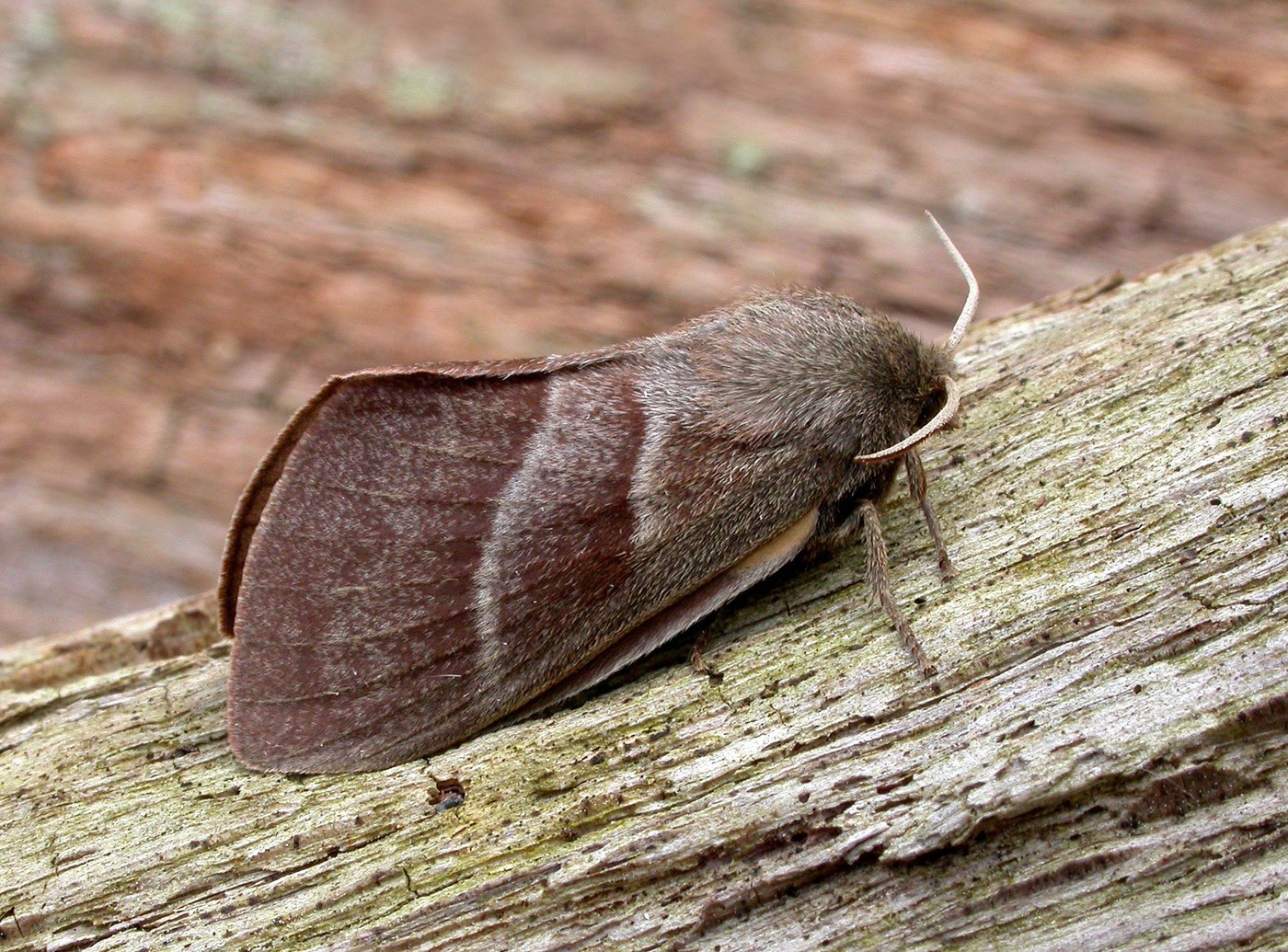
Key Visual Features
The Fox Moth is a stout, furry moth with a wingspan of roughly 45-70mm and clear differences between males and females.
- Males: Rich rusty reddish-brown wings crossed by two pale buff or cream bands; noticeably feathery (bipectinate) antennae.
- Females: Larger than males, with duller greyish-brown wings and less contrasting banding; antennae are simple and thread-like rather than feathery.
- Body: Stout, densely furry, typical of the eggar moth family, with no visible proboscis since adults do not feed.
- Wing shape: Broad and rounded, held tent-like over the body at rest.
Where and When You'll See It
Fox Moths are birds of open country - heathland, moorland, coastal dunes, and rough grassy hillsides. Males are unusual among moths in being strongly day-flying: on warm, sunny days in spring, they can be seen speeding low and fast over heather and gorse in search of females. Females are more sedentary and largely nocturnal, resting in low vegetation and flying mainly after dark. The main flight period runs from April through June.
Similar-Looking Species
- Drinker Moth - larger and more uniformly orange-yellow, with wavy diagonal lines rather than distinct pale bands, and found in damper grassy habitats later in summer.
- Oak Eggar - generally more uniformly reddish-brown with a single pale band and a small pale disc mark on the forewing, and flies later in the season.
- Northern Eggar - very similar to the Oak Eggar, found in more northerly heath and moorland habitats; separating from Fox Moth relies on band pattern and flight timing.
Life Cycle & Behavior
Fox Moth caterpillars are large, hairy, and dark brown, feeding through summer and autumn on heather and other low shrubs before overwintering as a partly grown larva and resuming feeding the following spring. Pupation happens in a tough cocoon spun among ground vegetation. The single generation per year and the male's daytime flight make this species one of the more conspicuous moths of open heath country.
Quick ID Checklist
- Stout, furry moth, males with fast, low, darting daytime flight
- Males rusty red-brown with two pale cross-bands; females greyer and duller
- Feathery antennae on males, thread-like on females
- Found over open heathland, moorland, and dunes
- Flies in spring (April-June), unusually early for a large moth
Frequently asked questions
Why do I see Fox Moths flying during the day?
Unlike most large moths, male Fox Moths are day-active, using fast, low flight over open heath and moorland to search for the more sedentary, mostly nocturnal females.
How do male and female Fox Moths differ?
Males are smaller, brighter rusty-red with feathery antennae, while females are larger, duller greyish-brown, and have simple thread-like antennae.
What habitat should I search to find one?
Open heathland, moorland, and coastal dunes with heather and gorse are the classic places to spot Fox Moths, especially on warm spring days.
How is the Fox Moth different from the Drinker Moth?
The Fox Moth has distinct pale bands across reddish wings and flies in spring, while the Drinker Moth is more uniformly orange-yellow with wavy lines and flies later, in summer.