
Fruit Fly (Mediterranean) Identification Guide
Identify the Mediterranean fruit fly by its patterned wings, tan-and-black mottled body, and reddish eyes, distinguishing it from the common vinegar fly.
Read the full Fruit Fly (Mediterranean) encyclopedia entry →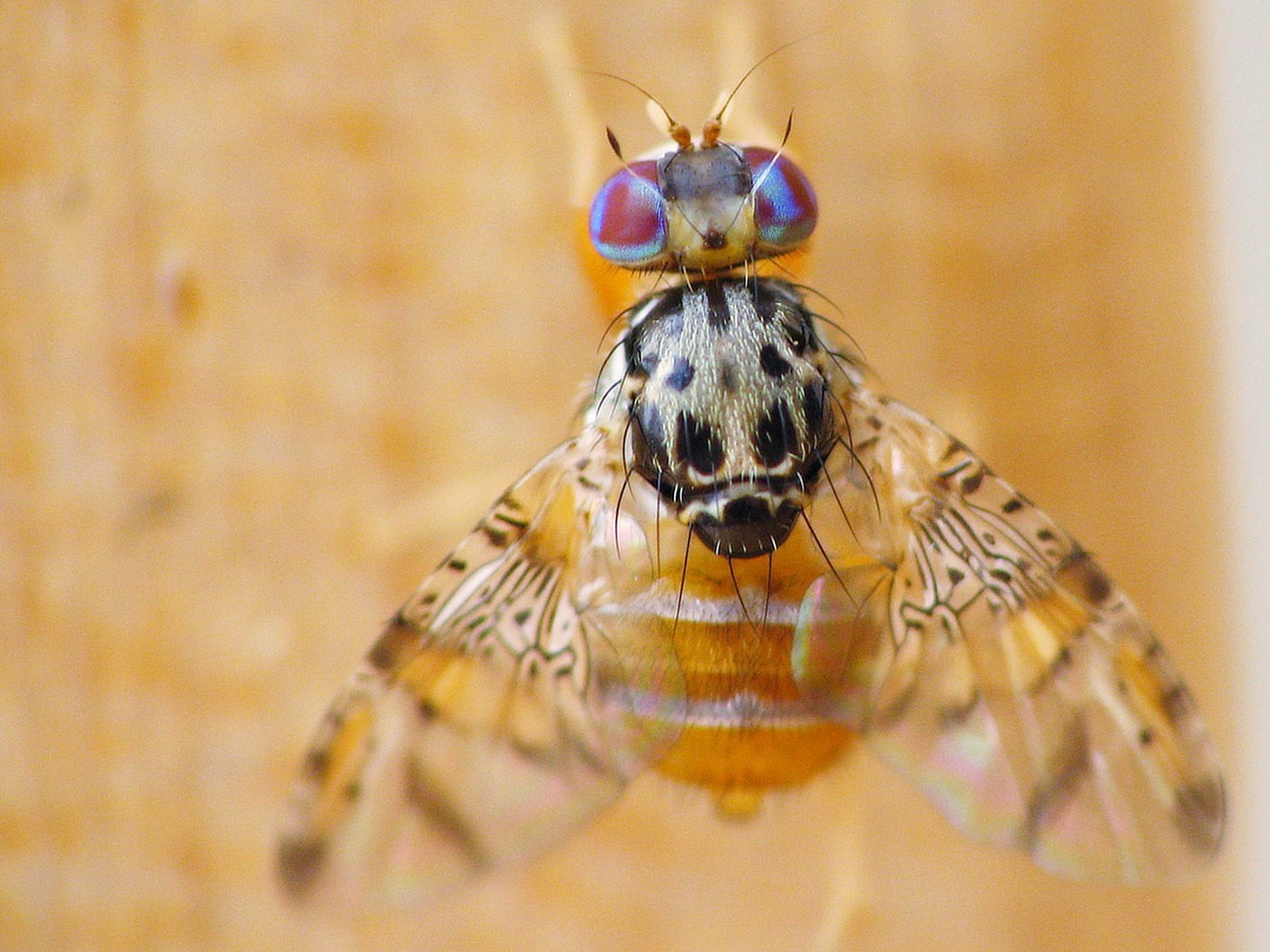
Key Visual Features
The Mediterranean fruit fly (often called the "medfly") is a true fruit fly notably larger and more boldly patterned than the tiny vinegar flies often seen in kitchens.
- Size: Around 3.5-5 mm, somewhat larger and stockier than the common vinegar/fruit fly seen indoors.
- Color: Tan to light brown body with black markings, and a notably mottled, patterned thorax with pale spots.
- Body shape: Slightly stouter and more robust than the tiny vinegar fly, with a rounded abdomen.
- Wings: The standout feature — clear wings marked with bold, irregular bands of yellow, brown, and black patterns rather than the plain clear wings of common fruit flies.
- Legs: Yellowish, moderately long and slender.
- Antennae: Short with a bristled arista, unremarkable compared to the striking wing pattern.
- Distinctive markings: Bright red to reddish-brown eyes stand out against the lighter body, and the patterned wings are held out to the sides at an angle, often waved slowly in a distinctive side-to-side motion at rest.
Where and When You'll See Them
Mediterranean fruit flies are associated with ripening and ripe produce, particularly a wide range of fruit, and are most commonly seen outdoors around orchards, gardens, and fruit-bearing trees and shrubs in warm climates. They are active during the day, especially in warm to hot weather, and are more strongly tied to fruit-growing regions than the average household vinegar fly. Watch for their slow, deliberate wing-waving display while perched on fruit or foliage.
Similar-Looking Bugs
- Vinegar/common fruit fly: Much smaller, with plain clear wings (no banding pattern) and a duller tan body without the bold mottled thorax markings of the medfly.
- House flies: Considerably larger and gray, lacking both the small size and the patterned wings.
- Other tephritid fruit flies: Several related species share the banded-wing look; the Mediterranean fruit fly is best distinguished by its specific wing pattern combination and reddish eyes alongside the mottled tan-and-black thorax.
Quick ID Checklist
- Small (3.5-5 mm) tan-and-black mottled body
- Bold banded pattern of yellow, brown, and black on the wings
- Reddish-brown eyes
- Slow side-to-side wing-waving display at rest
- Found around ripening fruit outdoors in warm-climate orchards/gardens
Frequently asked questions
How is the Mediterranean fruit fly different from the common fruit fly in the kitchen?
The key difference is the wings: the Mediterranean fruit fly has bold, patterned bands of yellow, brown, and black on its wings, while the common household vinegar fly has plain, unmarked clear wings and is noticeably smaller.
What is the wing-waving behavior seen in these flies?
Mediterranean fruit flies often perform a slow, deliberate side-to-side waving motion with their patterned wings while resting on fruit or foliage, which is a useful behavioral clue alongside the visual markings.
What color are the eyes of a Mediterranean fruit fly?
They typically have bright red to reddish-brown eyes that stand out against the lighter tan body.
Where would I be most likely to spot a Mediterranean fruit fly?
Outdoors around orchards, gardens, and ripening fruit trees or shrubs in warm-climate growing regions, rather than indoors around kitchen produce where the smaller vinegar fly is more common.