
Furniture Beetle Identification Guide
Identify the common furniture beetle by its hooded head, pitted wing covers, and tiny round exit holes in old wood.
Read the full Furniture Beetle encyclopedia entry →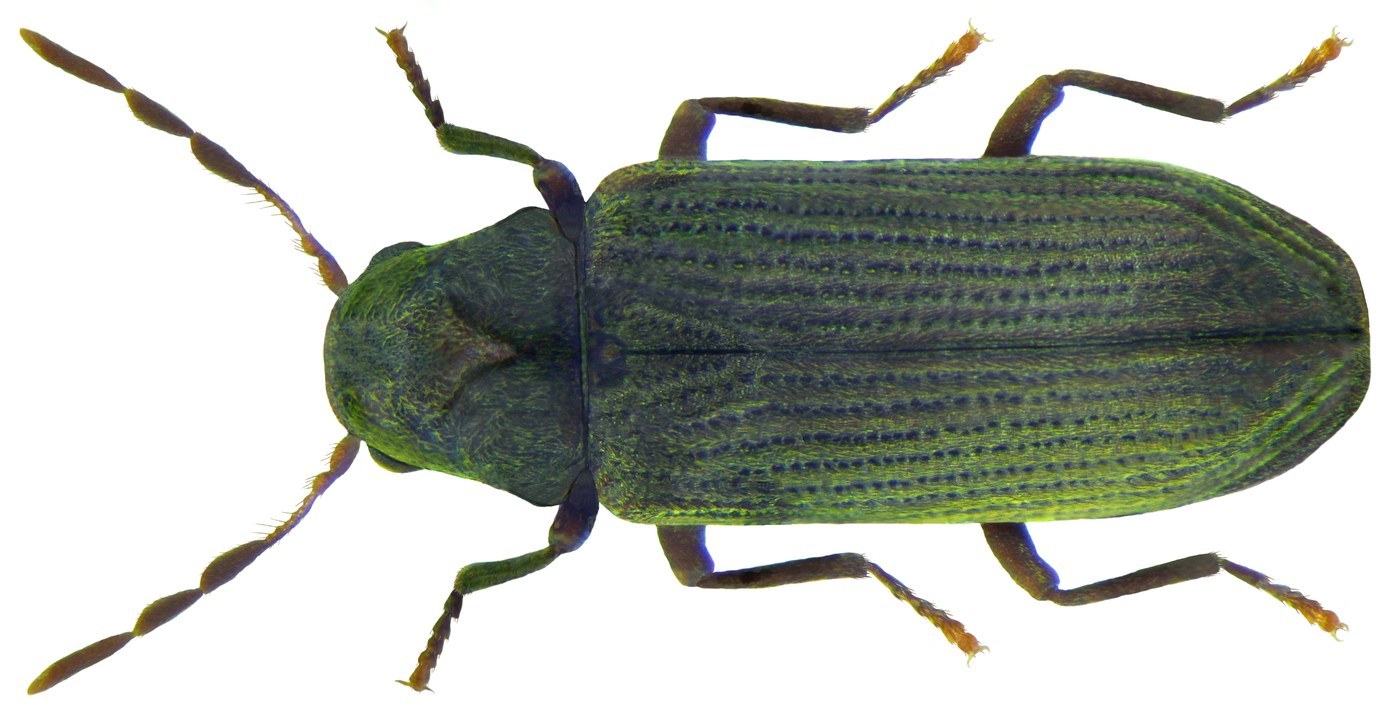
Key Visual Features
The common furniture beetle (Anobium punctatum) is a small, cylindrical, reddish-brown to dark brown beetle, generally 1/8 to 1/4 inch long. Viewed from above, the head is hidden beneath a hood formed by the raised, humped thorax, giving the front of the body a rounded, almost bald appearance. The wing covers are marked with distinct rows of small pits or punctures running lengthwise, which is where the beetle gets its scientific epithet. Antennae are short with a slightly enlarged tip. Because adults are small and often stay hidden, the most common way to identify an active presence is the fine, gritty frass and tiny round exit holes, about 1 to 2 mm across, left behind by larvae as they emerge from wood.
Where and When You'll See Them
Furniture beetles infest both softwood and hardwood, and are especially associated with older wood furniture, structural timber, and flooring, particularly wood that has some moisture content or has been stored in damp conditions. Adults are most likely to emerge and fly in late spring through summer, when they seek out cracks, joints, and unfinished wood surfaces to lay eggs. The larval stage, hidden inside the wood, can last a year or more before adults emerge, so exit holes and frass are often the first visible sign, sometimes appearing well after the original infestation started.
Similar-Looking Bugs
- Deathwatch beetle — larger and hairier with coarser, bun-shaped pellet frass rather than fine grit.
- Powderpost beetle — head visible from above (not hooded), and produces very fine, flour-like powder instead of gritty frass.
- Old house borer — considerably larger with oval rather than round exit holes.
Quick ID Checklist
- Small, reddish-brown to dark brown, cylindrical body, 1/8 to 1/4 inch
- Head hidden beneath a humped, hooded thorax
- Wing covers marked with rows of small pits
- Tiny round exit holes (1-2 mm) with fine, gritty frass
- Found in older wood furniture and structural timber, especially damp wood
Frequently asked questions
How do I know if furniture beetle activity is recent?
Fresh frass tends to be light-colored and powdery-fine with a gritty texture, collecting in small piles beneath new-looking exit holes, compared to older, discolored holes with no fresh debris.
What does furniture beetle damage look like?
Look for tiny round exit holes about 1-2 mm across on the surface of wood, often accompanied by small mounds of fine, gritty sawdust-like frass.
What's the difference between a furniture beetle and a deathwatch beetle?
The furniture beetle is smaller and less hairy, with finer gritty frass, while the deathwatch beetle is larger, mottled with yellowish hair patches, and leaves coarser pellet-shaped frass.
What type of wood attracts furniture beetles?
They infest both softwood and hardwood, particularly older furniture, flooring, and structural timber that retains some moisture.