
Garden Spider Identification Guide
Spot the black-and-yellow garden spider by its bold patterned abdomen and the signature zigzag stitching in its web.
Read the full Garden Spider encyclopedia entry →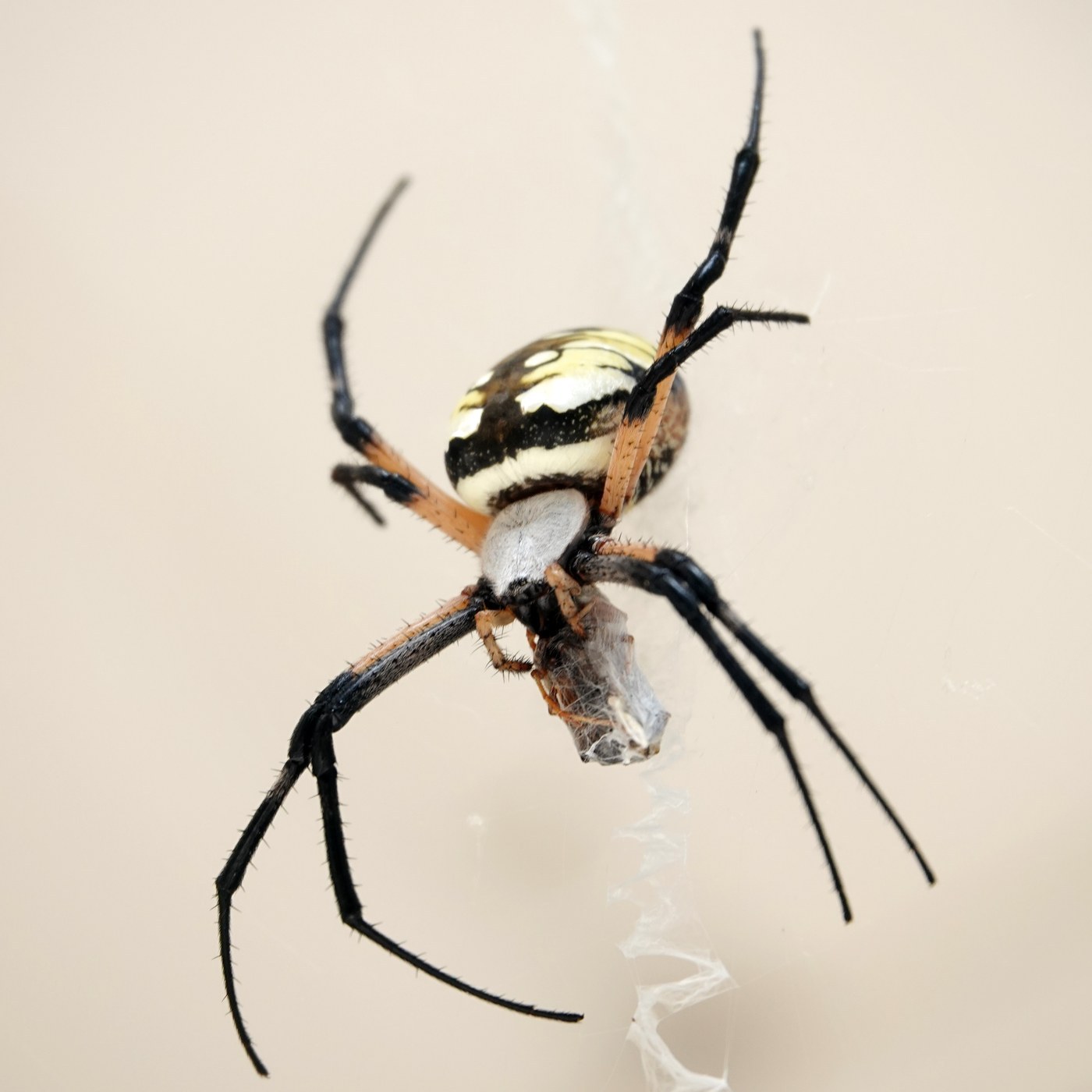
Key Visual Features
The garden spider (commonly the black-and-yellow garden spider, Argiope aurantia) is one of the most recognizable orb weavers thanks to its bold coloring and large size.
- Body shape: An egg-shaped, somewhat flattened abdomen attached to a smaller, fuzzy cephalothorax covered in silvery-white hairs.
- Color: Vivid black abdomen marked with bright yellow or orange patches and spots, with banded black-and-yellow legs.
- Size: Females are large and conspicuous, with a body up to an inch long and a leg span of several inches; males are much smaller and rarely noticed.
- Legs: Eight long, banded legs typically held in pairs forming an X-shape while the spider rests at the center of its web.
- Web feature: Often builds a dense, zigzagging band of silk (called a stabilimentum) running vertically through the center of the web, right where the spider sits.
Where and When You'll See Them
Garden spiders favor sunny, open, undisturbed areas with tall vegetation—gardens, meadows, roadside grasses, and the edges of fields. They anchor large webs between plant stalks, fence posts, or shrubs, often at a height of a few feet off the ground. They're most visible from mid-to-late summer through fall, when females have grown to full size and their webs and zigzag markings are easiest to spot in daylight, unlike many other orb weavers that hide by day.
Similar-Looking Bugs
- Other orb weaver species: Many share the round-web habit, but few match the garden spider's stark black-and-yellow pattern and prominent zigzag web decoration.
- Banded garden spider: A close relative with silvery bands across the abdomen instead of bold yellow patches; check for the pattern style to distinguish them.
- Wasps or bees: Occasionally confused at a glance due to yellow-and-black coloring, but the spider's eight legs, web, and body shape are unmistakable up close.
Quick ID Checklist
- Black abdomen with bold yellow or orange markings
- Silvery hairs on the front body segment
- Zigzag silk band running through the center of the web
- Large web built in sunny gardens or tall grass, visible during the day
- Spider rests head-down at the web's hub with legs in an X pose
Frequently asked questions
What is the zigzag pattern in the garden spider's web?
It's called a stabilimentum, a dense band of extra silk woven into the web near the spider's resting spot; scientists still debate its exact purpose, but it's a reliable field marker for this genus.
Are male and female garden spiders easy to tell apart?
Yes—females are large and boldly patterned, while males are noticeably smaller, more slender, and duller in color, and are rarely seen since they spend little time at the female's web.
Where do garden spiders usually build their webs?
They prefer sunny, sheltered spots with tall plants or structures to anchor to, such as garden edges, meadows, and fence lines, typically a few feet above the ground.
How is a garden spider different from a generic orb weaver?
"Garden spider" usually refers specifically to the boldly black-and-yellow Argiope species, while "orb weaver" is the broader family name covering many differently colored and shaped web-building spiders.