
Garden Tiger Moth Identification Guide
Identify the garden tiger moth by its maze-like brown-and-cream forewings and bold orange hindwings.
Read the full Garden Tiger Moth encyclopedia entry →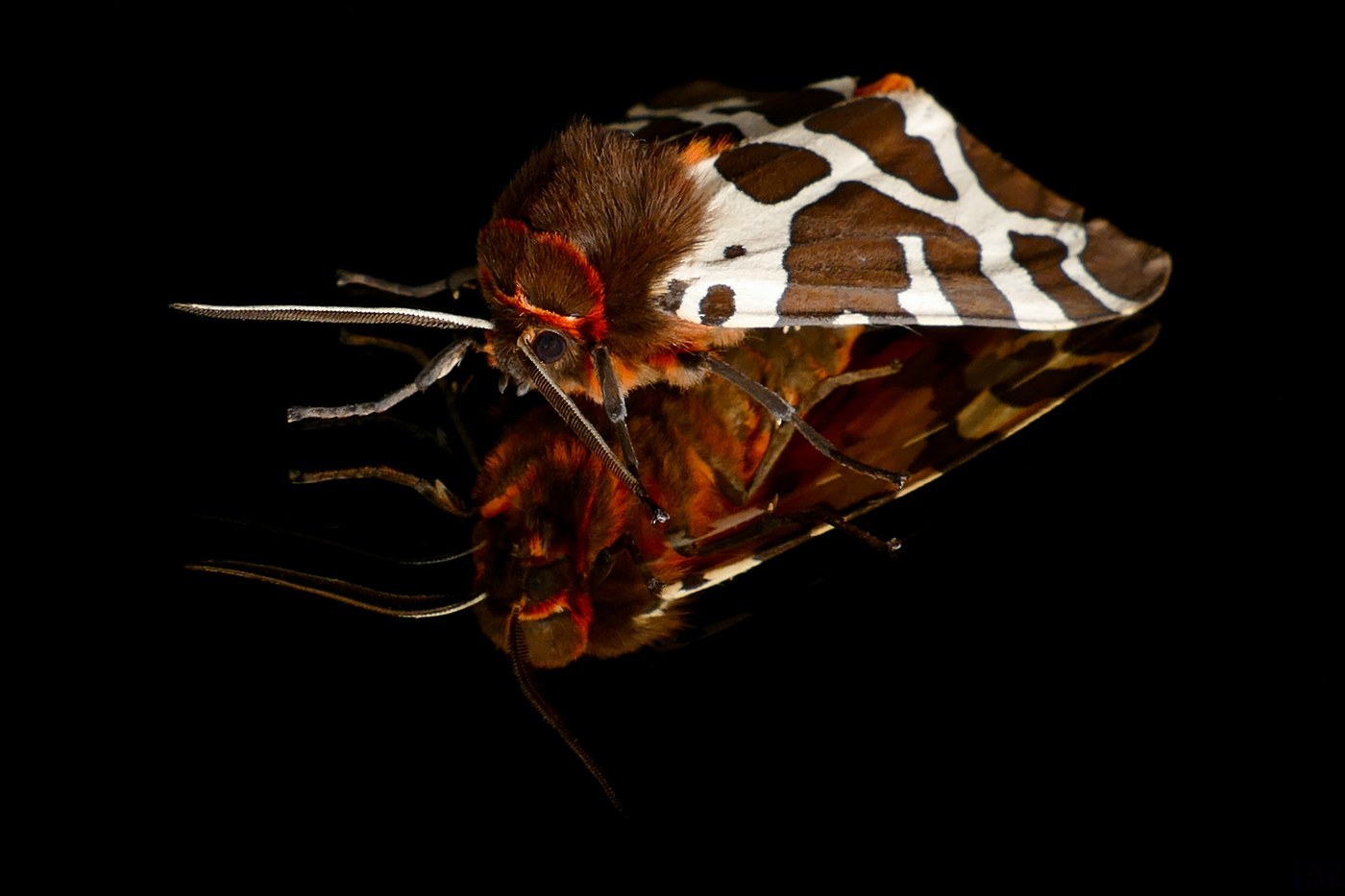
Key Visual Features
The garden tiger moth (Arctia caja) is a large, boldly patterned moth with a wingspan ranging from about 1.8 to 2.8 inches. Its forewings display a striking chocolate-brown to black background broken up by irregular cream-white blotches that form a maze-like or leopard-spot pattern—no two individuals look quite identical, though the overall brown-and-cream contrast is consistent. The hindwings are a completely different bright orange-red, marked with several dark blue-black spots, and are normally hidden beneath the forewings until the moth is disturbed or in flight. The robust, hairy body often shows a black-and-white checkered collar just behind the head. The caterpillar stage, sometimes called a "woolly bear" type, is densely covered in long, bristly hairs in shades of black and reddish-brown.
Where and When You'll See It
Garden tiger moths favor gardens, meadows, hedgerows, and woodland edges across Europe and parts of temperate North America. Adults are nocturnal and strongly attracted to artificial lighting, so they're most often encountered resting near porch lights or windows at night. Flight season runs mainly through the summer months, typically June through August in most of their range, with caterpillars active earlier in the season before pupating.
Similar-Looking Bugs
- Cream-spot tiger moth: Shares a broadly similar brown-and-cream forewing pattern, but the blotches are shaped and arranged differently, and its hindwing spotting pattern varies from the garden tiger moth's.
- Other Arctia species: Several close relatives share the same general "tiger moth" color scheme of dark forewings with pale blotches and brightly colored hindwings, but differ in the precise shape and arrangement of markings.
- Great tiger moth (North America): A closely related species with a similar overall look, distinguished by subtle differences in the forewing blotch pattern and hindwing spot arrangement.
Quick ID Checklist
- Chocolate-brown to black forewings with irregular cream-white blotches
- Bright orange-red hindwings with dark blue-black spots, hidden at rest
- Black-and-white checkered collar behind the head
- Robust, hairy body typical of tiger moths
- Nocturnal, attracted to lights, most active June through August
Frequently asked questions
How can I tell a garden tiger moth from other tiger moths?
Look closely at the shape and arrangement of the cream blotches on the forewings and the pattern of dark spots on the orange hindwings, since these details differ between closely related species.
Why don't I always see the orange hindwings?
The bright orange-red hindwings are normally hidden beneath the darker forewings when the moth is at rest and only become visible during flight or when the moth is disturbed.
What does the garden tiger moth caterpillar look like?
It is densely covered in long, bristly hairs in shades of black and reddish-brown, giving it a classic 'woolly bear' appearance.
When is the best time to see an adult garden tiger moth?
Adults are nocturnal and most commonly seen from June through August, often resting near outdoor lights at night.