
Giant Asian Mantis Identification Guide
A large, robust praying mantis with a distinctive bullseye spot on the inner front legs, common across Asia and introduced elsewhere.
Read the full Giant Asian Mantis encyclopedia entry →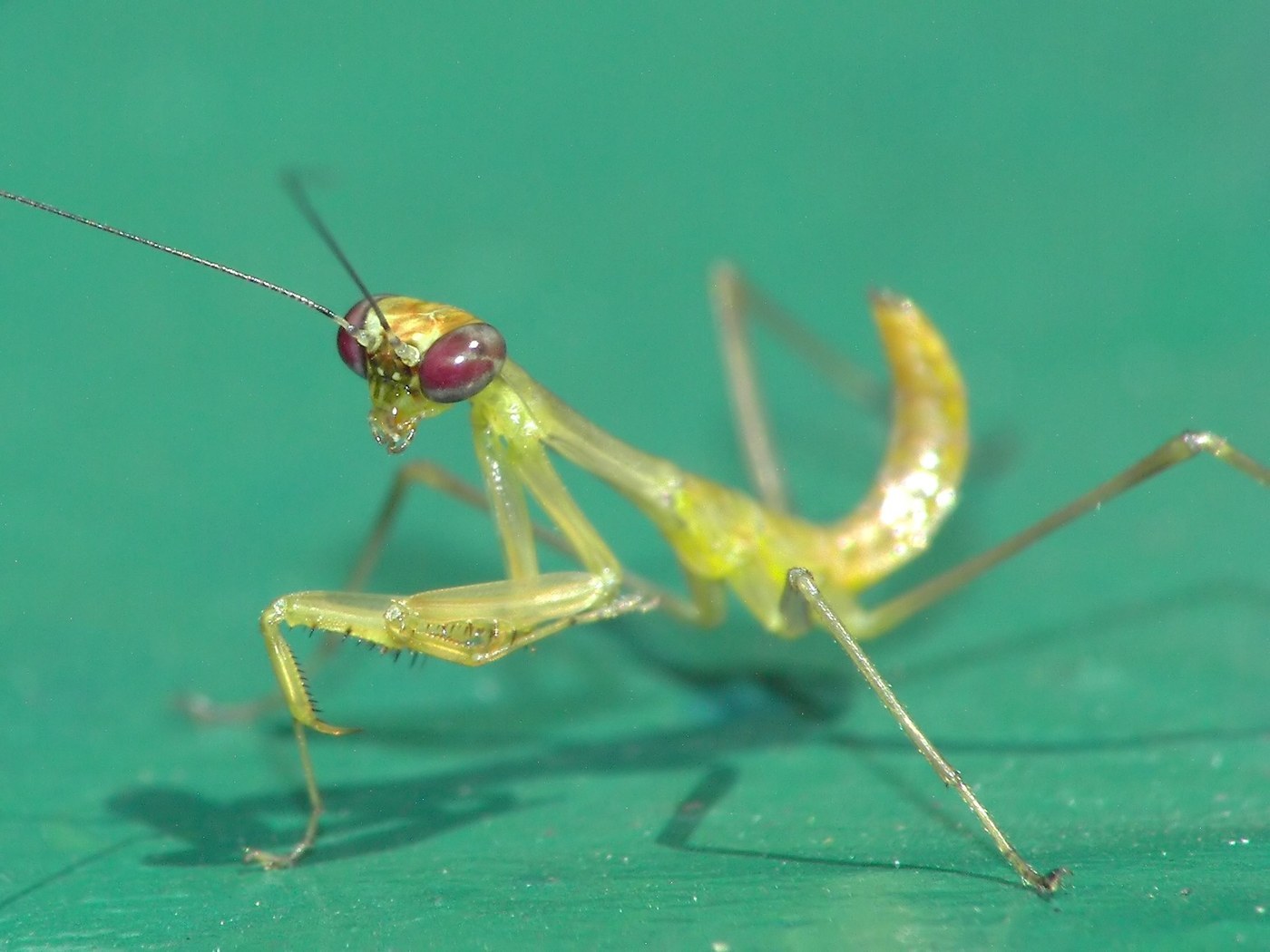
Key Visual Features
The giant Asian mantis (Hierodula species, sometimes called the giant Asian mantis or Hierodula patellifera among others) is a large, sturdy mantis recognized by a few key traits.
- Size: Large-bodied, typically 2.5-4 inches (6-10 cm) as an adult, among the bigger mantis species commonly encountered
- Color: Usually bright to medium green, though brown color forms occur; the body often has a smooth, somewhat glossy look
- Body shape: Robust and thick-bodied compared to slimmer mantis species, with a broad thorax
- Wings: Well-developed wings reaching the tip of the abdomen or beyond in adults; the wings are typically green with a translucent quality
- Legs: Raptorial front legs held in the classic folded "praying" position; a signature identifying mark is a small, pale, eye-like or bullseye-shaped spot on the inner surface of the front coxae (the base segment of the front legs), visible when the legs are spread
- Head: Triangular head with prominent compound eyes and the ability to swivel and track movement
Where and When You'd See It
Giant Asian mantises are native across South and Southeast Asia and have become established in other regions where introduced. They inhabit gardens, shrubs, tall grass, agricultural fields, and forest edges, favoring warm, humid climates. Adults are most visible in the warmer months, from summer into fall, perched on leaves and stems in ambush posture, often near flowers or areas with abundant small insect activity. Egg cases (oothecae) are typically laid on twigs or stems and overwinter, with young mantises (nymphs) appearing in spring.
Similar-Looking Bugs
- Chinese mantis: Also large and green-to-brown, but generally more slender with a longer, narrower body and lacks the distinct bullseye spot on the front coxae
- European mantis: Smaller and slimmer, often green or tan, with a small dark spot with a white center inside the "armpit" of the front leg — similar in concept but positioned differently and on a notably smaller-bodied mantis
- Orchid or flower mantises: Much more ornately shaped with petal-like leg lobes, unlike the plain, broad-bodied giant Asian mantis
- Other Hierodula relatives: Very similar in general shape; regional range and the precise coxal spot pattern help narrow identification
Quick ID Checklist
- Large, thick-bodied mantis, green or brown
- Pale bullseye/eye-spot marking on the inner base of the front legs
- Broad thorax compared to slimmer mantis species
- Full wings reaching or exceeding the abdomen tip in adults
- Found on garden foliage, shrubs, and tall grass in warm climates during summer/fall
Frequently asked questions
What is the easiest way to identify a giant Asian mantis?
Look for its large, robust green or brown body along with a distinctive pale bullseye-shaped spot on the inner base of the front legs, visible when the legs are spread apart.
How big does this mantis get?
Adults are among the larger commonly seen mantises, typically reaching 2.5 to 4 inches in body length.
How is it different from a Chinese mantis?
The giant Asian mantis tends to be thicker-bodied with the telltale coxal eye-spot, while the Chinese mantis is generally more slender and lacks that marking.
When are giant Asian mantises most commonly seen?
Adults are most visible during the warmer months, from summer through fall, perched on garden plants and shrubs.