
Giant Desert Hairy Scorpion Identification Guide
Identify North America's largest scorpion by its tan body, dark back, and dense bristly hairs.
Read the full Giant Desert Hairy Scorpion encyclopedia entry →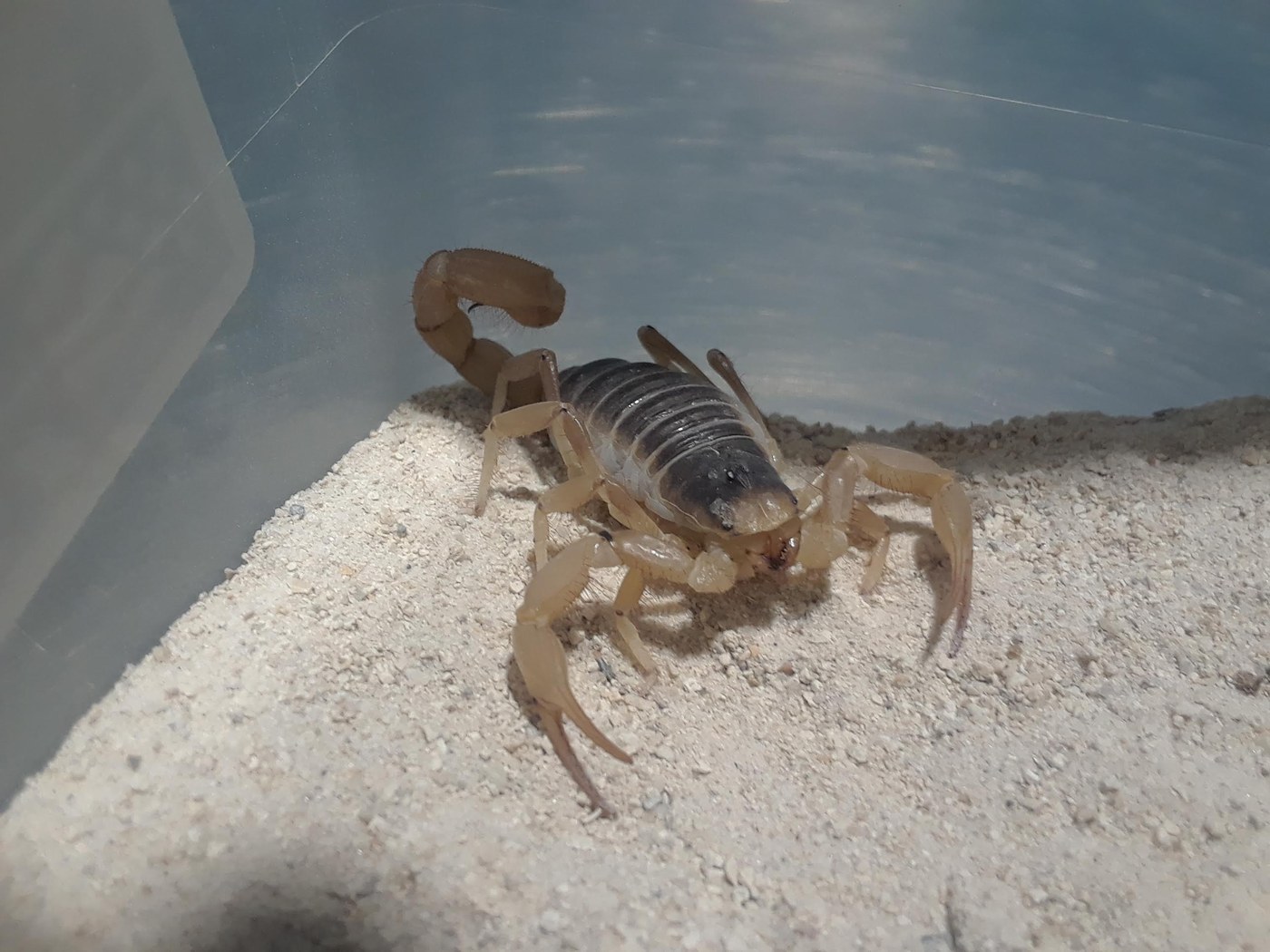
Key Visual Features
The giant desert hairy scorpion is the largest scorpion species in North America, and its size alone helps set it apart from other desert scorpions.
- Size: Adults typically reach 5–7 inches (13–18 cm) in length, occasionally larger.
- Color: Yellowish-tan to olive-green legs and pincers, with a contrasting dark brown to black back (dorsal surface) on the body segments.
- Body shape: Robust and heavily built, with a wide, thick tail (metasoma) and large, sturdy pincers (pedipalps).
- Legs: Eight legs, all covered in fine hair-like bristles, which give the species its common name.
- Wings/antennae: None; scorpions have no wings, and their sensory organs are a pair of short pedipalps and comb-like pectines on the underside rather than true antennae.
- Markings: The sharp two-tone contrast between the pale legs/pincers and the darker back is one of the most reliable field marks.
Where and When You'd See Them
This species inhabits arid desert regions of the southwestern United States and northern Mexico, digging burrows in sandy or gravelly soil, often near the base of rocks or shrubs. It is almost entirely nocturnal, emerging after dark to move across open desert ground, and is most active on warm nights during spring through fall. Daytime sightings are rare since individuals stay hidden in burrows.
Similar-Looking Bugs
- Bark scorpions are much smaller and slimmer, with a uniformly pale tan color and thin, evenly proportioned pincers, lacking the two-tone dark-and-tan pattern.
- Stripe-tailed scorpions show longitudinal stripes on the tail, which the giant desert hairy scorpion lacks.
- Emperor scorpions (not native to the same range) are much darker overall, often near-black, and lack the tan-and-dark contrast.
- Vinegaroons superficially resemble scorpions but have a whip-like tail filament instead of a stinger and lack large pincers of comparable proportion.
Quick ID Checklist
- Large size, 5–7 inches, largest scorpion in North America
- Tan to olive legs and pincers with a dark brown to black back
- Thick, robust pincers and a heavy, wide tail
- Fine hair-like bristles covering the legs and body
- Nocturnal, found in burrows in arid, sandy desert habitat
Frequently asked questions
What is the biggest clue for identifying a giant desert hairy scorpion?
Its large size combined with the two-tone coloring — tan legs and pincers against a dark brown to black back — is the most reliable identifying feature.
Where does the giant desert hairy scorpion live?
It lives in arid desert regions of the southwestern United States and northern Mexico, typically burrowing in sandy or gravelly soil.
Is the giant desert hairy scorpion active during the day?
No, it is nocturnal and stays hidden in its burrow through the day, emerging at night to move around the desert floor.
How can I tell it apart from a bark scorpion?
Bark scorpions are smaller, slimmer, and a uniform pale tan, while the giant desert hairy scorpion is larger, heavier bodied, and shows a distinct dark back.