Giant Mayfly Identification Guide
One of North America's largest mayflies, recognizable by its substantial size and long, trailing tail filaments.
Read the full Giant Mayfly encyclopedia entry →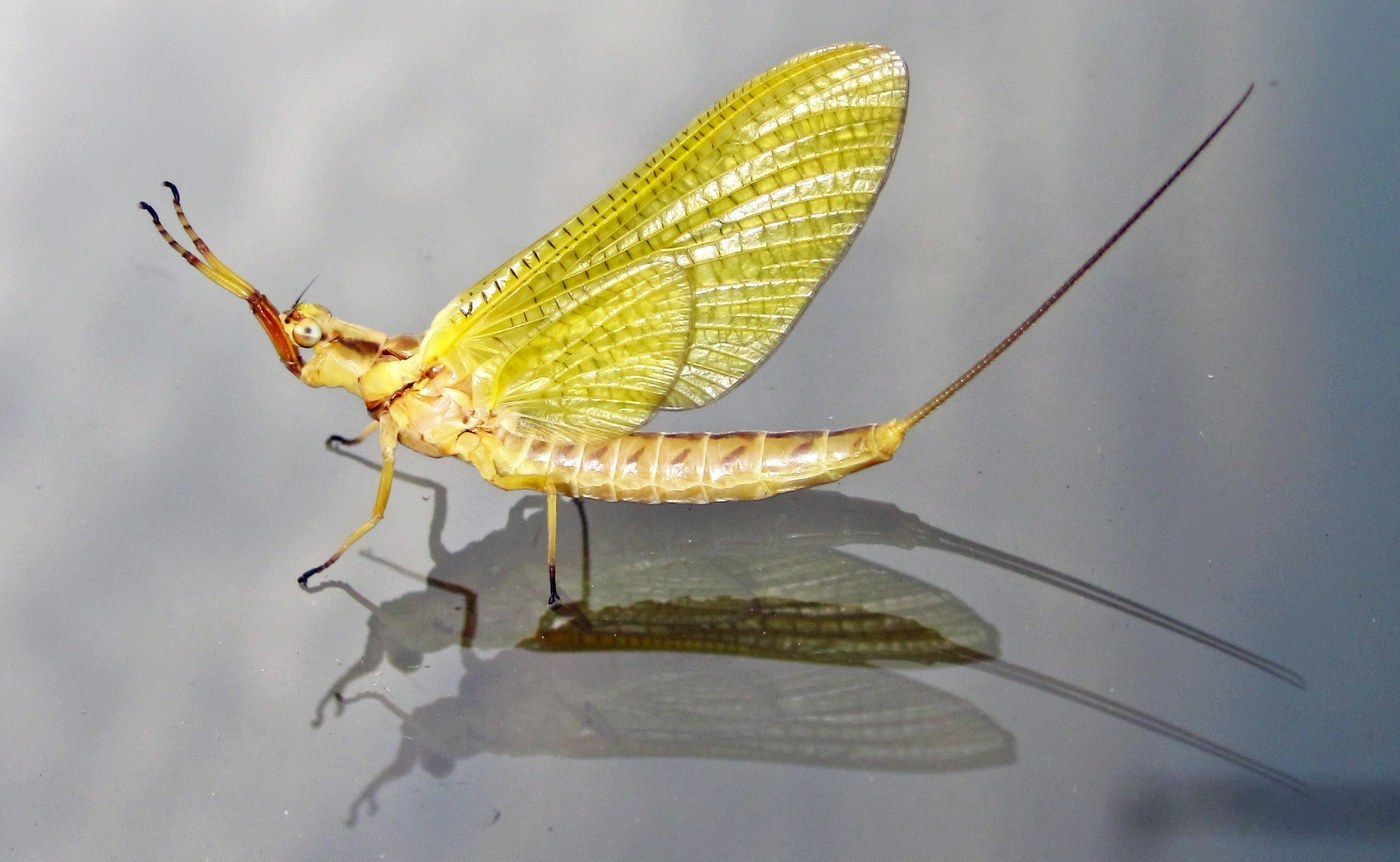
Key Visual Features
The Giant Mayfly, often referring to species in the genus Hexagenia, is among the largest mayflies in North America, with a body length that can reach up to 1.2 inches (30 mm) or more, not including the tails.
- Size: Notably large and robust compared to most other mayflies, which is the primary clue behind its common name.
- Wings: Large, translucent, upright wings held together above the body at rest, often with a pale yellowish or amber tint and visible network of veins.
- Body color: The body is typically pale yellow-tan to burrowing-mayfly cream, sometimes with darker brown markings on the back of the abdomen.
- Tails: Two or three very long, slender tail filaments trail behind the body, frequently as long as the body itself or longer.
- Legs and forelegs: Front legs are notably elongated in males and are often held forward; overall the legs are thin and delicate.
Where and When You'd See It
Giant Mayflies are strongly associated with larger, slower rivers, lakes, and reservoirs with soft, silty or muddy bottoms, since their nymphs burrow into sediment. Adults typically emerge in warm months, from late spring through summer, often in large synchronized swarms near dusk or after sunset. These mass emergences can be dramatic, with large numbers of adults gathering around lights near water at night.
Similar-Looking Species
- Green Drake Mayfly: Smaller overall and shows a more distinctly mottled olive-green and tan wing pattern rather than the plainer pale-amber wings of the Giant Mayfly.
- March Brown Mayfly: Noticeably smaller with a browner overall tone and different emergence timing, typically earlier in spring.
- Other burrowing mayflies: Some related large mayfly species can look similar; body size, the muddy-bottomed lake or river habitat, and the timing of the emergence swarm are useful clues for narrowing identification.
Given the challenge of separating similar large mayflies purely by appearance, the combination of very large size, pale coloring, extremely long tail filaments, and association with big, slow, silty waterways is the most reliable field approach.
Quick ID Checklist
- Notably large body size compared to other mayflies
- Pale yellow-tan to cream body color
- Long, translucent wings with a network of veins
- Two to three very long tail filaments
- Found near large, slow rivers, lakes, or reservoirs with soft, muddy bottoms
Frequently asked questions
What makes the Giant Mayfly stand out from other mayflies?
Its most obvious feature is sheer size. It is one of the larger mayfly species found in North America, with a noticeably bigger body and longer tail filaments than most other mayflies.
Why do Giant Mayflies often show up around lights at night?
Adults commonly emerge in large synchronized swarms during warm months, and like many night-flying insects, they can be drawn toward artificial lights near the water where they emerged.
What kind of water body is most likely to have Giant Mayflies?
Look near larger, slower-moving rivers, lakes, and reservoirs with soft, silty, or muddy bottoms, since the nymphs of this group live burrowed into that kind of sediment.
How do I distinguish a Giant Mayfly from a Green Drake Mayfly?
Giant Mayflies are generally larger with plainer, pale amber-tinted wings, while Green Drake Mayflies are somewhat smaller and show a more mottled olive-green and tan wing pattern.
Giant Mayfly identified by the community
Recent Giant Mayfly finds identified with Bug Identifier.