
Giant Walking Stick Identification Guide
North America's longest insect, a slender greenish-brown twig mimic with extremely elongated legs and antennae.
Read the full Giant Walking Stick encyclopedia entry →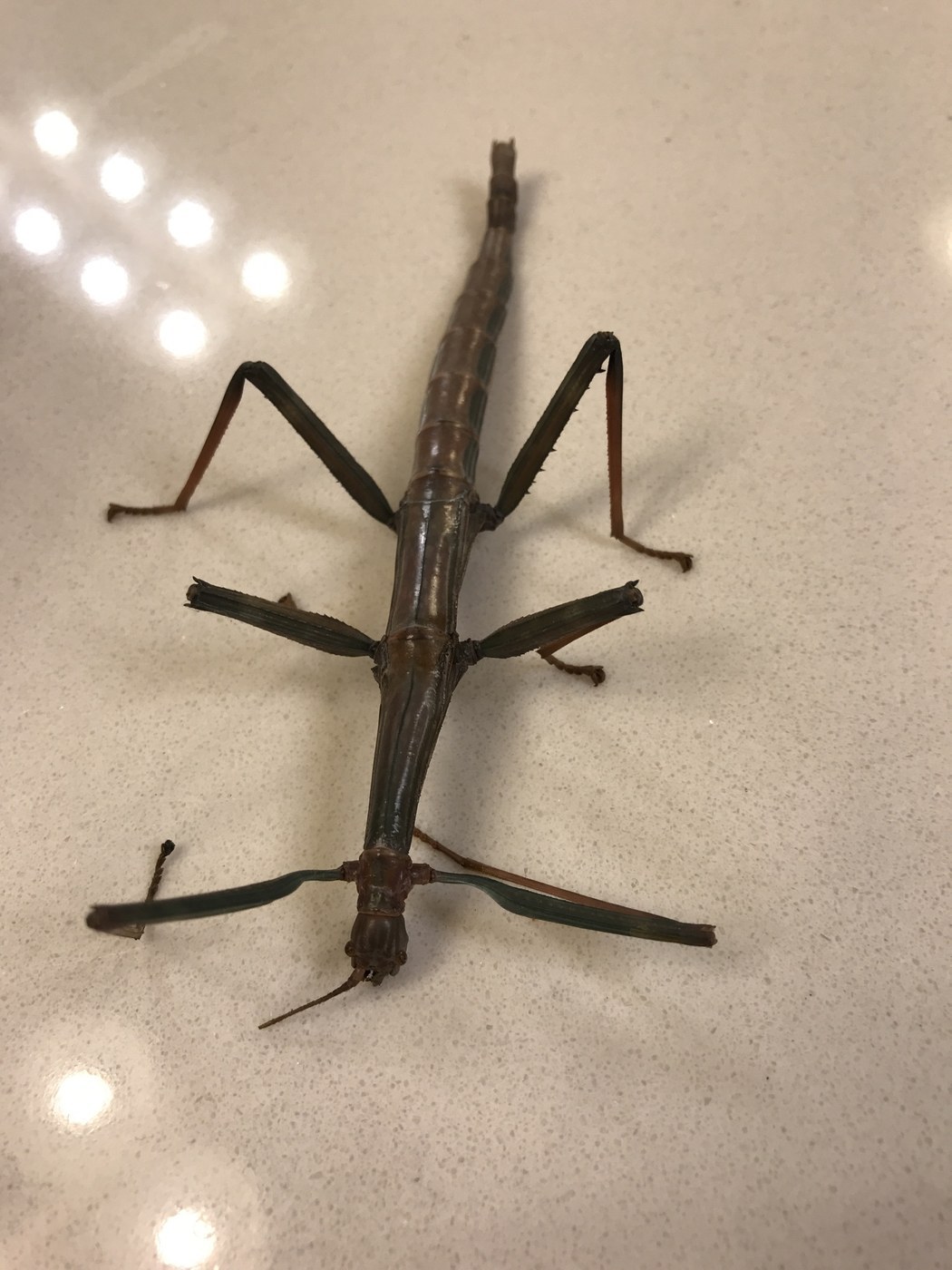
Key Visual Features
The giant walking stick (Megaphasma denticrus) holds the title of the longest insect native to North America, a striking example of stick mimicry.
- Size: Females can reach an impressive 5.5-7 inches (14-18 cm) in body length, among the longest insects on the continent; males are notably shorter and thinner, typically 4-5.5 inches (10-14 cm)
- Color: Brown, grayish-brown, or greenish-brown, providing camouflage against bark and dry vegetation; some individuals show a reddish tint on the legs
- Body shape: Extremely long, thin, and cylindrical, closely resembling a slender twig or stem, with almost no widening at any body segment
- Wings: Wingless — this species has no functional wings and relies entirely on stillness and its stick-like shape to avoid detection
- Legs: Very long, thin legs that add significantly to the insect's overall length; when at rest, the legs are often held extended fore-and-aft to elongate the twig illusion
- Antennae: Long and thread-like, adding to the elongated, linear appearance
- Other markings: Some individuals display small spines on the legs, particularly in males, but overall the body is fairly smooth compared to spinier stick insect species
Where and When You'd See It
Giant walking sticks are found across the central and southern United States, particularly in oak-hickory forests, woodland edges, and shrubby areas. They are active from summer through early fall, when adults reach their full size, feeding on leaves at night and remaining motionless among branches and foliage during the day. They are most often noticed clinging to tree trunks, shrubs, or found resting on structures near wooded areas during late summer.
Similar-Looking Bugs
- Common (northern) walking stick: A smaller, more frequently encountered relative with a shorter body, often mistaken for this species where ranges overlap; the giant walking stick is notably longer and bulkier when full grown
- Indian stick insect: Smaller overall and native to a different continent (South Asia) rather than North America
- Goliath stick insect or giant prickly stick insect: Both are non-native, much bulkier, and often spinier than the smooth, slender giant walking stick
- Actual twigs or plant stems: The mimicry is intentional; look closely for a small head with compound eyes, jointed legs, and antennae to distinguish the insect from real plant material
Quick ID Checklist
- Extremely long, thin, cylindrical body (among the longest insects in North America)
- Wingless with long, thread-like antennae
- Brown to greenish-brown coloring matching bark and twigs
- Legs held extended to elongate the stick-like silhouette
- Found on trees and shrubs in wooded areas of the central/southern US, late summer into fall
Frequently asked questions
What makes the giant walking stick notable compared to other stick insects?
It is recognized as the longest insect native to North America, with females reaching up to about 7 inches in body length.
How can I tell males from females?
Females are considerably longer and heavier-bodied, while males are shorter, thinner, and generally less bulky.
Does this species fly?
No, it is completely wingless and relies entirely on camouflage and stillness rather than flight to avoid detection.
When and where is it most likely to be seen?
It's most often encountered from summer into early fall in oak-hickory forests and wooded edges across the central and southern United States, typically resting motionless on branches or trunks.