Giant Water Bug Identification Guide
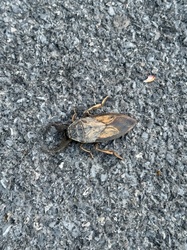
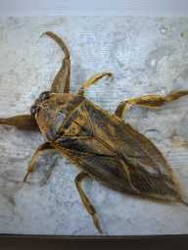
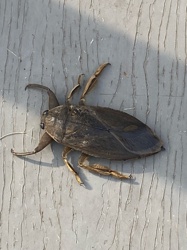
Identify the giant water bug by its large, flattened brown body, grasping front legs, and paddle-shaped swimming legs.
Read the full Giant Water Bug encyclopedia entry →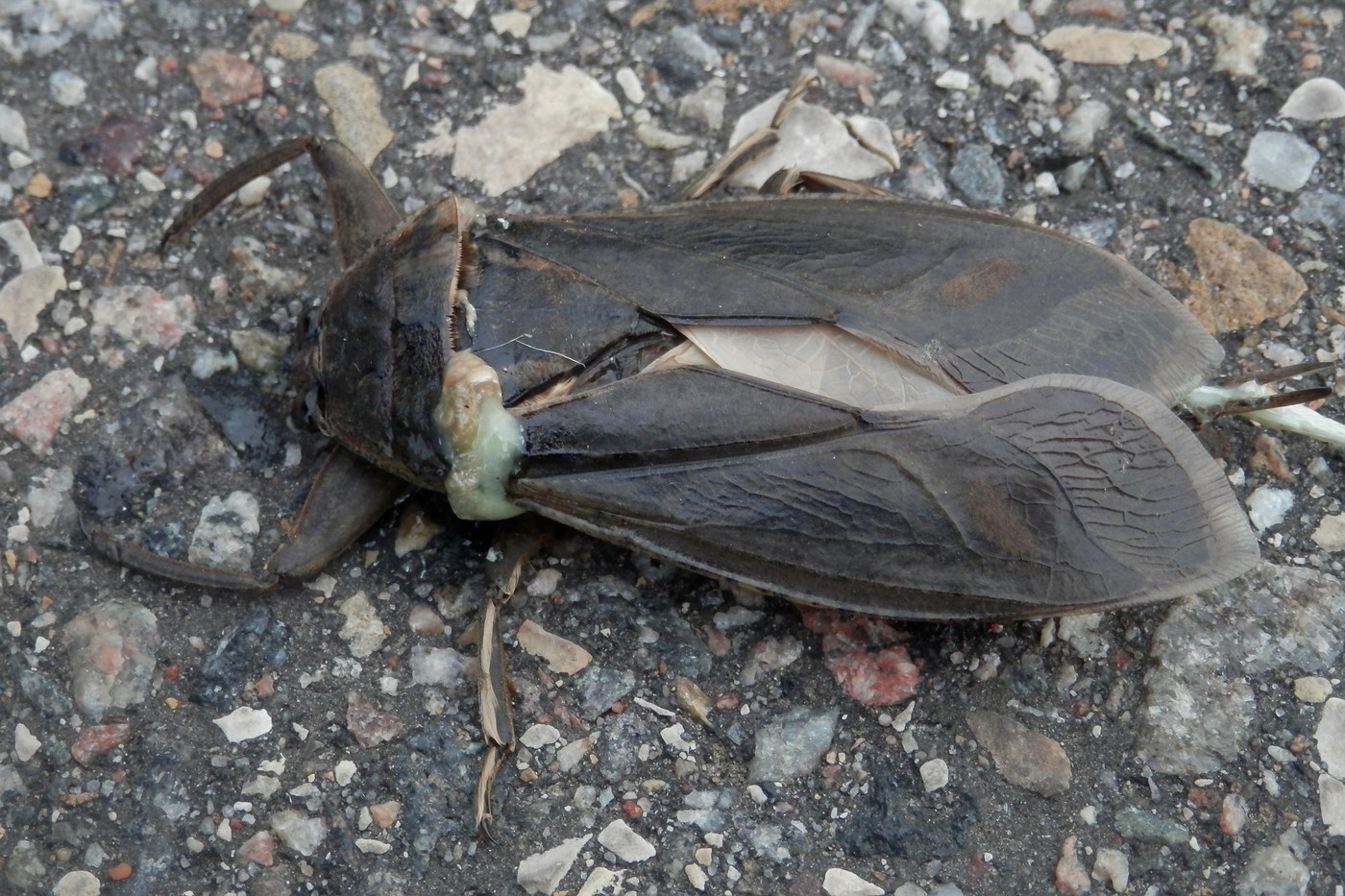
Key Visual Features
Giant water bugs are among the largest true bugs, easily recognized once you know their proportions and leg structure.
- Size: Large and unmistakable, with some species exceeding 2 inches in body length, making them one of the biggest aquatic insects.
- Body shape: Broad, flattened, and oval, streamlined for life in the water.
- Color: Brown to olive-brown, often blending well with pond debris and mud.
- Front legs: Thick, raptorial (grasping) front legs held folded like a praying mantis, used to seize prey.
- Hind legs: Flattened and fringed, forming paddle-like structures adapted for swimming.
- Rear end: Short, retractable breathing tubes (siphons) at the tip of the abdomen used to draw air while mostly submerged.
- Wings: Fully winged and capable of strong flight, which sets them apart from many other aquatic insects.
Where and When You'll See Them
Giant water bugs live in ponds, slow-moving streams, and marshes, where they cling to submerged vegetation or debris near the surface, waiting to ambush prey. They are strong fliers and are well known for turning up far from water at night, drawn to bright outdoor lights during warm months—a habit that has earned them the nickname "electric light bugs" in some regions. Look for them at ponds during the day and near porch or streetlights on summer nights.
Similar-Looking Bugs
- Backswimmers and water boatmen: Both are aquatic true bugs but are much smaller and more slender, lacking the giant water bug's bulky, grasping front legs.
- Cockroaches: When found indoors near lights, a giant water bug's oval brown shape can be mistaken for a large roach, but its paddle-shaped hind legs and grasping front legs are distinctive on closer look.
- Toe-biters (a regional name for the same insect): Not a different species, just another common name for the giant water bug.
Quick ID Checklist
- Large, flattened, oval brown body, often over an inch long
- Thick, folded grasping front legs
- Flattened, paddle-like hind legs for swimming
- Short breathing tubes at the tip of the abdomen
- Found clinging to pond vegetation or flying to lights on summer nights
Frequently asked questions
Why are giant water bugs sometimes found far from ponds?
They are capable fliers and are strongly attracted to bright artificial lights at night, which can carry them well away from water sources during warm months.
How can I tell a giant water bug from a cockroach if I find one near a light?
Check the front legs and hind legs—giant water bugs have thick, grasping front legs and flattened, paddle-shaped hind legs for swimming, features roaches don't have.
What are the tubes at the back of a giant water bug used for?
Short retractable siphons at the tip of the abdomen let the bug draw air from the surface while the rest of its body stays submerged.
Where do giant water bugs typically live?
In still or slow-moving freshwater habitats like ponds, marshes, and quiet stream edges, usually clinging to submerged plants near the surface.
Giant Water Bug identified by the community
Recent Giant Water Bug finds identified with Bug Identifier.