Golden Tortoise Beetle Identification Guide
Discover how to identify this tiny beetle known for its shimmering, metallic gold shell.
Read the full Golden Tortoise Beetle encyclopedia entry →Key Visual Features
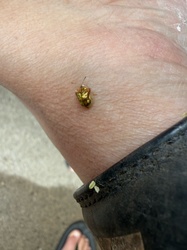
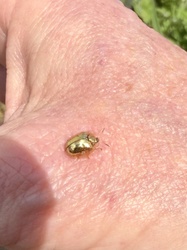
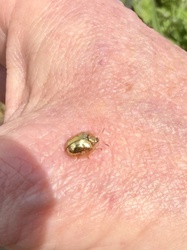
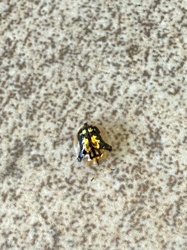
The golden tortoise beetle is a small beetle, about 5-7 mm long, best known for its brilliant, shiny gold or metallic bronze appearance, which can look almost like a drop of liquid metal on a leaf. Like other tortoise beetles, its body is flattened and shield-shaped, with the expanded shell covering the head and legs from above, giving it a smooth, oval outline with a slightly domed center. The metallic sheen is created by thin layers within the shell that reflect light, and this coloring can fade or shift to a duller orange or reddish tone when the beetle is stressed, handled, or nearing the end of its life stage.
Where and When You're Likely to See Them
This beetle is most commonly found on morning glory and sweet potato vines, where it feeds on leaves throughout the warm growing season, typically spring through early fall. Adults are usually seen resting flat on the upper surface of leaves during the day, where their reflective shell can catch sunlight and make them easier to spot despite their small size. Larvae, which carry a covering of shed skins and debris on their backs, are often found nearby on the same leaves.
Similar-Looking Bugs
The golden tortoise beetle is part of the larger tortoise beetle group, and its main distinguishing trait compared to other tortoise beetle species is the vivid, mirror-like gold coloring, which most relatives lack. It can be confused with other small metallic beetles such as certain jewel beetles or flea beetles, but those have a more elongated or convex body rather than the flat, disc-shaped shell of a tortoise beetle. If the color has faded to reddish-orange, it may resemble a plain tortoise beetle, so checking the flattened shape and host plant together with any remaining metallic sheen helps confirm the identification.
Quick ID Checklist
- Small, flattened, disc-shaped body about 5-7 mm long
- Bright metallic gold or bronze sheen, sometimes fading to reddish-orange
- Head and legs hidden beneath the shell when viewed from above
- Found on morning glory and sweet potato leaves
- Larvae carry debris and shed skin on their backs nearby
Frequently asked questions
Why does the golden color sometimes disappear?
The metallic gold sheen comes from reflective layers in the shell and can fade to a duller orange or reddish color when the beetle is disturbed, handled, or aging, so color alone isn't always a fixed identifier.
What plants are golden tortoise beetles usually found on?
They are most often found on morning glory and sweet potato vines, which serve as their primary host plants.
How is this beetle different from other tortoise beetles?
The defining feature is its vivid, mirror-like metallic gold or bronze coloring, which is much more striking than the plainer green, tan, or brown tones seen in many other tortoise beetle species.
Can I see the golden tortoise beetle's legs and head?
Rarely from above, since its flattened shell extends outward and covers the head and legs, giving it a smooth, unbroken oval outline typical of the tortoise beetle group.
Golden Tortoise Beetle identified by the community
Recent Golden Tortoise Beetle finds identified with Bug Identifier.