
Goliath Stick Insect Identification Guide
One of the heaviest stick insects, a large Australian phasmid with a stout body and mottled bark-like coloring.
Read the full Goliath Stick Insect encyclopedia entry →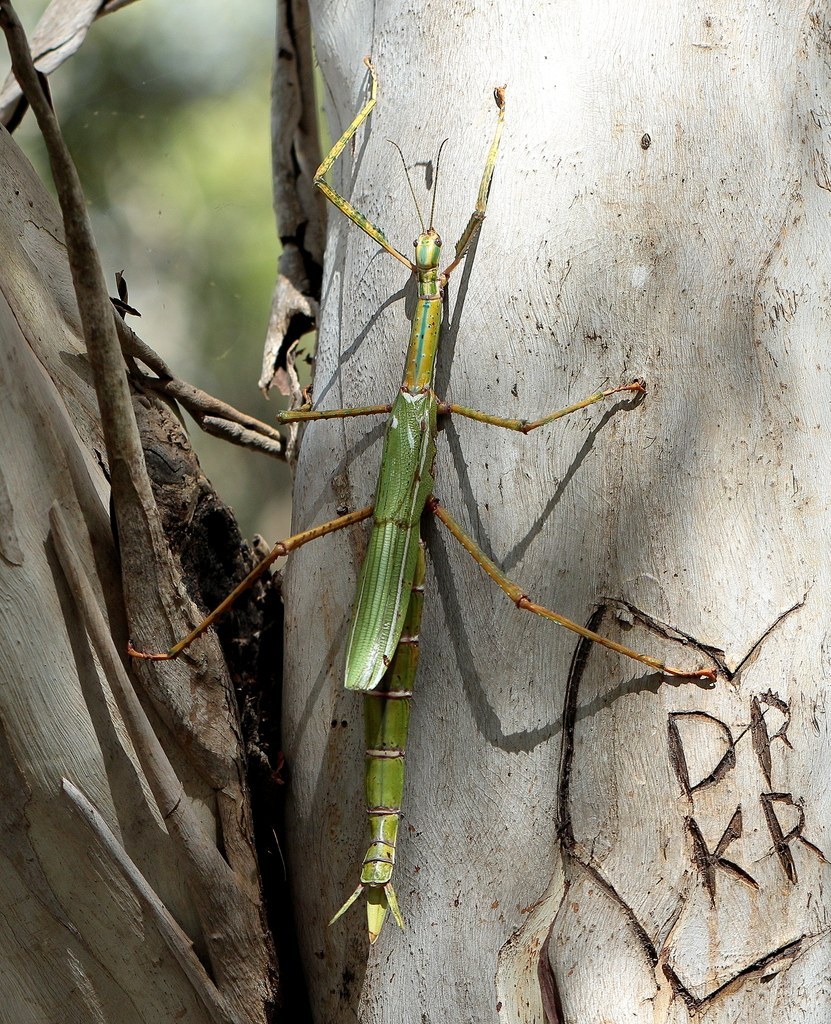
Key Visual Features
The Goliath stick insect (Eurycnema goliath) is a large, robust phasmid native to Australia, notable for its substantial size and coloring.
- Size: Large-bodied, with females reaching roughly 8-10 inches (20-25 cm) including outstretched legs, and a heavier build than many other long stick insects; males are smaller and slimmer
- Color: Typically green with mottled brown, tan, or grayish patterning along the body, sometimes with more uniformly green individuals; legs may show darker banding
- Body shape: Stout and elongated, thicker-bodied than slender twig-mimicking species, giving a sturdier, more substantial appearance
- Wings: Both sexes typically have wings; males tend to have more developed wings suited for flight, while females have shorter, less flight-capable wings, though the hind wings can show colorful patches when spread
- Legs: Long legs, often marked with mottled or banded coloring that helps break up the outline against bark or foliage
- Antennae: Moderate length, thread-like
- Other markings: The mottled green-and-brown patterning across the body and legs is a key camouflage feature, helping it blend with both live foliage and dry bark
Where and When You'd See It
Goliath stick insects are native to eastern Australia, inhabiting eucalyptus forests and woodland where they feed on foliage at night. They rest motionless among leaves and branches during the day, relying on their coloring and stillness to avoid detection, and become active to feed after dark. As with many phasmids in warm Australian climates, they can be found across the warmer months, with populations most noticeable in summer.
Similar-Looking Bugs
- Giant prickly stick insect: Bulkier and covered in numerous spines and thorn-like projections, unlike the comparatively smoother-bodied Goliath stick insect
- Giant walking stick: A North American species that is slimmer and more uniformly brown, without the mottled green coloring typical of the Goliath stick insect
- Other large green phasmids: Many share a generally similar green, elongated shape; the Goliath's notably stout, heavy body and mottled brown-green patterning help distinguish it from more slender relatives
- Leaves or bark fragments: The camouflage is designed to mimic both live and dead plant material; a close look reveals a distinct head, compound eyes, and jointed legs confirming it as an insect
Quick ID Checklist
- Large, stout body, one of the heavier-bodied stick insects
- Mottled green-and-brown coloring for combined leaf/bark camouflage
- Males more slender with better-developed wings than bulkier females
- Long legs with mottled or banded markings
- Found on eucalyptus foliage in eastern Australian woodland, active at night
Frequently asked questions
What sets the Goliath stick insect apart from other large phasmids?
It has an unusually stout, heavy body compared to more slender stick insect species, combined with mottled green-and-brown coloring that provides camouflage against both leaves and bark.
Do Goliath stick insects fly?
Males have better-developed wings suited to flight, while females have shorter wings and are more limited fliers due to their bulkier bodies.
Where does this species live?
It is native to eastern Australia, found in eucalyptus forests and woodland habitat.
How does its color help with camouflage?
The mottled green and brown patterning across the body and legs breaks up its outline, helping it blend with a mix of live foliage and dry bark or twigs.