
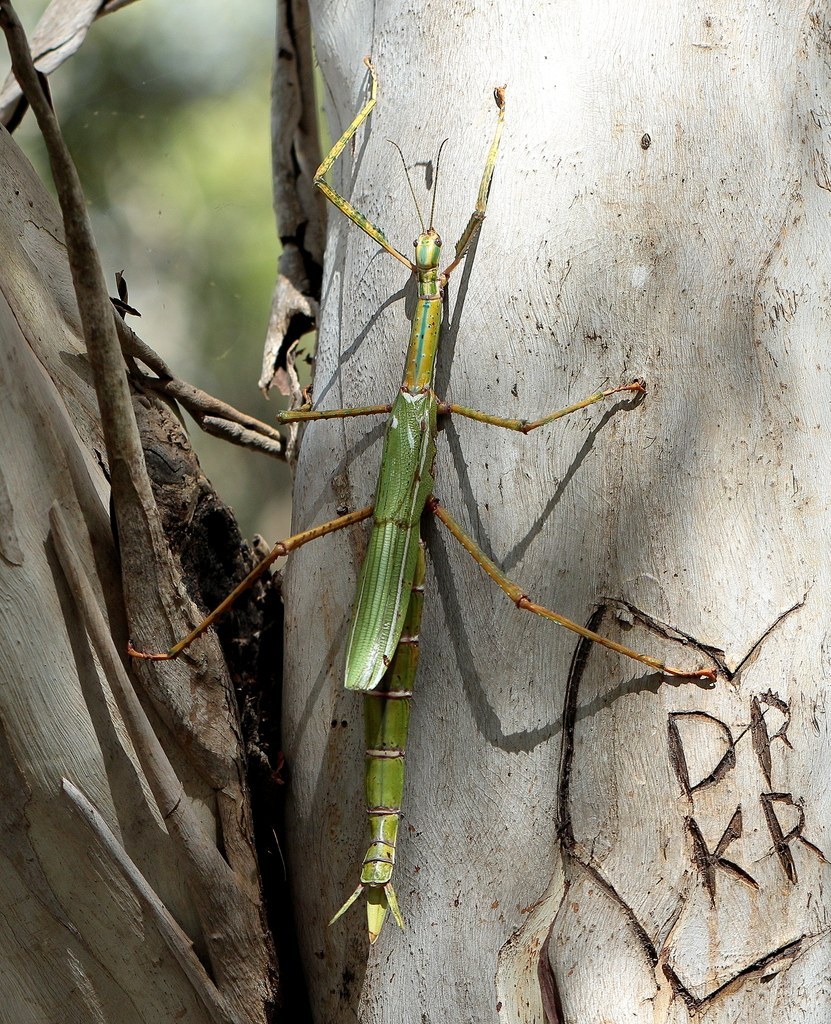
Goliath Stick Insect
Eurycnema goliath
One of the largest stick insects in the world, this vivid green giant unfurls startling crimson underwings when startled, briefly abandoning its disguise as foliage.
- Size
- Body up to 15 cm; females can span roughly 25 cm with legs extended
- Habitat
- Tropical and subtropical eucalypt forests and woodland canopy
- Danger
- Harmless
Spotted a bug like this?
Identify any bug or insect from a photo, free.
Overview
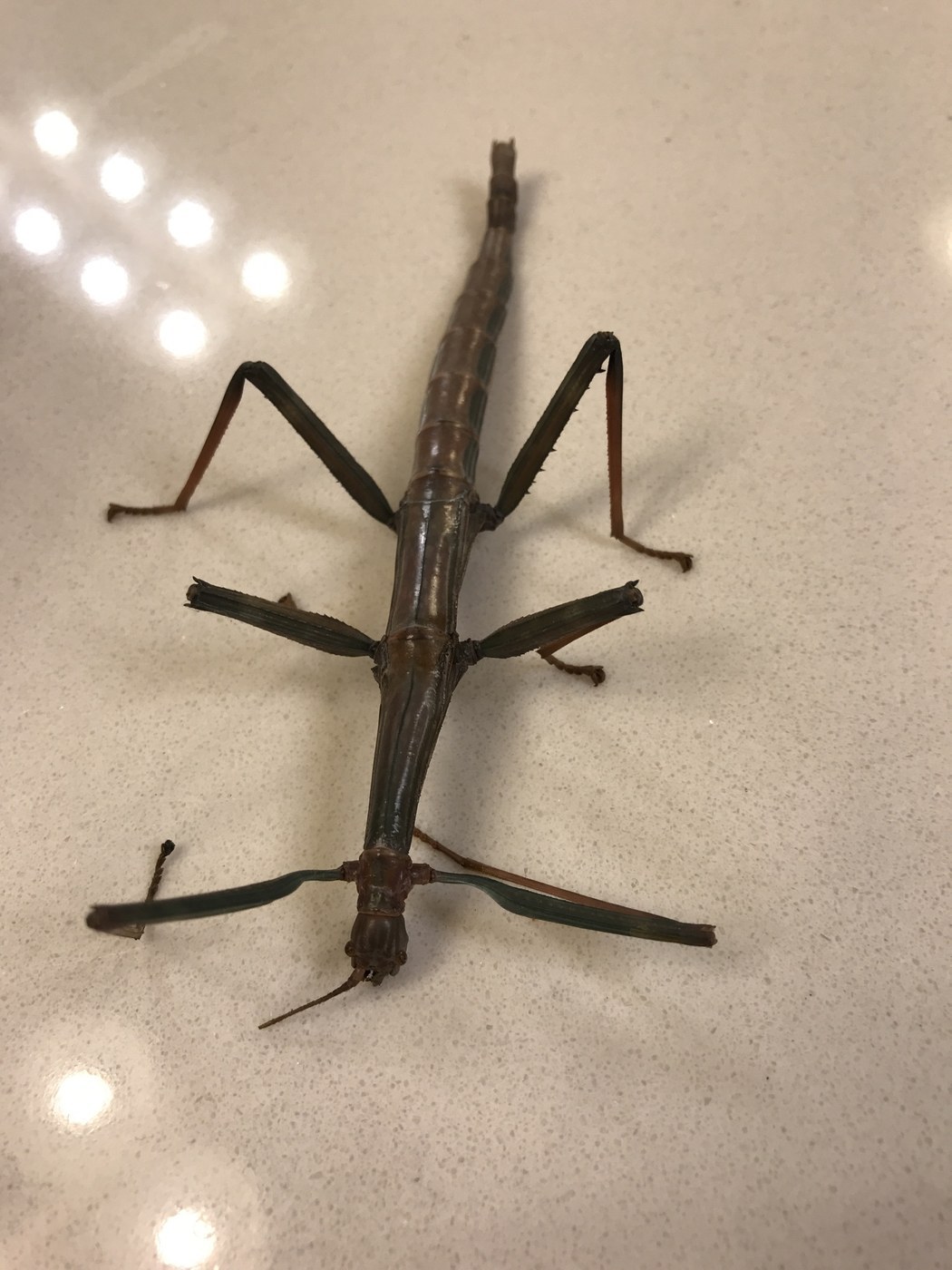
The goliath stick insect is among the heaviest and longest phasmid species found in Australia, with females reaching an overall length approaching a quarter of a metre when the legs are included. Its body is typically bright leaf-green with pale yellow stripes running along the sides, allowing it to blend almost seamlessly into the eucalyptus canopy it inhabits.
Native to the coastal regions of eastern and northern Australia and parts of New Guinea, this species spends most of its life high in tree foliage, feeding on eucalyptus and related leaves. Though its bulk and length are impressive, it is a harmless plant-feeder that relies on camouflage as its main defense, only revealing bright hindwing coloration as a last-resort startle display.
How to Identify
- Large, elongated body, typically bright green with cream or yellow lateral stripes
- Females are considerably larger and heavier-bodied than the more slender males
- Males possess fully developed wings capable of weak flight; females have shorter wings and rarely fly
- Hindwings flash red or pink markings when opened in a defensive display
- Long, thin legs and antennae that reinforce the leaf-and-twig disguise
- Distinguished from smaller Australian phasmids by its sheer size and vivid coloring
Habitat & Range
This species occurs along the eastern coast of Australia, from Queensland down into New South Wales, as well as in parts of New Guinea, favoring subtropical and tropical eucalypt forest and woodland. It lives primarily in the tree canopy, descending occasionally, and is most commonly observed at night when active on foliage, with sightings peaking during the warmer months.
Behavior & Diet
Goliath stick insects are nocturnal herbivores that feed on the leaves of eucalyptus and related trees, remaining still and camouflaged among branches by day. When threatened, an individual may rock back and forth to mimic wind-blown foliage, or suddenly flare its wings to expose bright hindwing patches and startle a predator before dropping away or gliding off. Males, being lighter and fully winged, are more mobile and can make short flights between trees, while the heavier females tend to stay closer to a single feeding area. As foliage feeders, they contribute modestly to canopy leaf turnover and serve as prey for birds and other predators.
Life Cycle
Females drop numerous hard-shelled eggs to the forest floor over an extended period, and these eggs may take several months to over a year to hatch depending on conditions. Newly hatched nymphs are dark-colored and more slender, gradually developing the green coloration and elongated form of adults through a series of molts. There is no pupal stage, as phasmids undergo incomplete metamorphosis. Development to full adult size can take many months, with sexual maturity reached after the final molt.
Frequently asked questions
How big does the goliath stick insect get?
It is one of the largest stick insects in the world, with females reaching around 15 cm in body length and an overall span near 25 cm with legs extended.
Do goliath stick insects fly?
Males have functional wings and can make short flights, while females have reduced wings and rarely leave their perch.
Why does it flash red when disturbed?
Opening its wings to reveal bright hindwing coloration is a startle display meant to briefly surprise a predator, giving the insect a chance to escape.
What does the goliath stick insect eat?
It feeds on the leaves of eucalyptus and related tree species in its native forest habitat.
Goliath Stick Insect guides
In-depth guides for identifying, understanding, and living alongside Goliath Stick Insect.
Other bugs you may enjoy
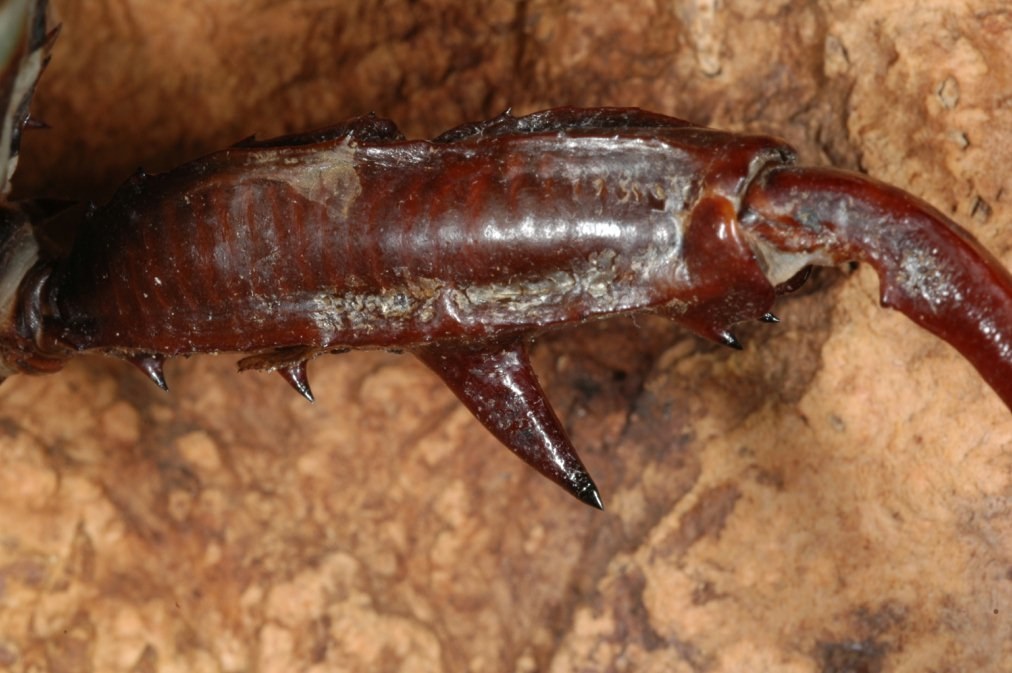
Walking Stick Insect
Trees, shrubs and leaf litter in forests, woodlands and gardens
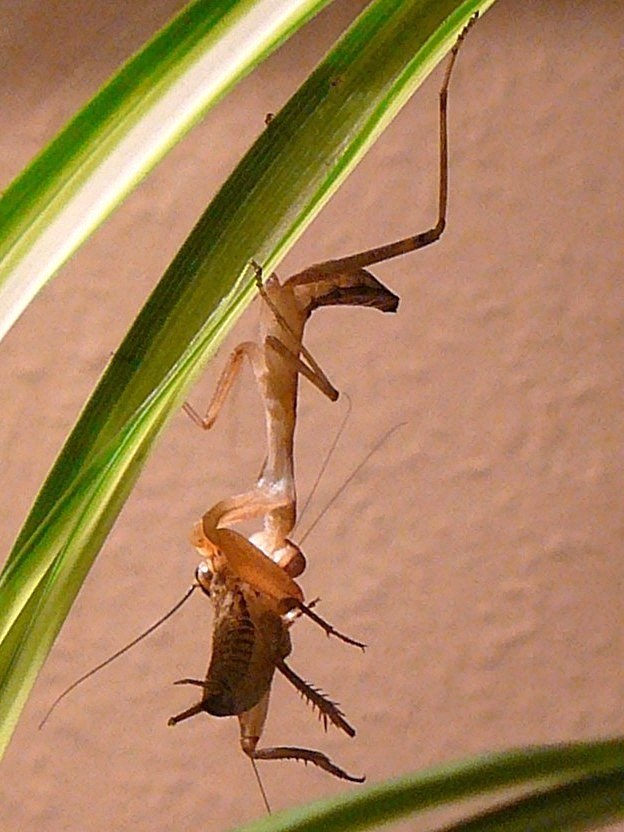
African Mantis
grasslands, shrubs, and gardens across sub-Saharan Africa
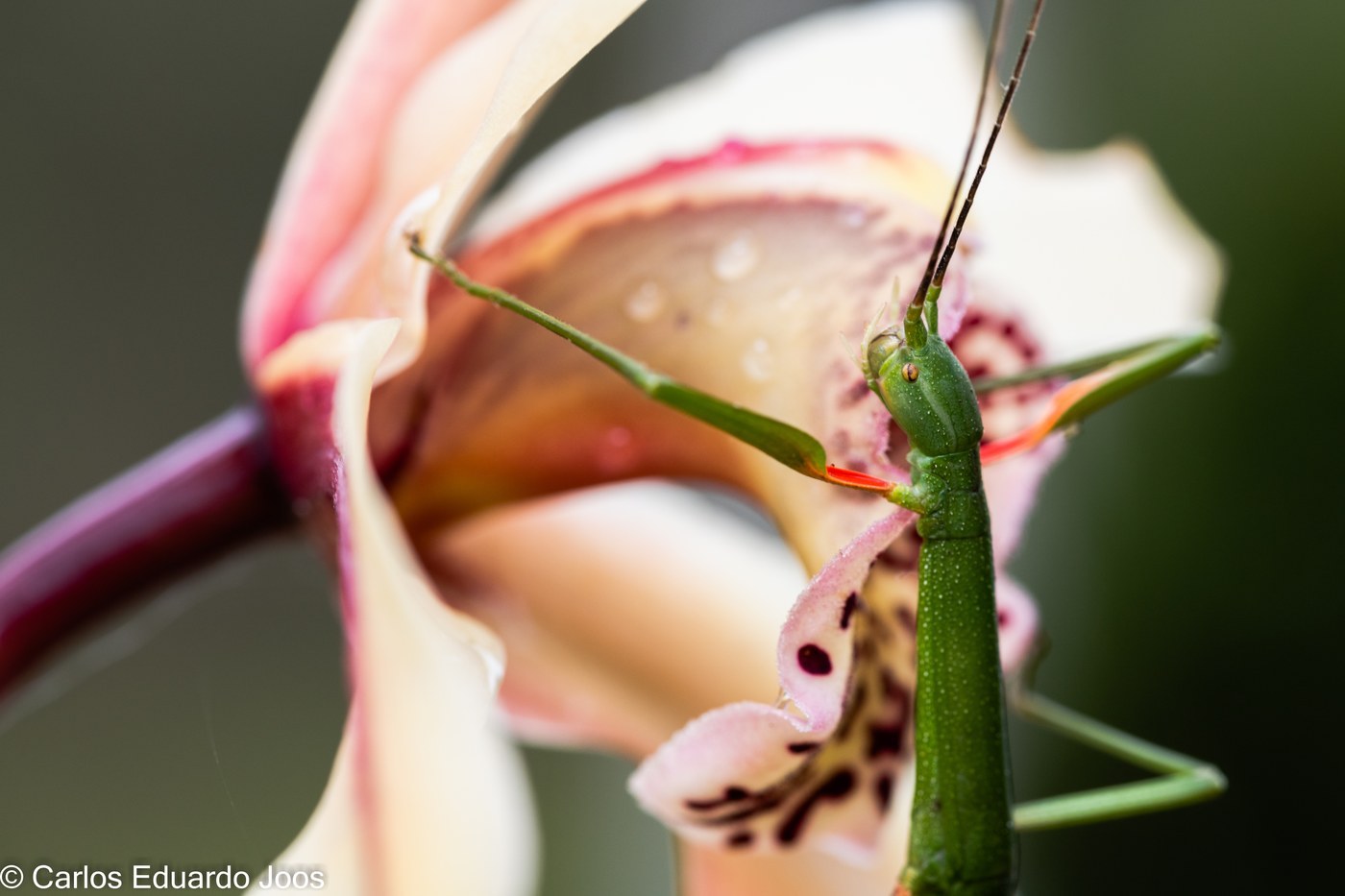
Walking Stick
Deciduous woodlands, forest edges, and shrubby vegetation
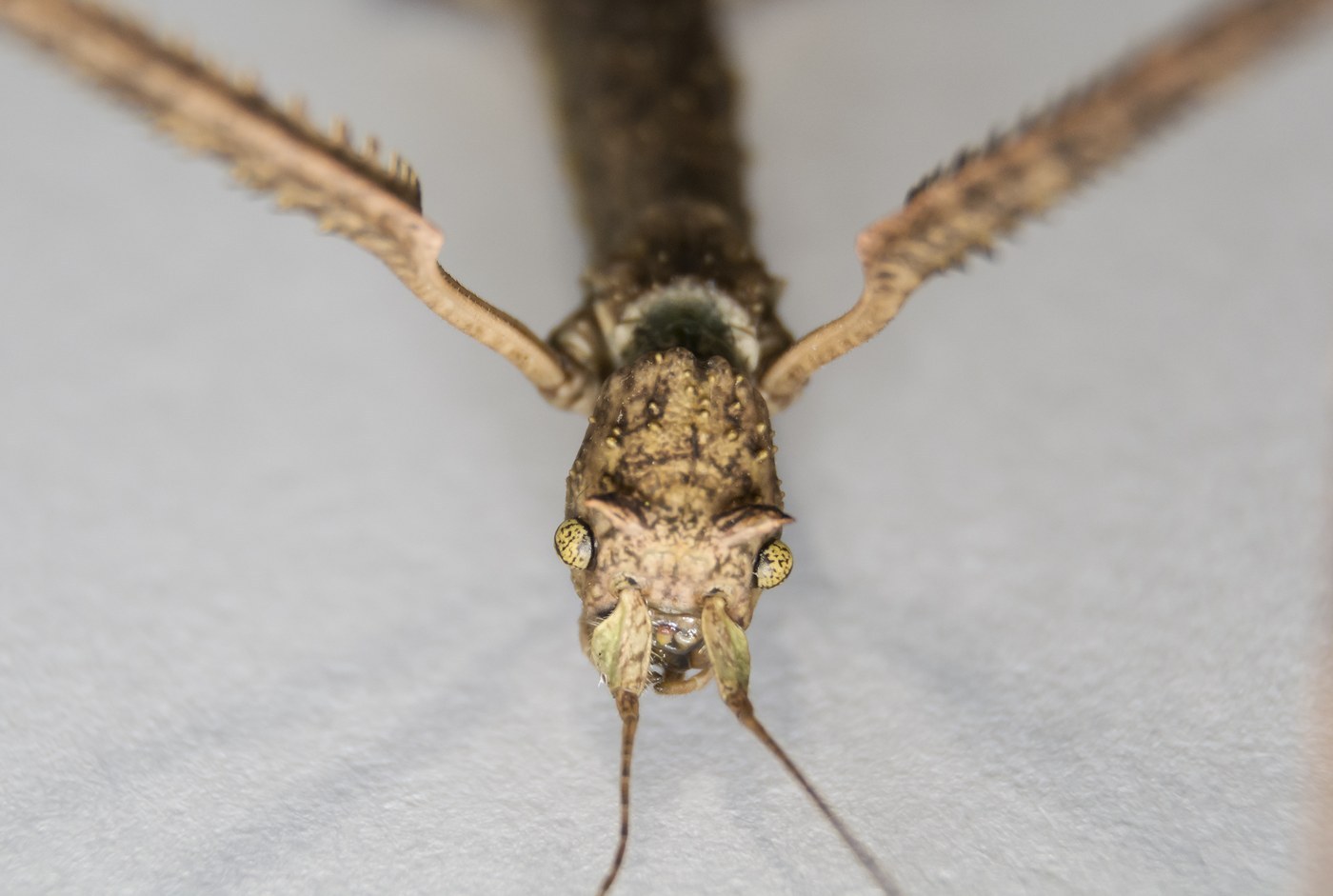
Vietnamese Walking Stick
tropical forests of Vietnam; widely kept in captivity worldwide
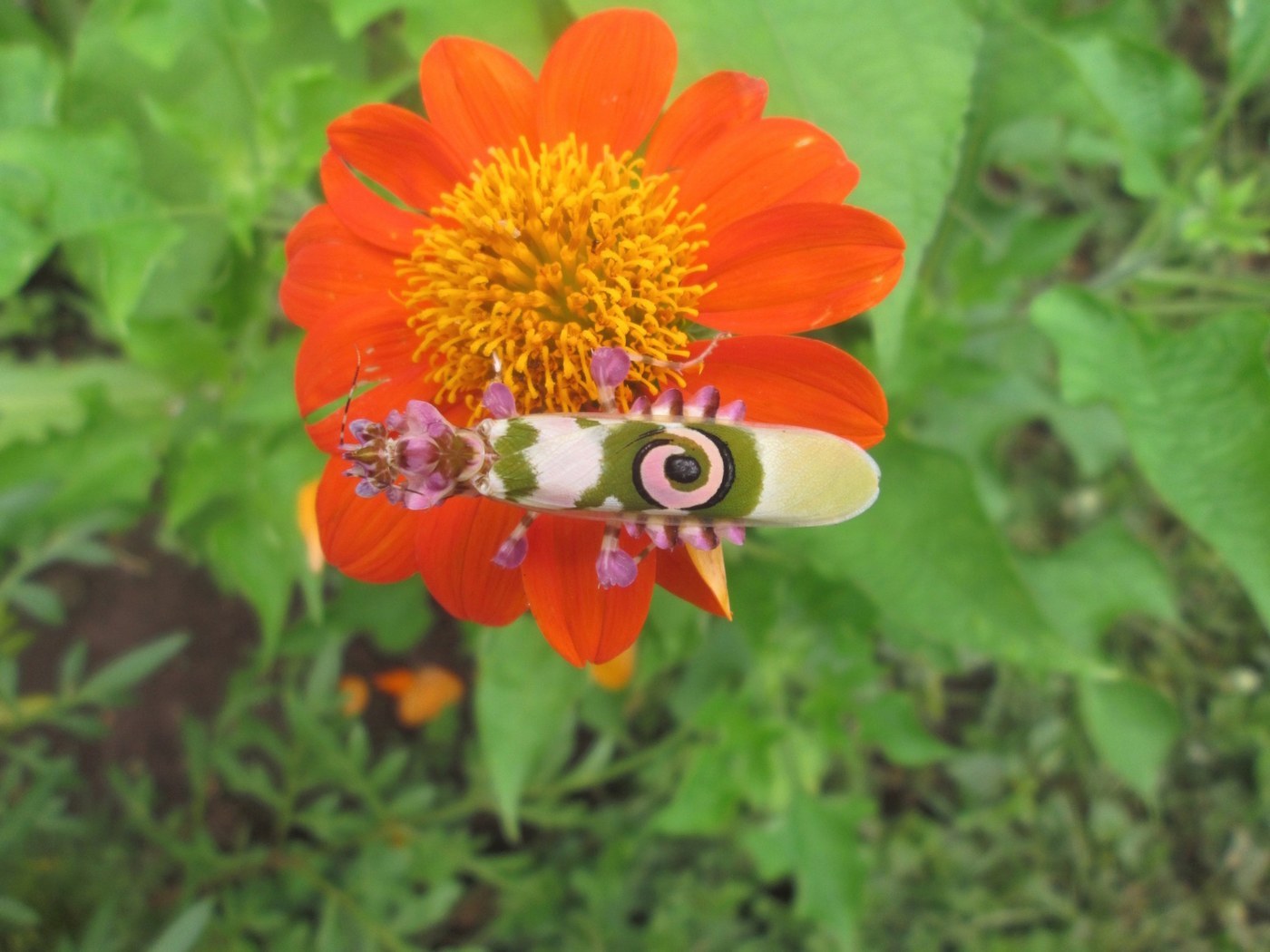
Spiny Flower Mantis
African savanna and woodland shrubs and flowering plants
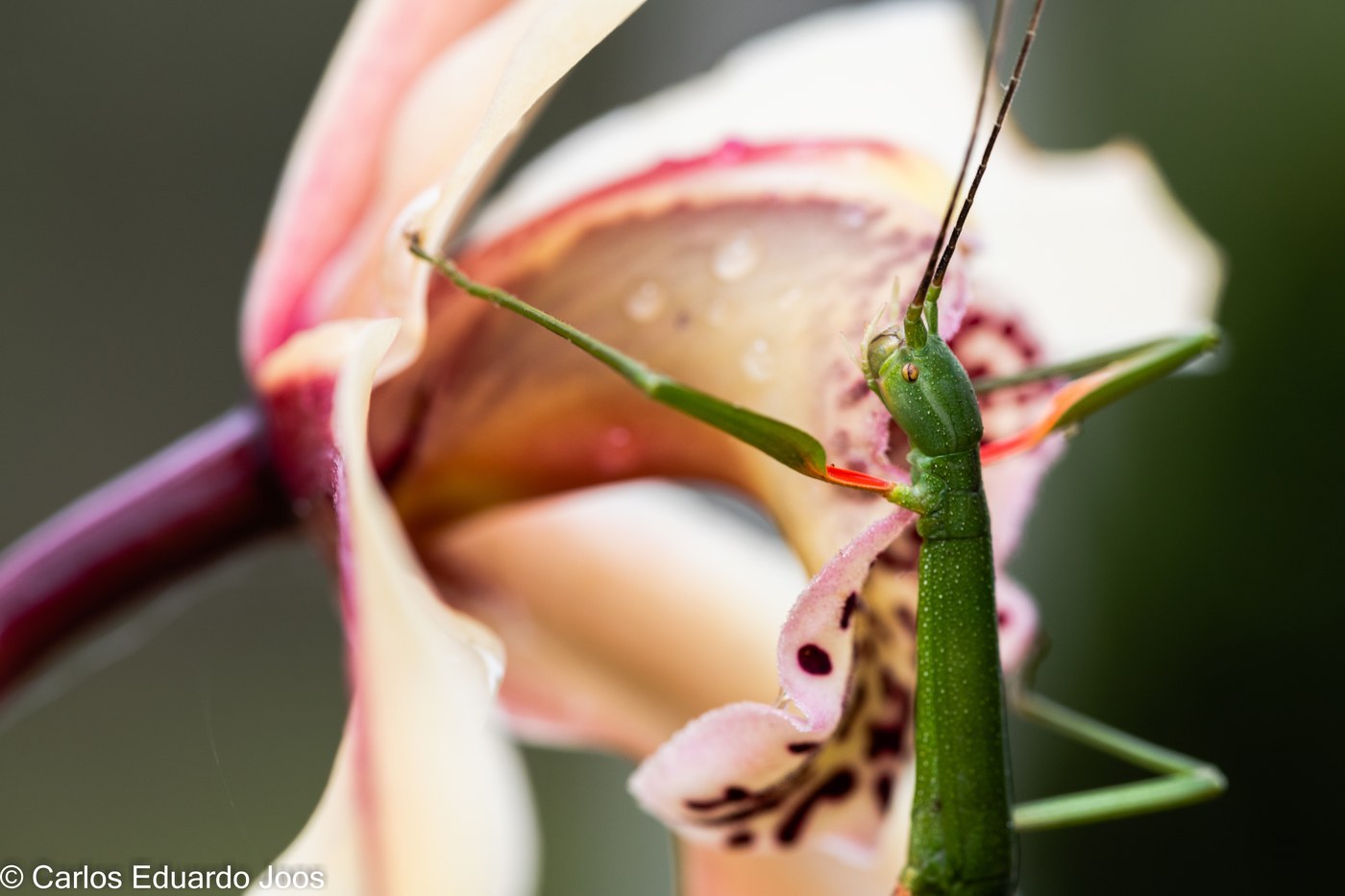
Northern Walkingstick
deciduous forests and woodland edges of the eastern and central United States and southern Canada
Praying Mantis
Gardens, meadows, shrubs, and tall grass
Orchid Mantis
tropical rainforests and flowering shrubs of Southeast Asia
Giant Prickly Stick Insect
eucalyptus forests and shrubland of eastern Australia and New Guinea
Javanese Leaf Insect
Tropical lowland and montane forest foliage
Giant Walking Stick
Deciduous woodlands, forest edges, and shrubby thickets
Leaf Insect
Tropical rainforest understory and canopy foliage