
Grain Moth Identification Guide
Recognize grain moths by their slender, pale wings and close association with stored cereal and grain products.
Read the full Grain Moth encyclopedia entry →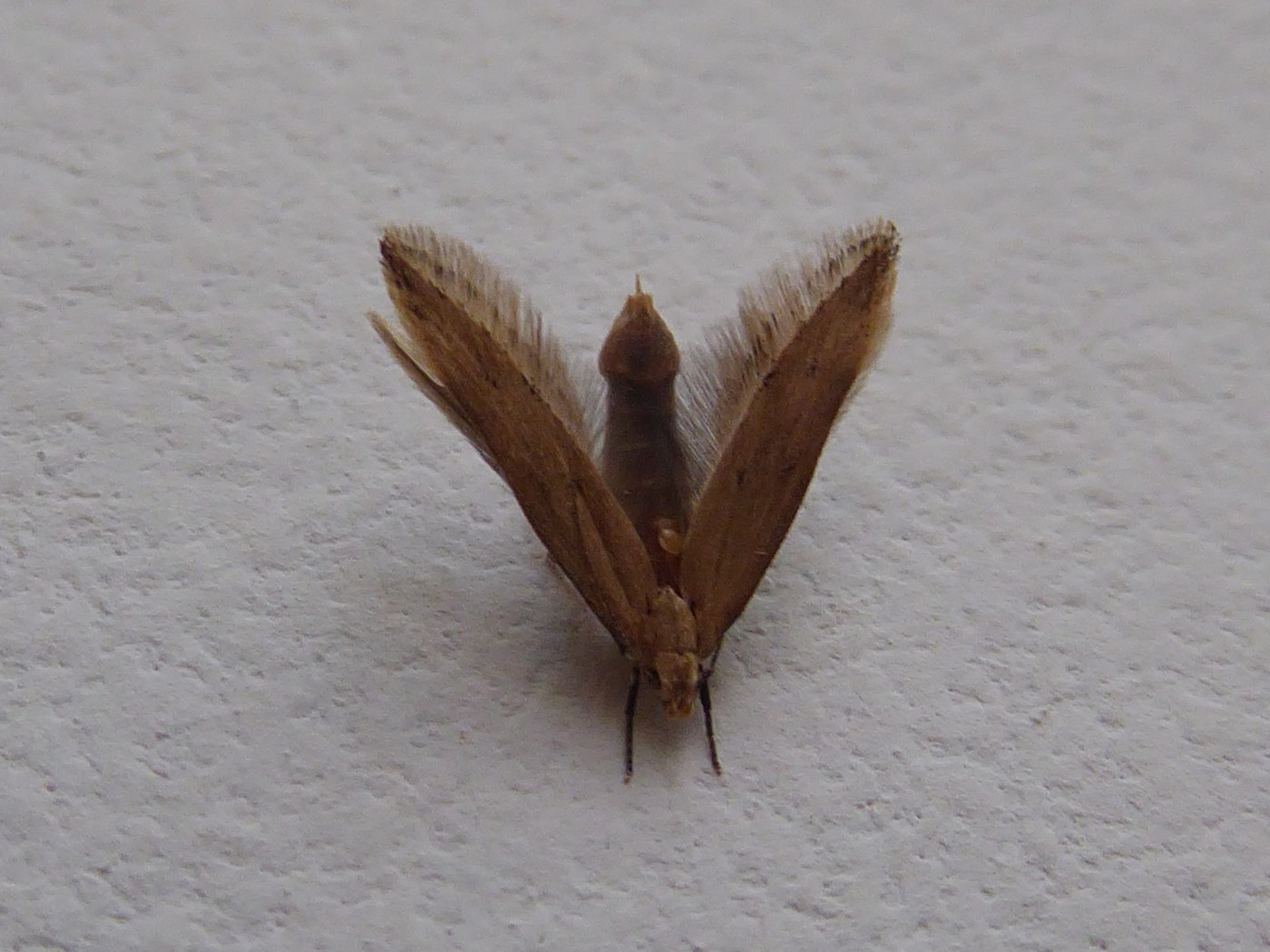
Key Visual Features
"Grain moth" commonly refers to small moths associated with stored cereal grains, such as the Angoumois grain moth (Sitotroga cerealella), recognized by their slender build and pale coloring.
- Size: Small moths with a wingspan of roughly 12-20 mm, similar in scale to other pantry moth species.
- Wing shape: Forewings are notably narrow and pointed, tapering toward the tip, giving a slimmer silhouette than broader-winged moths.
- Color: Generally pale buff, straw-colored, or grayish-tan across the forewings, without the sharp two-tone contrast seen in some other pantry moths.
- Hindwings: Distinctly narrow with a fringe of long hair-like scales along the trailing edge, often described as having a pointed or "feathered" tip.
- Resting posture: Wings fold closely along the body, giving an elongated, slender resting shape.
- Antennae: Thread-like, held back along the body when at rest.
- Larvae: Small, whitish caterpillars that develop inside individual grain kernels, largely hidden from view until the adult moth emerges through a small round exit hole in the kernel.
Where and When You'd See It
Grain moths are found indoors around stored whole grains and cereal products, including in pantries, grain storage containers, and food processing or storage areas. Adults are most active in the evening and at night, sometimes drawn to indoor lighting. Activity is generally more noticeable in warmer months but can persist indoors year-round wherever suitable stored grain is present. A telltale sign is finding small, round exit holes in individual grain kernels where an adult has emerged.
Similar-Looking Bugs
- Indianmeal moth: Larger, with a clearly two-toned wing (pale base, coppery-bronze tip), and generally associated with a broader range of dried food products rather than whole grain kernels specifically.
- Clothes moths: Similar small size, but with broader, more uniformly golden-tan wings and an association with fabric rather than stored grain.
- Other small tineid moths: Can appear superficially similar but generally lack the narrow, pointed wing shape and hair-fringed hindwing typical of grain moths.
Quick ID Checklist
- Small moth (12-20 mm wingspan) with narrow, pointed forewings
- Pale buff, straw, or grayish-tan coloring without bold two-tone contrast
- Hindwings fringed with long hair-like scales along the edge
- Larvae develop hidden inside individual grain kernels
- Small round exit holes in grain kernels are a strong identification clue
Frequently asked questions
How can I tell a grain moth from an Indianmeal moth?
Wing pattern is the key difference: grain moths have narrow, pointed wings in a fairly uniform pale tan color, while Indianmeal moths are larger with a clearly two-toned wing showing a coppery-bronze outer section.
Why don't I see grain moth larvae crawling around?
The larvae typically develop hidden inside individual grain kernels rather than moving around openly, only becoming visible as an adult moth once they emerge through a small exit hole.
What does grain kernel damage from this moth look like?
Look for small, round exit holes on the surface of individual grain kernels, which mark where an adult moth has emerged after completing its development inside.
When are grain moths most active?
Adults are typically most active during the evening and nighttime hours, and can sometimes be seen near indoor lighting in areas close to stored grain.