
Great Silver Water Beetle Identification Guide
Learn how to recognize Europe's largest aquatic beetle by its glossy black shell, keeled underside, and slow, deliberate swimming style.
Read the full Great Silver Water Beetle encyclopedia entry →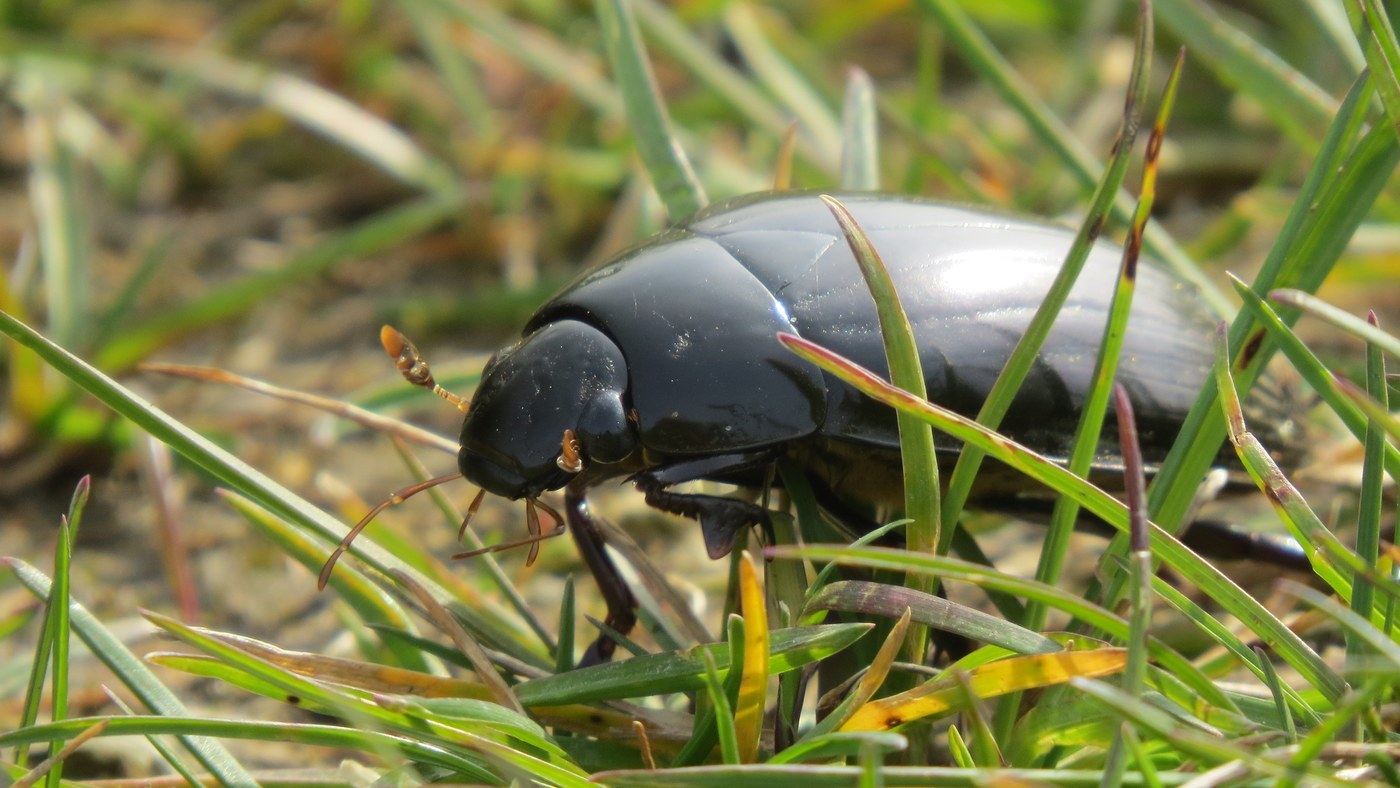
Key Visual Features
The great silver water beetle is one of the largest aquatic beetles found in still and slow-moving freshwater habitats, with a smooth, oval, strongly convex body that can reach well over an inch in length.
- Size: Typically 35-48 mm long, making it noticeably bigger than most other water beetles sharing its habitat.
- Color: Glossy black to dark olive-brown on top, with a subtle greenish or bronze sheen in bright light.
- Body shape: Broadly oval and highly domed, almost boat-shaped, tapering slightly at both ends.
- Underside: The belly bears a distinctive sharp mid-line keel or spine that projects backward between the hind legs — a feature unique among large water beetles in its range.
- Legs: The hind legs are flattened and fringed with hairs for swimming, but move alternately rather than in unison, giving a rowing rather than kicking motion.
- Antennae: Short, club-tipped antennae are often held tucked close to the head and are easy to overlook; instead, the long, thread-like maxillary palps near the mouth are more conspicuous and can be mistaken for antennae.
Where and When You'd See It
Look for this beetle in weedy ponds, ditches, marshes, and slow canals with abundant submerged and emergent vegetation. Adults are most active from spring through late summer, often surfacing briefly to take in air at the tip of the abdomen before diving again. They are strong fliers on warm nights and may turn up at lights near still water.
Similar-Looking Bugs
- Diving beetles (Dytiscidae): Smaller, more streamlined, and swim by kicking both hind legs together in a strong, fast stroke, unlike the slower rowing motion of the great silver water beetle.
- Other Hydrophilidae: Smaller silver water beetle relatives lack the prominent ventral keel and rarely approach the same large size.
- Water scavenger beetles generally: Share the clubbed, short antennae and palps, but few reach this species' size or possess the sharp breastbone-like keel.
Quick ID Checklist
- Large, glossy black, boat-shaped beetle over 3.5 cm long
- Sharp keel running along the center of the underside
- Short clubbed antennae paired with longer visible palps
- Alternating (rowing), not synchronized, swimming leg motion
- Found in still, vegetated freshwater ponds and ditches
Frequently asked questions
What is the easiest way to tell a great silver water beetle from a diving beetle?
Check the swimming motion and size: the great silver water beetle rows with its hind legs alternately and is noticeably larger and more domed, while diving beetles kick both hind legs together and have a flatter, more torpedo-shaped body.
Why does this beetle sometimes look like it has two sets of antennae?
It has short, club-tipped true antennae near the eyes plus much longer, thread-like maxillary palps near the mouth; the palps are more visible and are often mistaken for a second pair of antennae.
What underside feature confirms this species?
A sharp, keel-like ridge running along the midline of the thorax and abdomen, ending in a backward-pointing spine, is a reliable confirming feature not shared by most other water beetles.
What habitat is most likely to hold this beetle?
Still or slow-flowing freshwater with dense vegetation, such as weedy ponds, ditches, and marsh pools, is the typical habitat where adults are found.