
Great Southern White Identification Guide
A crisp white coastal butterfly with black zigzag wingtip markings and distinctive blue-tipped antennae.
Read the full Great Southern White encyclopedia entry →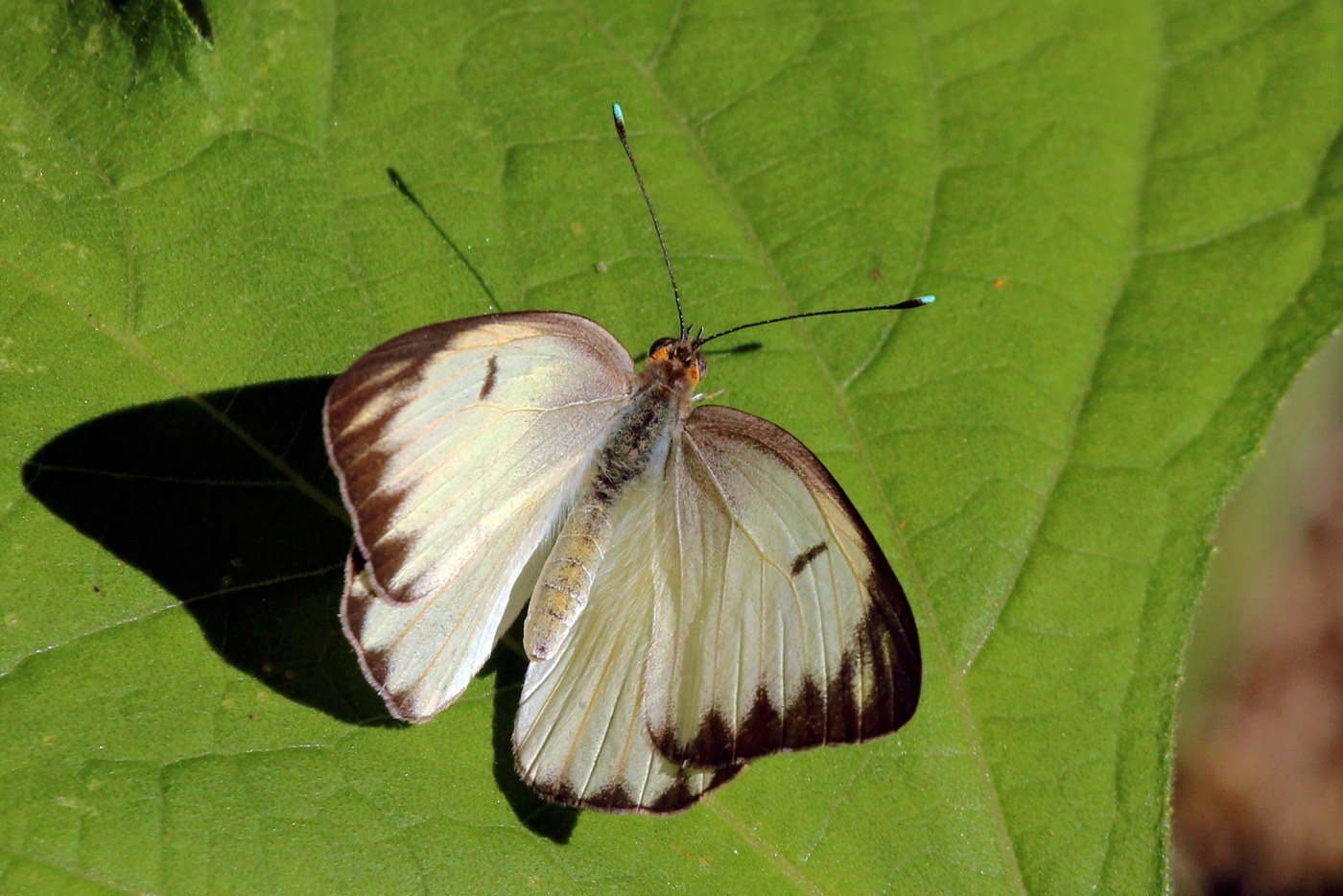
Key Features
The great southern white (Ascia monuste) is a medium-large white butterfly with a wingspan of about 2 to 2.75 inches. Look for:
- Bright, clean white wings overall.
- Black, zigzag or checkered markings along the outer edge of the forewing tip, which are bolder and more extensive in females and reduced to a few small marks in males.
- Antennae tipped with a distinctive pale blue club, visible at close range.
- A slender white body and rounded wing shape.
- Some individuals, especially migratory females, show a grayish or smoky tint on the wings rather than pure white.
Where and When to Spot It
This species is most common along the Gulf Coast, Florida, and southern coastal Texas, favoring beaches, dunes, salt marshes, and nearby gardens where saltwort and other mustard-family host plants grow. It is active nearly year-round in warm coastal climates and is well known for periodic mass migrations, when large numbers of individuals fly steadily in one direction, sometimes for days. Watch for it flying low and directly along open, breezy coastal habitat.
Similar Species
- Checkered white: Smaller, found more inland, with checkering scattered more broadly across the wing rather than concentrated at the tip.
- Cabbage white: Has one or two bold round black spots on the forewing rather than zigzag tip markings, and a pale yellow-green underside hindwing.
- Cabbage white males vs. great southern white males: The blue-tipped antennae and coastal habitat help confirm great southern white. Paying attention to habitat is especially useful here, since the great southern white rarely strays far from open, breezy coastal ground, while its look-alikes are more commonly encountered well inland.
Quick ID Checklist
- Medium-large, bright white butterfly
- Black zigzag markings concentrated at the forewing tip
- Pale blue-tipped antennae clubs
- Coastal, beach, and salt marsh habitat
- Sometimes seen in large directional migratory flights
FAQs
Frequently asked questions
Why do some great southern whites look grayish instead of pure white?
Migratory females in particular can show a smoky or grayish tint on their wings, which differs from the bright white typical of most individuals.
What is distinctive about this butterfly's antennae?
The antennae end in clubs tipped with a pale blue color, a helpful close-up feature for confirming identification.
Where is the best place to look for great southern whites?
Coastal habitats such as beaches, dunes, and salt marshes along the Gulf Coast and Florida are the most reliable places to find them.
What is the mass migration behavior sometimes seen in this species?
Large numbers of great southern whites occasionally fly together in a steady, directional stream, a striking movement that can last for days in certain years.