
Great Spangled Fritillary Identification Guide
Recognize the great spangled fritillary by its large size and rows of bright silver spots underneath.
Read the full Great Spangled Fritillary encyclopedia entry →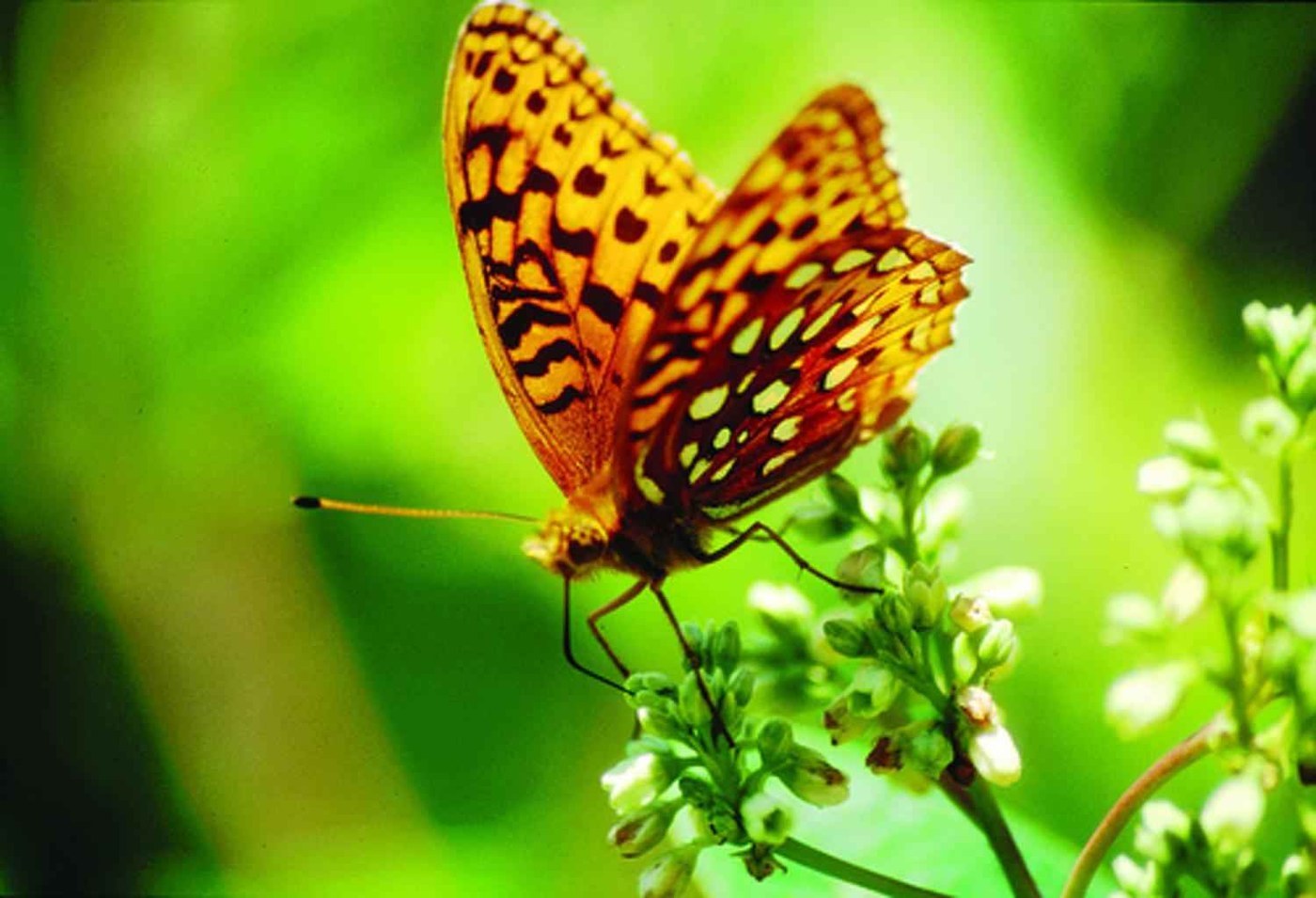
Key Visual Features
The great spangled fritillary (Speyeria cybele) is one of the largest and most widespread true fritillaries in North America.
- Size: Wingspan of about 2 1/2 to 4 inches (6.5–10 cm), notably large for a fritillary.
- Color: Rich orange upper wings covered with a dense network of black spots, streaks, and dashes; the base of the wings near the body is often darker, almost brownish-black, especially in females.
- Body shape: Sturdy body typical of the genus Speyeria, robust compared to smaller fritillary relatives.
- Wings: Rounded wing shape without tails, broader and less elongated than a gulf fritillary's wings.
- Underside: The hindwing underside is a warm tan to reddish-brown base covered with numerous large, bright silver spots ("spangles") arranged in organized rows, which is where the species gets its name.
- Sex differences: Females tend to be larger and darker at the wing base than males, with more contrast between the orange and black markings.
- Antennae: Clubbed antennae typical of brush-footed butterflies.
Where and When You'll See One
Great spangled fritillaries are found across much of the northern and central United States and southern Canada, in meadows, open woodlands, prairies, and fields, especially where violets grow, since violets are the required host plant for the caterpillars. Adults fly from early summer through early fall, and are frequently seen nectaring at composite flowers like milkweed, coneflower, thistle, and bee balm. They tend to fly with a strong, somewhat bounding pattern low over open vegetation.
Similar-Looking Bugs
- Gulf fritillary: Has more elongated, narrower wings and is generally found in warmer southern regions, whereas the great spangled fritillary has rounder wings and favors cooler, more northern habitats.
- Other Speyeria fritillaries (e.g., Aphrodite fritillary): Very similar in size and pattern; subtle differences in the width of certain underside bands and the darkness of the wing base are needed to separate them reliably.
- Variegated fritillary: Smaller, with a duller mottled tan-brown underside lacking the bright, well-defined silver spangles.
Quick ID Checklist
- Large orange wings densely marked with black spots and streaks
- Dark, almost brownish-black shading near the wing base
- Rows of large, bright silver spots on the hindwing underside
- Rounded, broad wings without tails
- Found in meadows and open areas near violets across northern/central North America
Frequently asked questions
Where does the great spangled fritillary get its name?
The 'spangled' part refers to the rows of large, bright silver spots that cover the underside of the hindwing, which catch the light and stand out clearly against the tan-brown background.
How can I tell males and females apart?
Females tend to be larger with darker, more brownish-black shading near the wing base, while males show less contrast and appear a bit more uniformly orange overall.
What plant is important for finding this butterfly's caterpillars?
Violets are the required host plant for great spangled fritillary caterpillars, so meadows, woodland edges, and fields with violets are good places to look for both adults and evidence of breeding activity.
How do I tell this species apart from the gulf fritillary?
Wing shape and range are the best clues — the great spangled fritillary has broader, more rounded wings and favors cooler northern and central regions, while the gulf fritillary has longer, narrower wings and prefers warmer southern climates.