
Green Drake Mayfly Identification Guide
A large, upright-winged mayfly whose seasonal mass emergences make it one of the most recognizable stream insects.
Read the full Green Drake Mayfly encyclopedia entry →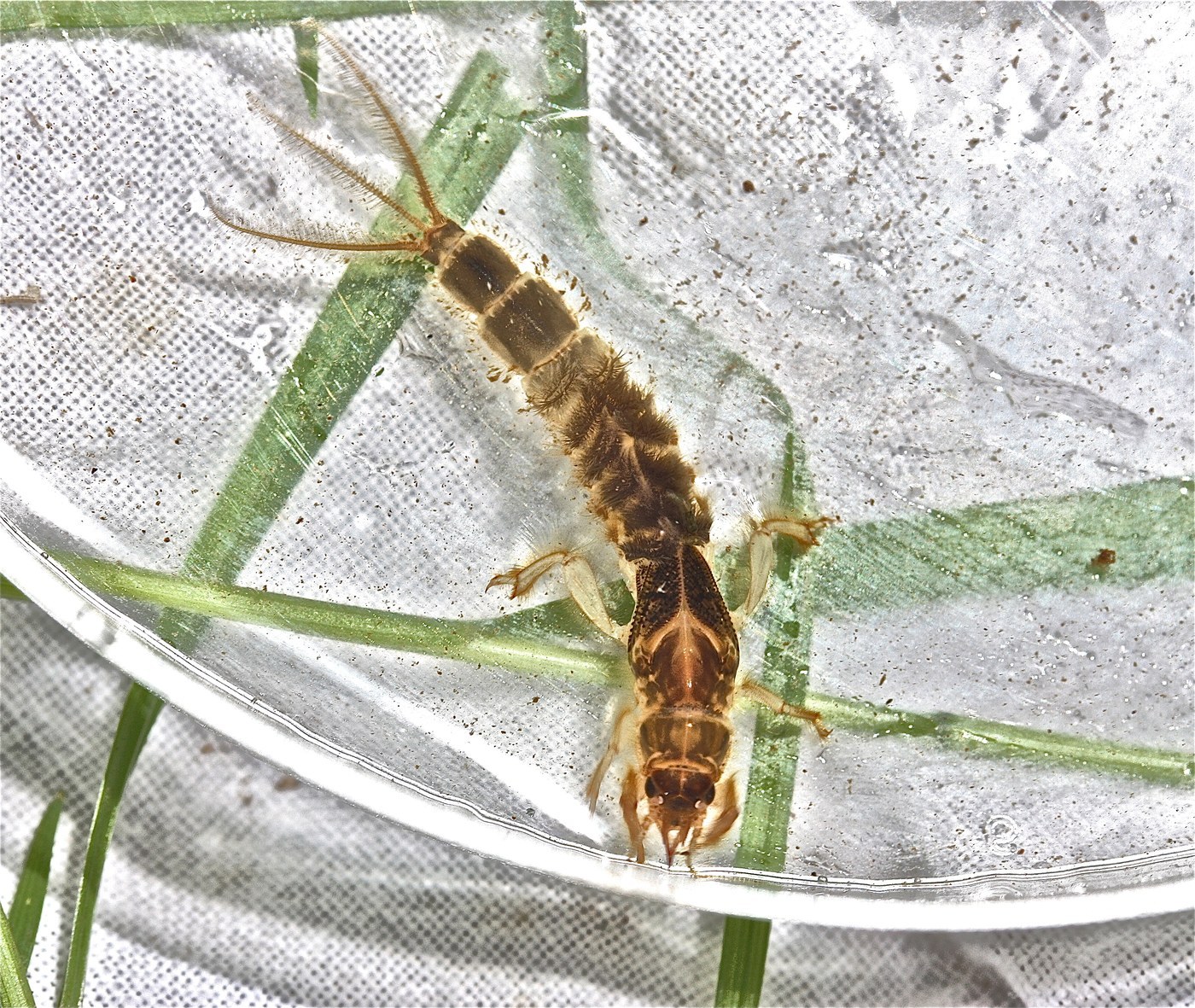
Key Visual Features
The Green Drake Mayfly is one of the larger mayflies found in North American streams, with a body length (excluding tails) often reaching 0.6 to 0.9 inches (15 to 23 mm).
- Wings: Large, upright, triangular wings held vertically together above the body at rest, a classic mayfly posture. The wings often show a mottled, cream-and-brown or olive-and-tan pattern with prominent veining.
- Body color: The body is typically a mottled yellowish-green to olive-tan, which is the source of the "green" in its common name, though the shade can range from pale cream to darker olive depending on the individual and stage.
- Tails: Two or three long, thread-like tail filaments extend from the rear of the abdomen, often as long as or longer than the body itself.
- Legs and antennae: Slender legs and very short, bristle-like antennae, both typical of mayflies.
- Body shape: A soft, elongated abdomen with a slightly humped thorax where the wings attach.
Where and When You'd See It
Green Drake Mayflies are associated with clean, cold, well-oxygenated rivers and streams, particularly in mountainous or upland regions. They are best known for dramatic, often brief mass emergences in late spring to early summer, when large numbers of adults appear over the water within a short window, sometimes concentrated around dusk. Adults are short-lived and are typically seen fluttering weakly above riffles and pools or resting on streamside vegetation during the emergence period.
Similar-Looking Species
- Giant Mayfly: Generally larger and often shows a more uniform, darker body color rather than the mottled green-tan pattern of the Green Drake.
- March Brown Mayfly: Emerges earlier in the season and tends to show browner, less green-tinted wing mottling.
- Other drake species: Several related mayflies share the upright-wing, mottled body look; the timing of emergence and the specific habitat (cold, fast, clean water) help narrow down the Green Drake specifically.
Because many mayfly species look broadly similar, the combination of large size, mottled olive-tan wings, and a well-known, synchronized emergence period is often the best clue for field identification.
Quick ID Checklist
- Large upright wings held vertically together at rest
- Mottled yellowish-green to olive-tan body and wing pattern
- Two to three long tail filaments
- Found over clean, cold, fast-flowing streams and rivers
- Known for sudden, large mass emergences in late spring to early summer
Frequently asked questions
Why are Green Drake Mayflies associated with a specific time of year?
This species is known for a synchronized mass emergence, typically in late spring to early summer, when large numbers of adults appear over the water within a short period, making the timing itself a useful identification clue.
What makes the wings of a Green Drake Mayfly distinctive?
The wings are large, held upright above the body, and show a mottled cream, tan, and olive-green pattern with clearly visible veins, differing from the more uniform wings of some other mayfly species.
How can I tell a mayfly apart from a similar-looking damselfly?
Mayflies hold their wings upright and pressed together above the body and have long, thread-like tail filaments, while damselflies fold their wings flat against the body or hold them slightly open and lack those long tail threads.
Does the body color of a Green Drake Mayfly vary?
Yes, the mottled body can range from pale cream to a richer olive-green or tan, so it is best identified using a combination of size, wing pattern, tail length, and the habitat and season in which it is found.