Green Grasshopper Identification Guide
Learn the field marks that separate common green grasshoppers from their many lookalikes in meadows and grassy fields.
Read the full Green Grasshopper encyclopedia entry →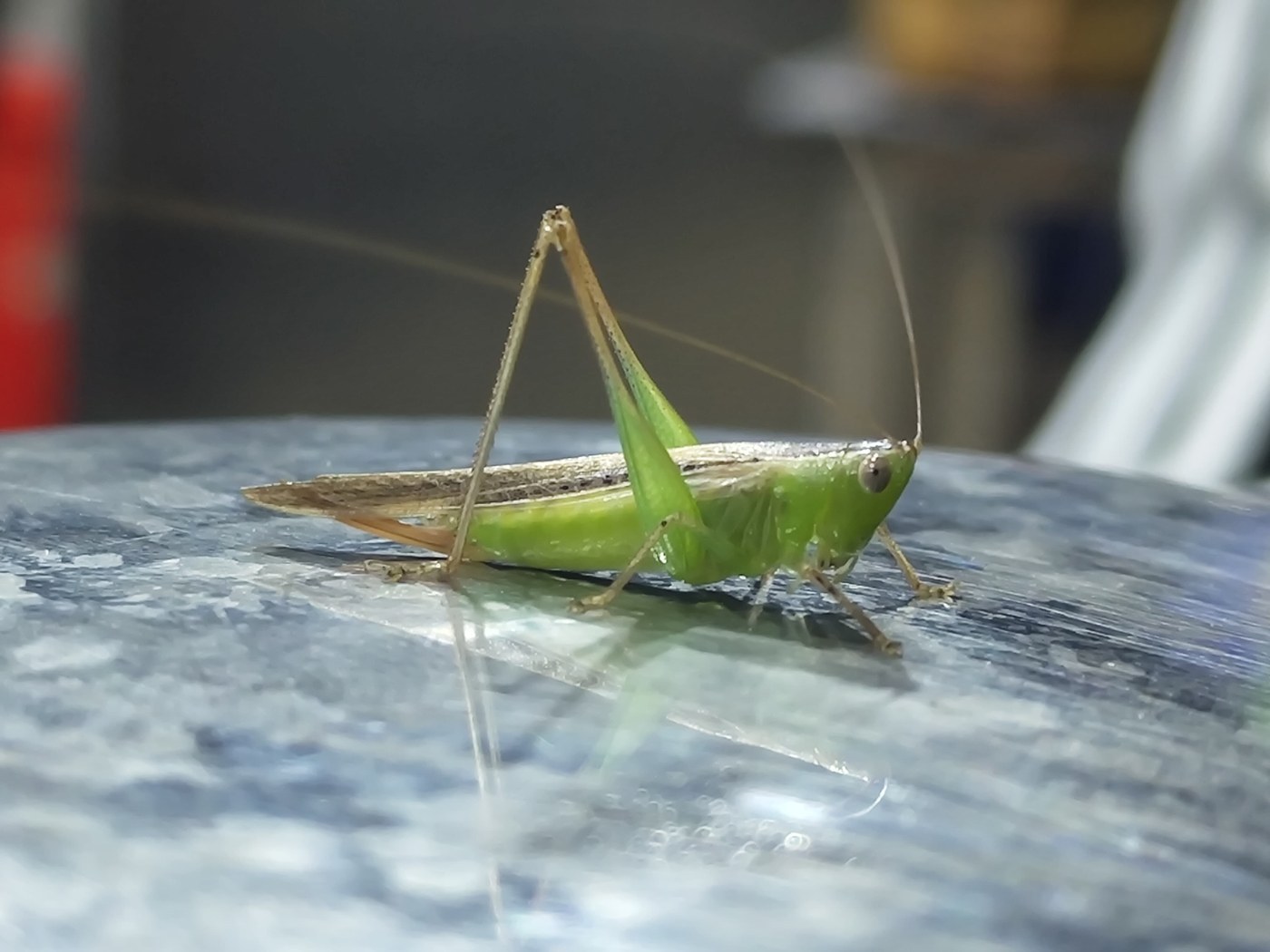
Key Visual Features
"Green grasshopper" commonly refers to small to medium grassland grasshoppers with predominantly green coloring, such as the common green grasshopper found in meadows and pastures. Adults typically measure about 0.6 to 1 inch long.
- Color: Bright to olive green overall, sometimes with a brownish or golden-brown stripe or patch along the back and wings.
- Body shape: Compact, cylindrical body with a rounded head and short, stout antennae compared to katydids or crickets.
- Legs: Long, strong hind legs adapted for jumping, often marked with faint banding.
- Wings: Wings typically reach close to the tip of the abdomen in fully winged individuals, though some related species have shorter wings.
- Underside and face: Pale green or yellowish underside, with a relatively short face profile compared to more elongated grasshopper species.
Where and When You'll See It
Green grasshoppers are common in grassy meadows, pastures, roadside verges, and open fields with dense low vegetation. They are most active and easiest to spot from late spring through summer into early fall, particularly on warm, sunny days when they perch on grass stems or hop between them. Males are often located first by the sound of their stridulation (leg-against-wing rubbing) rather than sight.
Similar-Looking Species
- Meadow grasshopper: Similar green coloring but usually has noticeably shorter wings that do not reach the tip of the abdomen, making it flightless or a weak flier.
- Other band-winged or field grasshoppers: May show green coloring as juveniles but develop browner tones and different wing patterns as adults.
- Katydids: Also green, but katydids have much longer, thread-like antennae (often longer than the body) compared to the short antennae of true grasshoppers.
Quick ID Checklist
- Overall green body, sometimes with a brown dorsal stripe
- Short, stout antennae (not thread-like)
- Long hind legs built for jumping
- Wing length reaching near or short of the abdomen tip depending on species
- Found in grassy meadows and fields, most active late spring through summer
Frequently asked questions
How do you tell a green grasshopper from a katydid?
Grasshoppers have short, stout antennae usually shorter than the body, while katydids have very long, thread-like antennae that often exceed body length.
Why are some green grasshoppers hard to see?
Their green coloring closely matches surrounding grass blades, providing effective camouflage until they move or jump.
Do all green grasshoppers have full-length wings?
No, some species or individuals have shorter wings that don't reach the tip of the abdomen, while others have wings extending close to or past it; wing length is a useful feature for narrowing down the exact species.
When is the best time to find green grasshoppers?
Warm, sunny days from late spring through summer are ideal, as they're most active perching and hopping among grass stems in meadows and fields.
Green Grasshopper identified by the community
Recent Green Grasshopper finds identified with Bug Identifier.