
Greenhead Fly Identification Guide
Identify greenhead flies by their large iridescent green eyes, stocky body, and strong presence near coastal marshes in summer.
Read the full Greenhead Fly encyclopedia entry →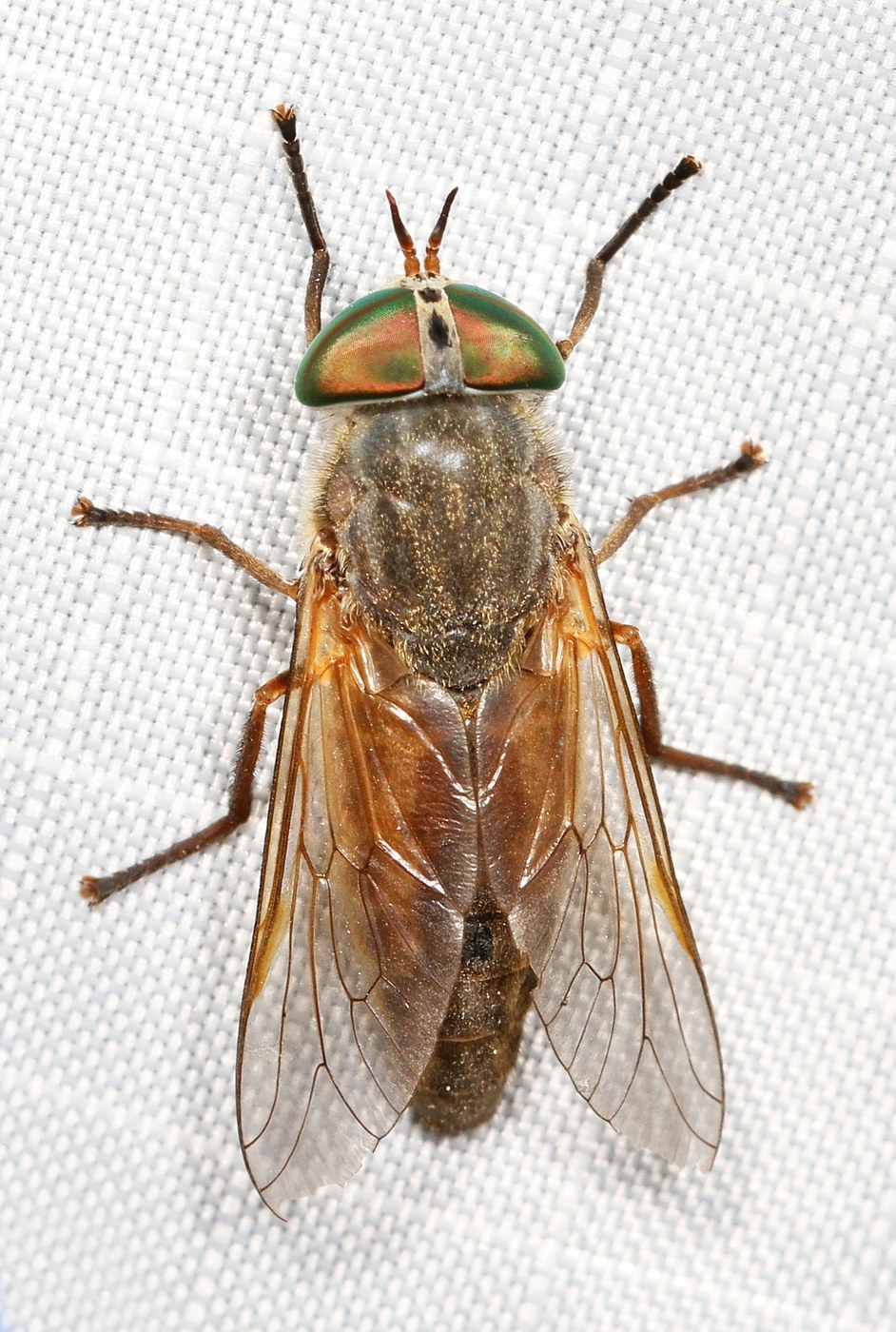
Key Visual Features
Greenhead flies are a type of horse fly (family Tabanidae) named for their striking eye color and are among the larger biting flies found near coastal habitats.
- Body: Robust and stocky, generally 0.5 to 0.8 inches long, with a broad thorax and tapered abdomen.
- Eyes: The standout feature—large, iridescent green or gold eyes that often take up most of the head, sometimes with darker banding.
- Color: The body is typically yellowish-brown to olive, with a somewhat dull or matte thorax contrasting the shiny eyes.
- Wings: Clear or lightly smoky, held flat and slightly spread over the back at rest.
- Legs: Sturdy and moderately long, built for a strong, direct flight style.
Where and When You'd See Them
Greenhead flies are most abundant in coastal salt marshes, dunes, and beach areas during mid to late summer, when adults are active during the day, especially in bright sunlight and calm conditions. Larvae develop in the muddy, saturated soil of salt marshes, which is why adult populations are concentrated near these wetland habitats. Females fly persistently around people and animals near the shoreline searching for a blood meal, while males are typically found resting on marsh vegetation, feeding on nectar rather than blood.
Similar-Looking Bugs
- Deer flies: Smaller overall with patterned wings and a narrower body; greenhead flies are bulkier with clear wings.
- House flies: Much smaller, with dull reddish eyes rather than large iridescent green ones.
- Other horse flies: Similar body shape, but greenheads are distinguished by their especially vivid green eye coloring and strong association with salt marsh habitats.
- Bumblebees: Occasionally confused in flight due to similar size, but greenhead flies lack hair bands and have a smooth, glossy body.
Quick ID Checklist
- Large, stocky fly around half to three-quarters of an inch long
- Bright iridescent green or gold eyes covering most of the head
- Yellowish-brown to olive body with clear wings
- Found in salt marshes, dunes, and beaches, especially mid to late summer
- Females actively fly around people near shorelines; males rest on marsh plants
Frequently asked questions
What is the easiest feature for identifying a greenhead fly?
Look at the eyes first—their large, bright iridescent green or gold coloring is the most distinctive and reliable identification feature of this species.
Where do greenhead flies live?
They are closely tied to coastal salt marshes and nearby beaches and dunes, since their larvae require the muddy, saturated soil found in these wetland habitats.
When are greenhead flies most active?
They are most commonly encountered during mid to late summer, active in daylight hours, especially on warm, sunny, calm days.
Do both male and female greenhead flies bite?
No, only females seek a blood meal, which they need for egg development; males feed on nectar and are usually found resting on marsh vegetation.