
Grizzled Mantis Identification Guide
Learn to spot this bark-colored North American mantis that hides in plain sight on tree trunks.
Read the full Grizzled Mantis encyclopedia entry →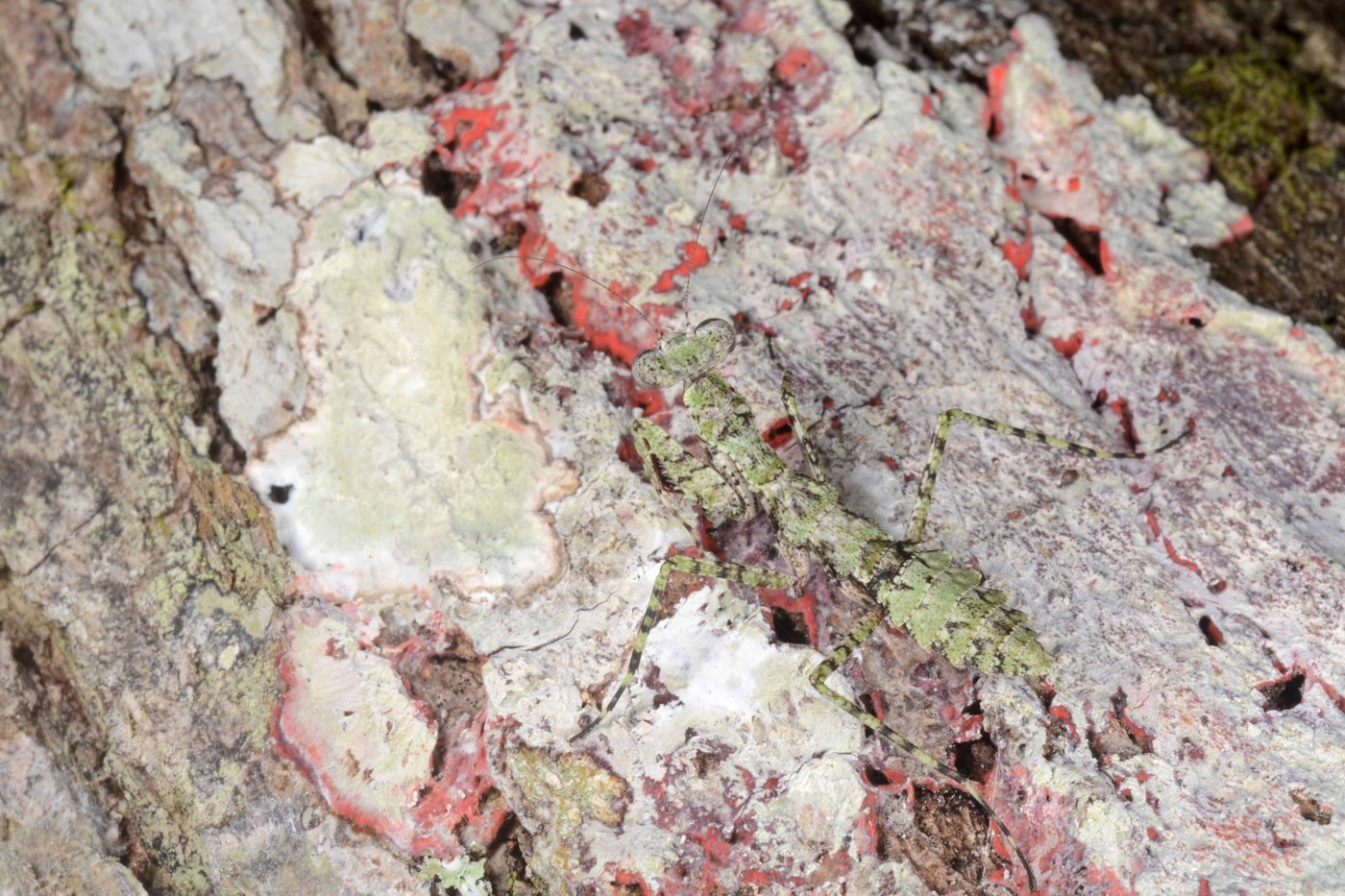
Key Visual Features
The grizzled mantis (Gonatista grisea) is a native North American species best known for its exceptional bark and lichen camouflage. Key identifying traits include:
- Mottled gray, white, and black coloring that closely resembles lichen-covered tree bark
- Flattened body shape, broader and less elongated than many other mantis species
- Medium size, with adults typically reaching 4.5–6 cm (about 1.8–2.4 inches) in length
- Wings that lie flat against the body, blending seamlessly with the mottled pattern of the thorax and abdomen
- Triangular head with large eyes positioned for wide-angle vision
- Females generally bulkier than the more slender, more frequently flying males
Where and When You'd See It
This species is found in the southeastern United States, including Florida and along the Gulf Coast, where it lives on the trunks and branches of trees covered in lichen and bark texture. Its coloring makes it almost invisible against tree bark, so it is most often spotted by movement rather than by color contrast. Grizzled mantises are active from spring through fall in warm climates, with adults most commonly observed in mid-to-late summer. They tend to remain still for long periods, relying on camouflage rather than flight to avoid detection.
Similar-Looking Bugs
- Carolina mantis: has a more elongated, twig-like body and is typically brown or green rather than gray and mottled
- Praying mantis species with green coloring: easy to distinguish since the grizzled mantis's gray, bark-like pattern is unique among common mantises in its range
- Bark-mimicking moths: moths at rest can show similar mottled gray patterns, but lack the mantis's raptorial front legs and triangular, mobile head
Because its camouflage is so effective against the exact bark texture it favors, a grizzled mantis is often confirmed only once it shifts position or turns its head toward an observer.
Quick ID Checklist
- Mottled gray, black, and white "lichen" pattern
- Flattened, broad body shape
- Found resting motionless on tree bark
- Medium size, roughly 4.5–6 cm as an adult
- Range limited mainly to the southeastern United States
Frequently asked questions
What makes the grizzled mantis so hard to spot?
Its mottled gray, white, and black coloring closely mimics lichen-covered bark, so it blends almost seamlessly with the tree trunks it rests on.
Where in North America is the grizzled mantis typically found?
It is native to the southeastern United States, particularly Florida and areas along the Gulf Coast, where it lives on bark-covered trees.
How can I tell a grizzled mantis from a Carolina mantis?
The grizzled mantis has a flatter, broader body with gray, bark-like mottling, while the Carolina mantis is more slender and elongated with brown or green coloring.
Is the grizzled mantis more often seen moving or staying still?
It typically stays motionless for long stretches to preserve its camouflage, so it is usually noticed only when it shifts position on the bark.