
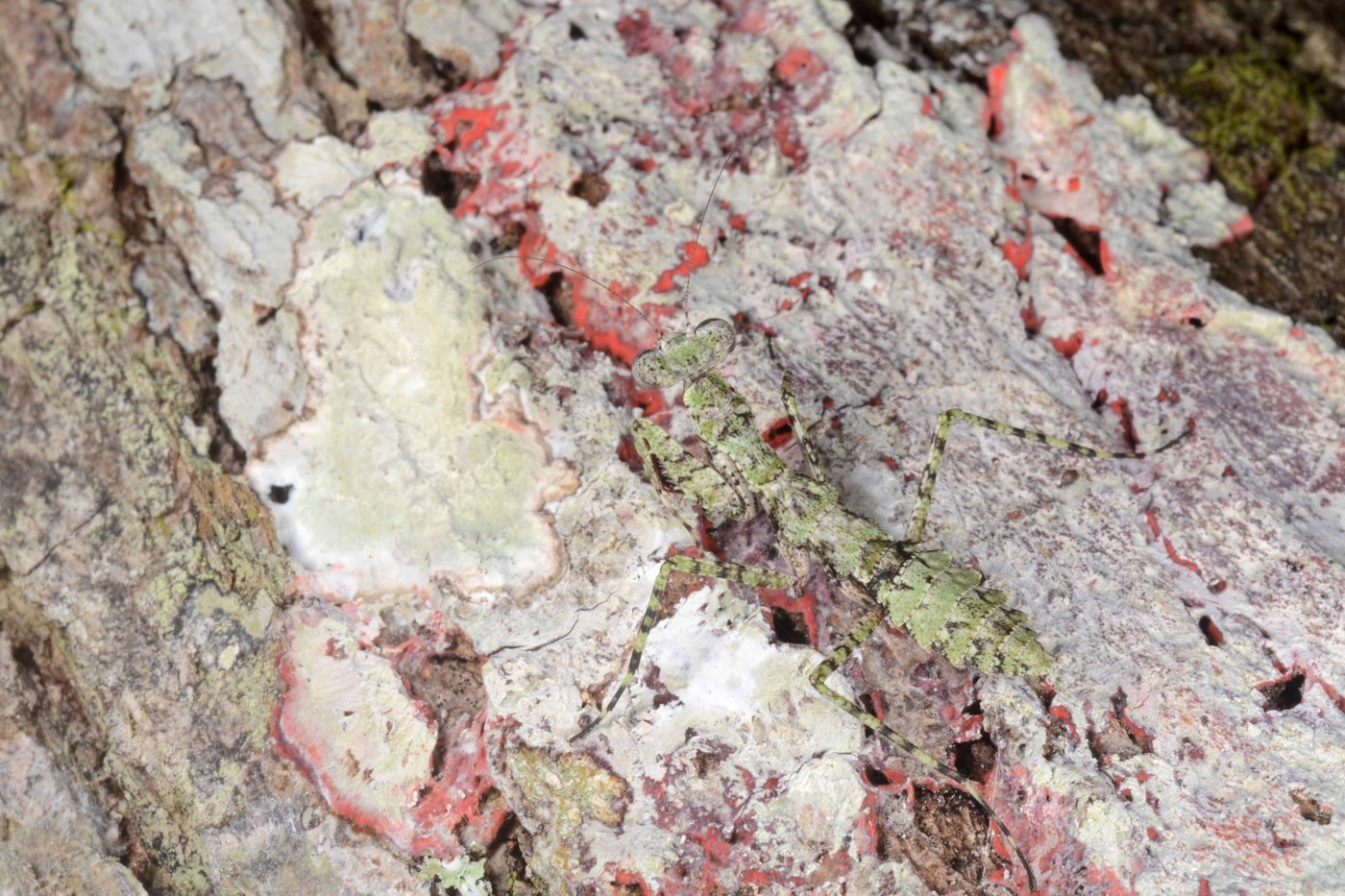
Grizzled Mantis
Gonatista grisea
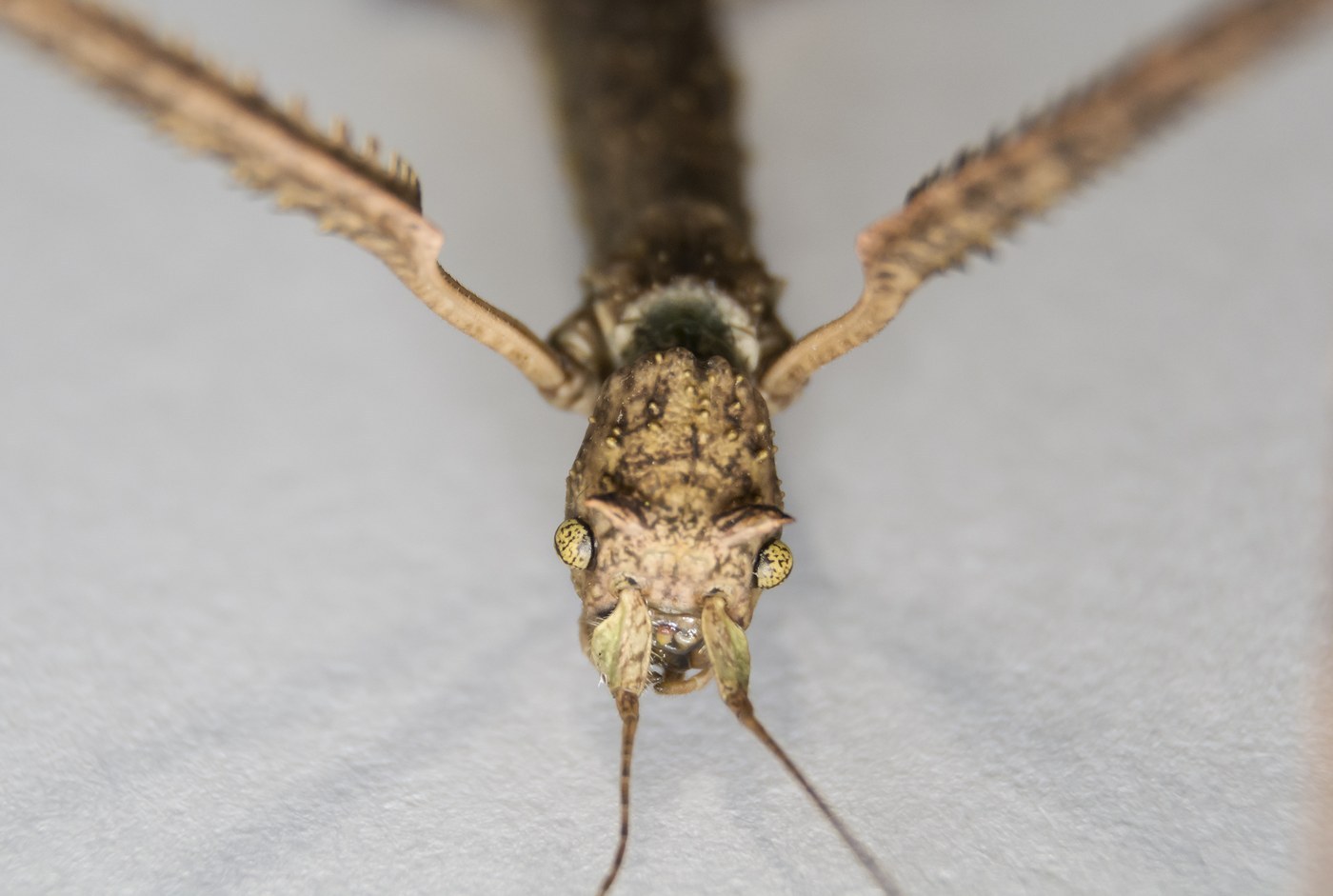
Mottled in shades of gray and lichen-green, this flattened mantis presses itself against tree bark so convincingly that it seems to melt into the trunk.
- Size
- Adults roughly 4-6 cm long
- Habitat
- Tree bark and trunks in woodlands and forest edges
- Danger
- Harmless
Spotted a bug like this?
Identify any bug or insect from a photo, free.
Overview
The grizzled mantis is a bark-dwelling species best known for its highly effective camouflage against tree trunks, where its mottled gray, green, and brown patterning mimics lichen-covered bark with striking accuracy. Its flattened body shape allows it to press closely against bark surfaces, further enhancing its disguise from both predators and prey.
Native to the southeastern United States, particularly Florida and neighboring states, this species spends most of its life resting on tree trunks and branches, relying on stillness and coloration rather than active flight or movement to remain hidden. As with other mantises, it is a predatory but harmless insect that poses no threat to people.
How to Identify
- Flattened, broad body patterned in mottled gray, brown, and green tones resembling lichen-covered bark
- Wings held flat and close to the body, extending the bark-like camouflage
- Triangular head with large, forward-facing compound eyes typical of mantises
- Raptorial front legs folded close to the body when at rest
- Moderate size, generally shorter and stockier than many other mantis species
- Distinguished from other bark-associated mantises by its specific gray-green mottled pattern and range within the southeastern U.S.
Habitat & Range
This species occurs in the southeastern United States, with strongholds in Florida and adjoining Gulf Coast states, inhabiting woodlands, forest edges, and areas with mature trees bearing lichen-covered bark. It is typically found resting on tree trunks and larger branches and is most commonly observed during the warmer months when it is actively foraging.
Behavior & Diet
The grizzled mantis is an ambush predator that remains motionless against tree bark, using its coloration to avoid detection while waiting for small insects such as flies, moths, and other invertebrates to pass within striking range of its raptorial forelegs. It moves deliberately and infrequently, preferring to rely on camouflage rather than flight or rapid movement to evade predators such as birds and larger insectivores. Within its woodland habitat, it contributes to natural regulation of small insect populations while itself serving as prey for birds and other predators that manage to spot it despite its disguise.
Life Cycle
Females produce a foam-like ootheca that hardens into a protective case, typically attached to bark or a similar rough surface where it blends with the surroundings. Nymphs hatch resembling small, wingless versions of the adult with similar bark-like coloration, and develop through successive molts, gradually acquiring wing pads and eventually functional wings at maturity. There is no pupal stage, consistent with incomplete metamorphosis typical of mantises. Adults are most commonly seen in the warmer months, with a single generation typically completing its life cycle within a year.
Frequently asked questions
Why is it called the grizzled mantis?
Its name refers to the mottled gray and green patterning on its body, which closely resembles lichen-covered tree bark.
Where does the grizzled mantis live?
It is found in woodlands and forest edges in the southeastern United States, especially Florida, where it rests on tree trunks and branches.
What does the grizzled mantis eat?
It preys on small insects such as flies and moths, capturing them with its raptorial front legs.
How does its camouflage work?
Its flattened body and mottled gray-green pattern allow it to press against bark and blend in almost seamlessly with lichen-covered tree trunks.
Grizzled Mantis guides
In-depth guides for identifying, understanding, and living alongside Grizzled Mantis.
Other bugs you may enjoy
Walking Stick Insect
Trees, shrubs and leaf litter in forests, woodlands and gardens
African Mantis
grasslands, shrubs, and gardens across sub-Saharan Africa
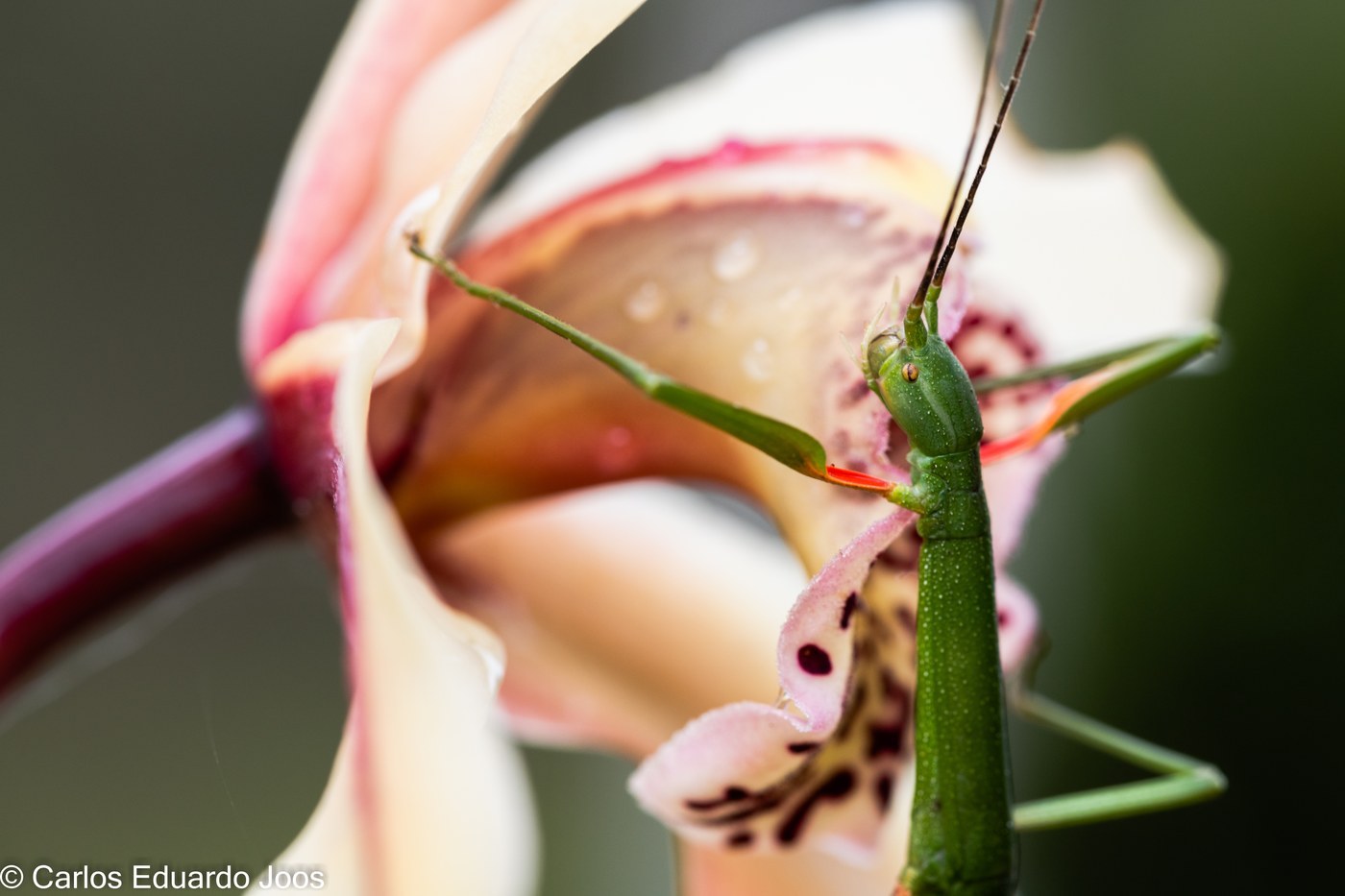
Walking Stick
Deciduous woodlands, forest edges, and shrubby vegetation
Vietnamese Walking Stick
tropical forests of Vietnam; widely kept in captivity worldwide
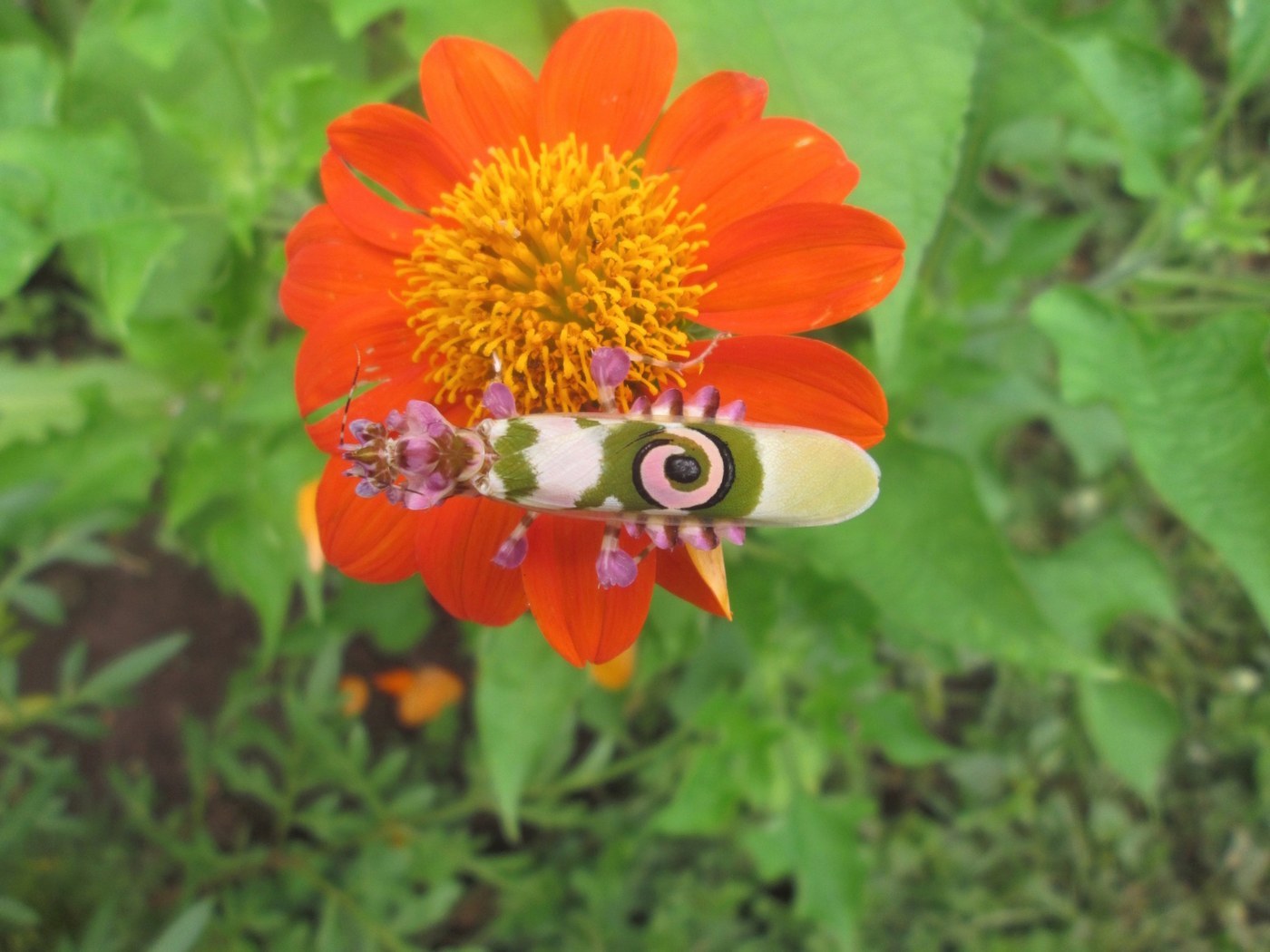
Spiny Flower Mantis
African savanna and woodland shrubs and flowering plants
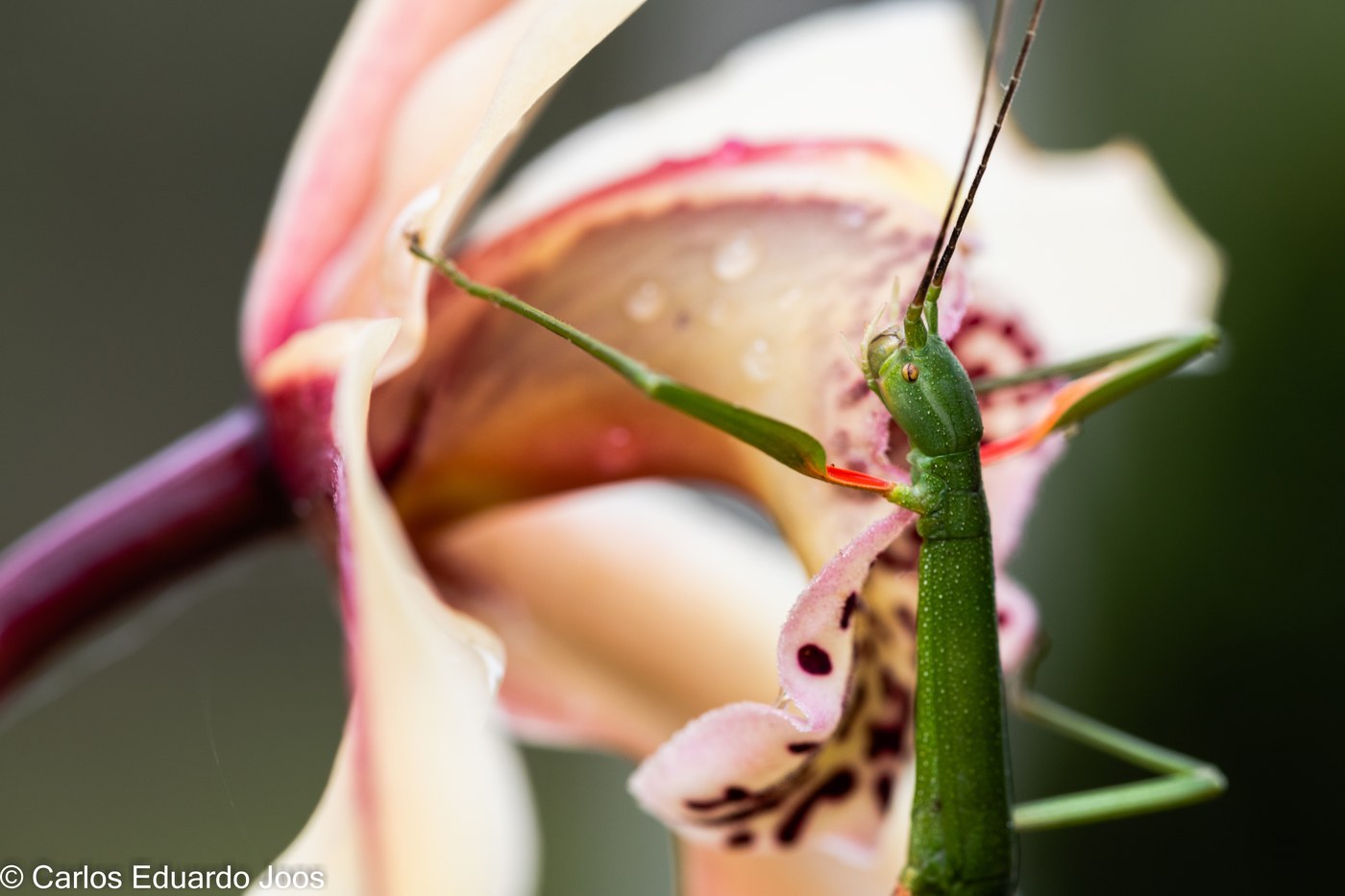
Northern Walkingstick
deciduous forests and woodland edges of the eastern and central United States and southern Canada
Praying Mantis
Gardens, meadows, shrubs, and tall grass
Orchid Mantis
tropical rainforests and flowering shrubs of Southeast Asia
Goliath Stick Insect
Tropical and subtropical eucalypt forests and woodland canopy
Giant Prickly Stick Insect
eucalyptus forests and shrubland of eastern Australia and New Guinea
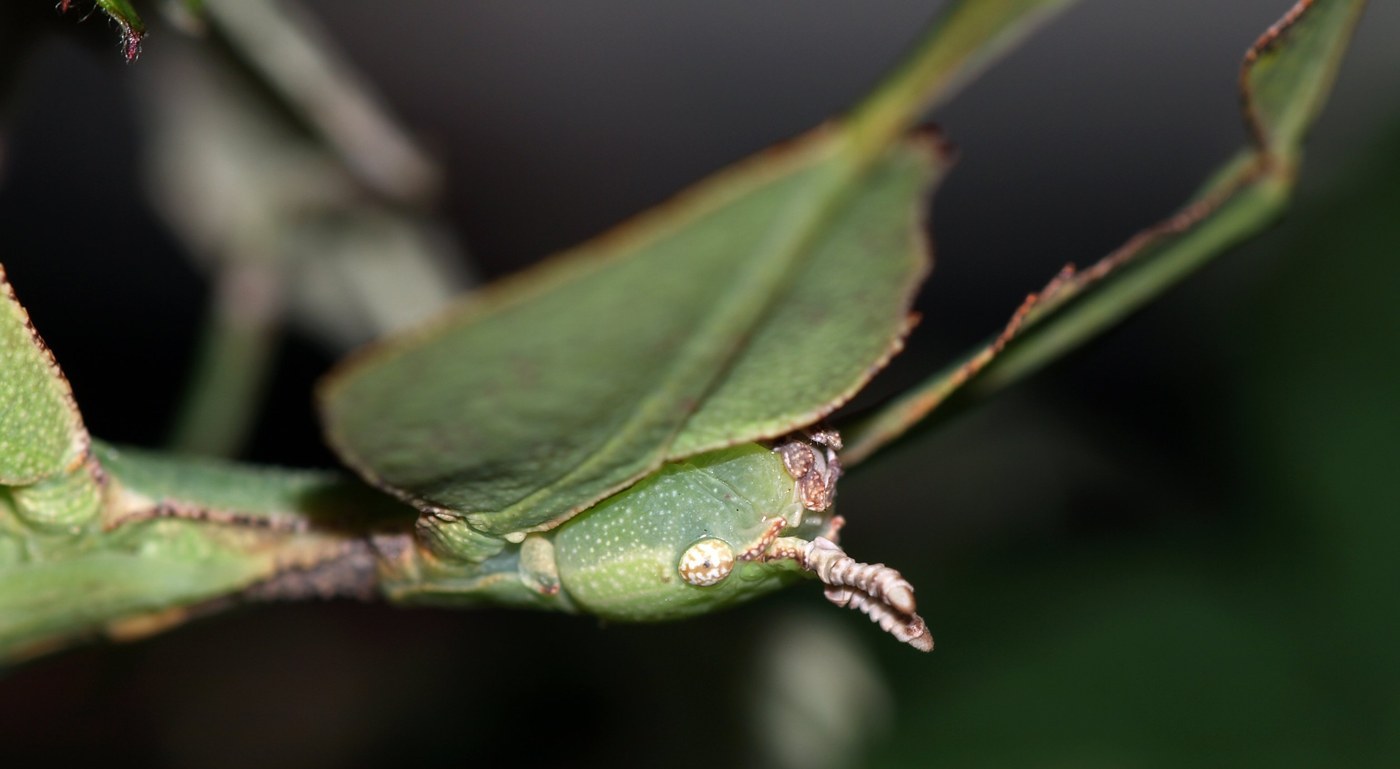
Javanese Leaf Insect
Tropical lowland and montane forest foliage
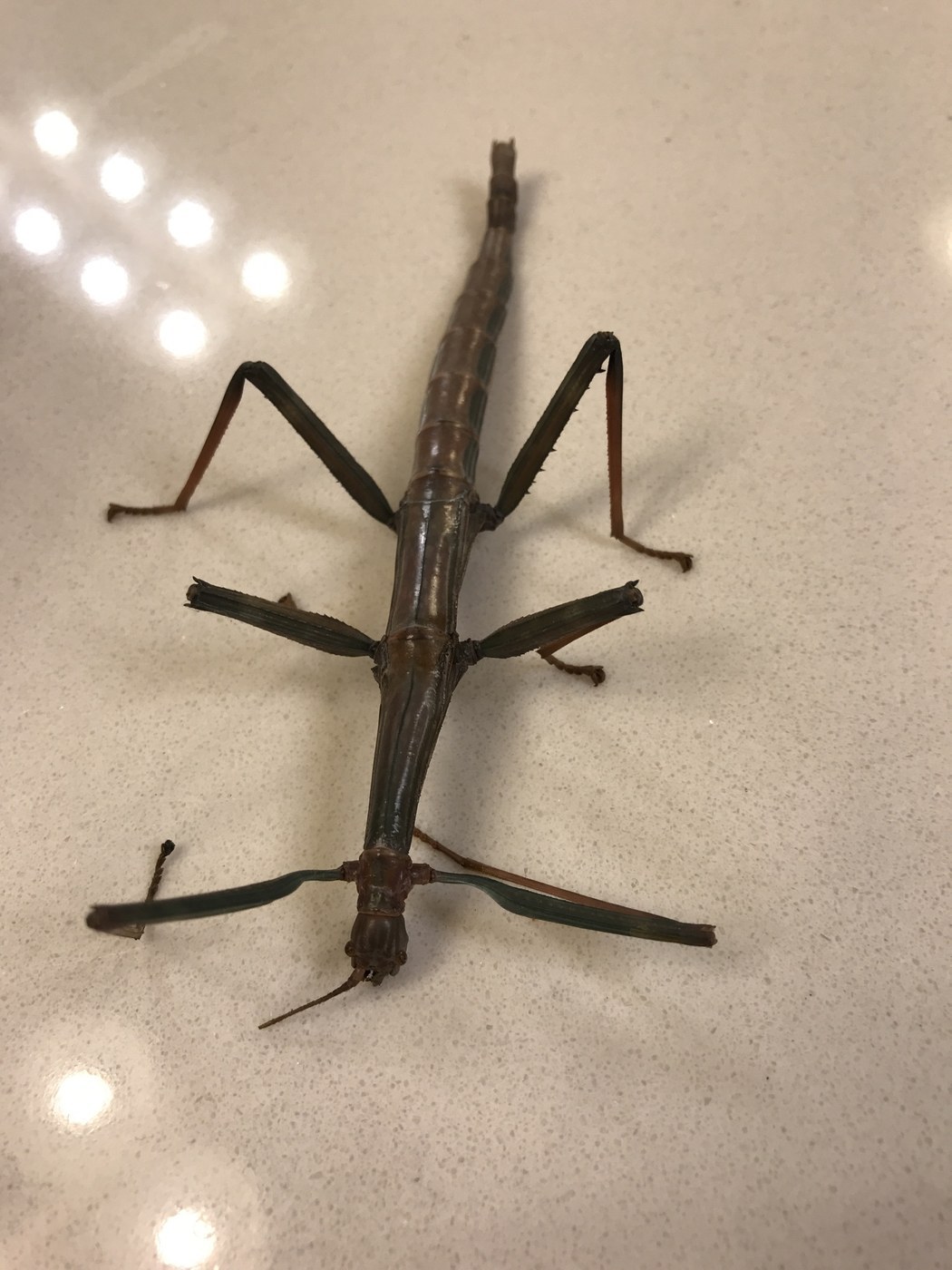
Giant Walking Stick
Deciduous woodlands, forest edges, and shrubby thickets