Grub Worm Identification Guide
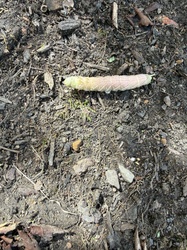
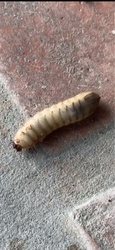
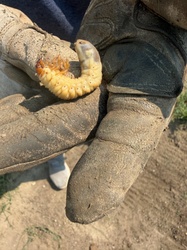
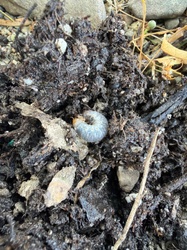
Recognize this soil-dwelling beetle larva by its plump, whitish C-shaped body, brown head capsule, and short stubby legs.
Read the full Grub Worm encyclopedia entry →Key Visual Features
Grub worms are the larvae of various scarab beetles (such as June beetles and Japanese beetles), easily identified by their soft, curled, C-shaped body found in soil.
- Size: Varies by species and age, generally 0.5 to 1.5 inches long when mature.
- Color: Body is whitish to grayish-white and soft, with a distinctly darker, hardened, brown to reddish-brown head capsule; the rear end of the abdomen often appears slightly darker or grayish due to visible gut contents through the translucent skin.
- Body shape: Plump, soft, wrinkled body that is almost always found curled into a tight C-shape, rarely extended straight.
- Legs: Three pairs of short, small true legs clustered near the front of the body, just behind the head; no prolegs along the rear segments (a key difference from caterpillars).
- Head: Distinct, hardened, brown head capsule with visible chewing mandibles.
- Texture: Skin appears smooth but wrinkled/segmented, without hair or bristles.
Where and When You'd See One
Grub worms live below the surface in soil, particularly in lawns, garden beds, and turf, where they feed on roots and organic matter. They are most commonly found from late summer through fall when larvae are actively feeding near the surface, and again in spring as soil warms before pupation; they burrow deeper during the coldest winter months. They are rarely seen above ground and are usually discovered when digging in soil, lifting sod, or turning over mulch or compost.
Similar-Looking Bugs
- Cutworms: Also curl into a C-shape, but are smooth-bodied moth larvae with fleshy prolegs along the rear segments and a soft head that isn't as hardened or distinctly capsule-like as a grub's.
- Wireworms: Slender, hard, shiny, and yellowish-brown to orange, resembling a small segmented wire rather than a plump, soft, curled grub.
- Beetle larvae of other families (e.g., click beetles): Narrower and more elongated than the rounder, plumper scarab grub.
- Fly maggots: Legless, tapered, and lacking any hardened head capsule or visible legs, unlike a grub's clearly segmented body with short true legs and a distinct brown head.
Quick ID Checklist
- Plump, soft, whitish body curled tightly into a C-shape
- Distinct hardened brown head capsule with visible mandibles
- Three pairs of short true legs near the front only, no prolegs
- Found below the soil surface in lawns, garden beds, or compost
- Most active near the surface in late summer/fall and spring
Frequently asked questions
What is the most reliable feature for identifying a grub worm?
Look for a plump, soft, whitish body tightly curled into a C-shape with a distinct hardened brown head capsule and just three pairs of short true legs near the front, with no legs along the rear of the body.
How can I tell a grub worm from a cutworm found in the same soil?
A grub worm has a harder, more distinct brown head capsule and only true legs near the front with no rear prolegs, while a cutworm is a smooth moth larva with a softer head and fleshy prolegs along its rear segments, and it curls less consistently into a tight C shape.
When are grub worms most likely to be found near the soil surface?
They tend to feed closest to the surface in late summer through fall and again in spring, while retreating deeper into the soil during the coldest part of winter.
What kind of insect does a grub worm grow into?
Grub worms are the larval stage of various scarab beetles, such as June beetles and Japanese beetles, and will eventually pupate in the soil before emerging as adult beetles.
Grub Worm identified by the community
Recent Grub Worm finds identified with Bug Identifier.