
Gulf Fritillary Caterpillar Identification Guide
A bright orange caterpillar lined with rows of black branching spines, found feeding on passionflower vines.
Read the full Gulf Fritillary Caterpillar encyclopedia entry →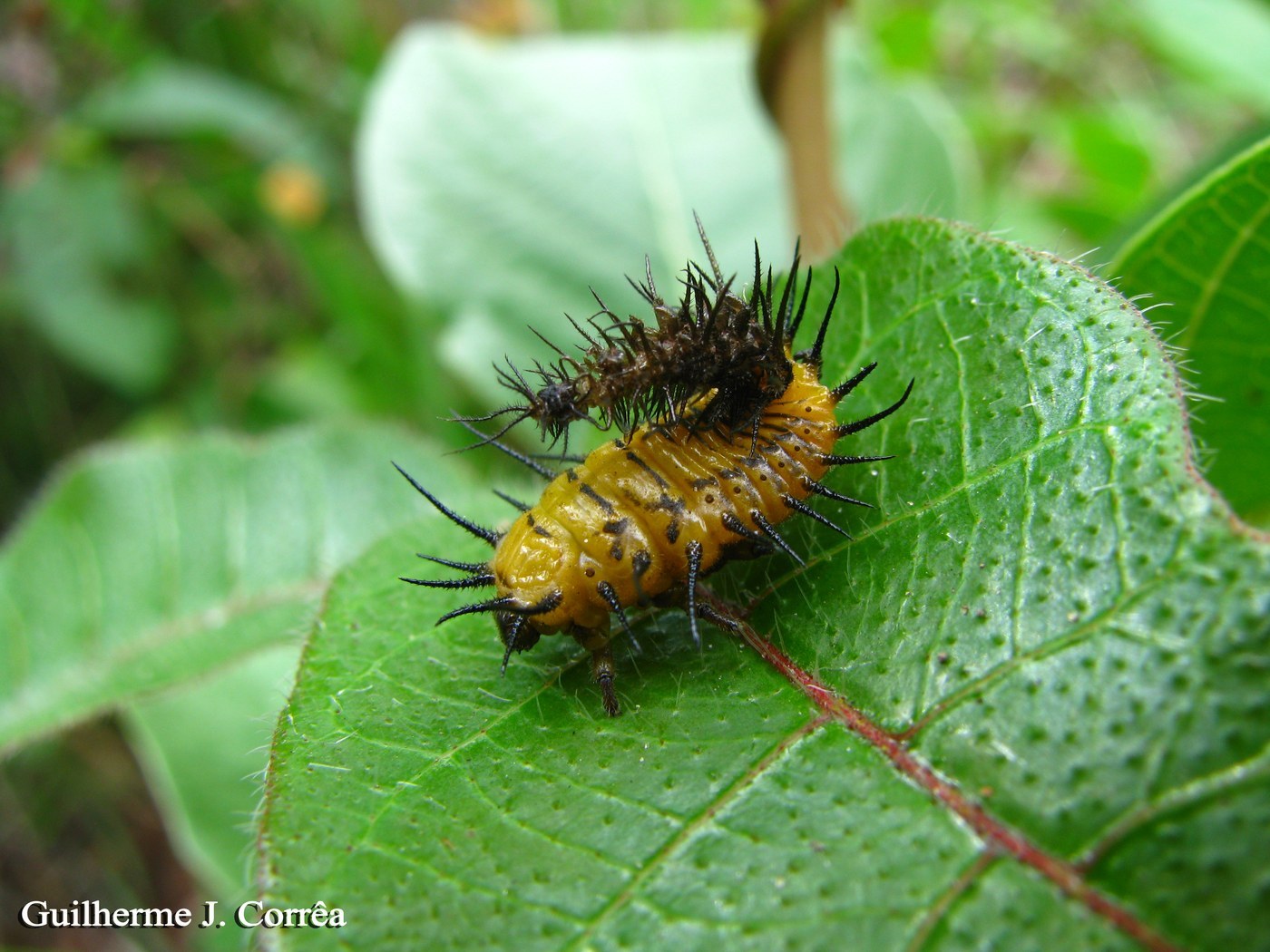
Key Visual Features
The gulf fritillary caterpillar is a bold, brightly colored species that grows to about 1.5 inches long.
- Color: Vivid orange body, sometimes with a slightly darker orange or reddish tone toward the back
- Spines: Rows of long, black, branching spines run the length of the body in even lines, giving it a distinctly spiky silhouette
- Head: Black and shiny, matching the color of the spines
- Body shape: Slender and elongated, with the spines making up much of its visual profile
- Underside: Pale orange, with the spines wrapping around the sides of the body
- Legs: Three pairs of small true legs near the head and several pairs of fleshy prolegs further back, both matching the orange body tone
Where and When You'll See It
Gulf fritillary caterpillars feed exclusively on passionflower vines, so their presence is a strong indicator that a passionflower plant is nearby. They are most commonly seen from spring through fall in warmer regions where passionflower grows year-round, feeding openly on leaves, stems, and tendrils in full daylight rather than hiding in shelters. Their bright coloring makes them relatively easy to spot against the green vine foliage compared to many camouflaged caterpillar species.
Similar-Looking Bugs
- Variegated fritillary caterpillar: Also orange with black spines, but shows added whitish or cream stripes running down the back that gulf fritillary caterpillars lack, and feeds on violets and other host plants rather than passionflower
- Io moth caterpillar: Bright green rather than orange, with star-shaped branching spine clusters instead of simple black spines in rows
- Milkweed tussock caterpillar: Covered in dense tufts of hair rather than spines, and found on milkweed instead of passionflower
Quick ID Checklist
- Bright orange body with rows of black branching spines
- Black, shiny head
- Feeds openly in daylight on passionflower vines
- No pale stripes down the back (helps separate from variegated fritillary)
- Found spring through fall wherever passionflower grows
- Feeds openly on leaves, stems, and tendrils rather than hiding in a shelter
Frequently asked questions
What plant is the gulf fritillary caterpillar always found on?
It feeds exclusively on passionflower vines, so spotting one usually means a passionflower plant is growing nearby.
How do I tell a gulf fritillary caterpillar from a variegated fritillary caterpillar?
The gulf fritillary caterpillar is solid orange with black spines and no stripe, while the variegated fritillary caterpillar shows added pale or cream stripes down its back and feeds on different host plants such as violets.
Are gulf fritillary caterpillars easy to spot?
Yes, their bright orange color and black branching spines stand out clearly against green passionflower foliage, and they feed openly in daylight rather than hiding.
Do gulf fritillary caterpillars build any kind of shelter?
No, unlike some caterpillars that fold leaves or spin webbing, they feed openly on the exposed leaves and stems of the passionflower vine.