Gulf Fritillary Identification Guide
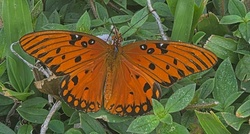
Identify the gulf fritillary by its long, bright orange wings and dazzling silver-spotted underside.
Read the full Gulf Fritillary encyclopedia entry →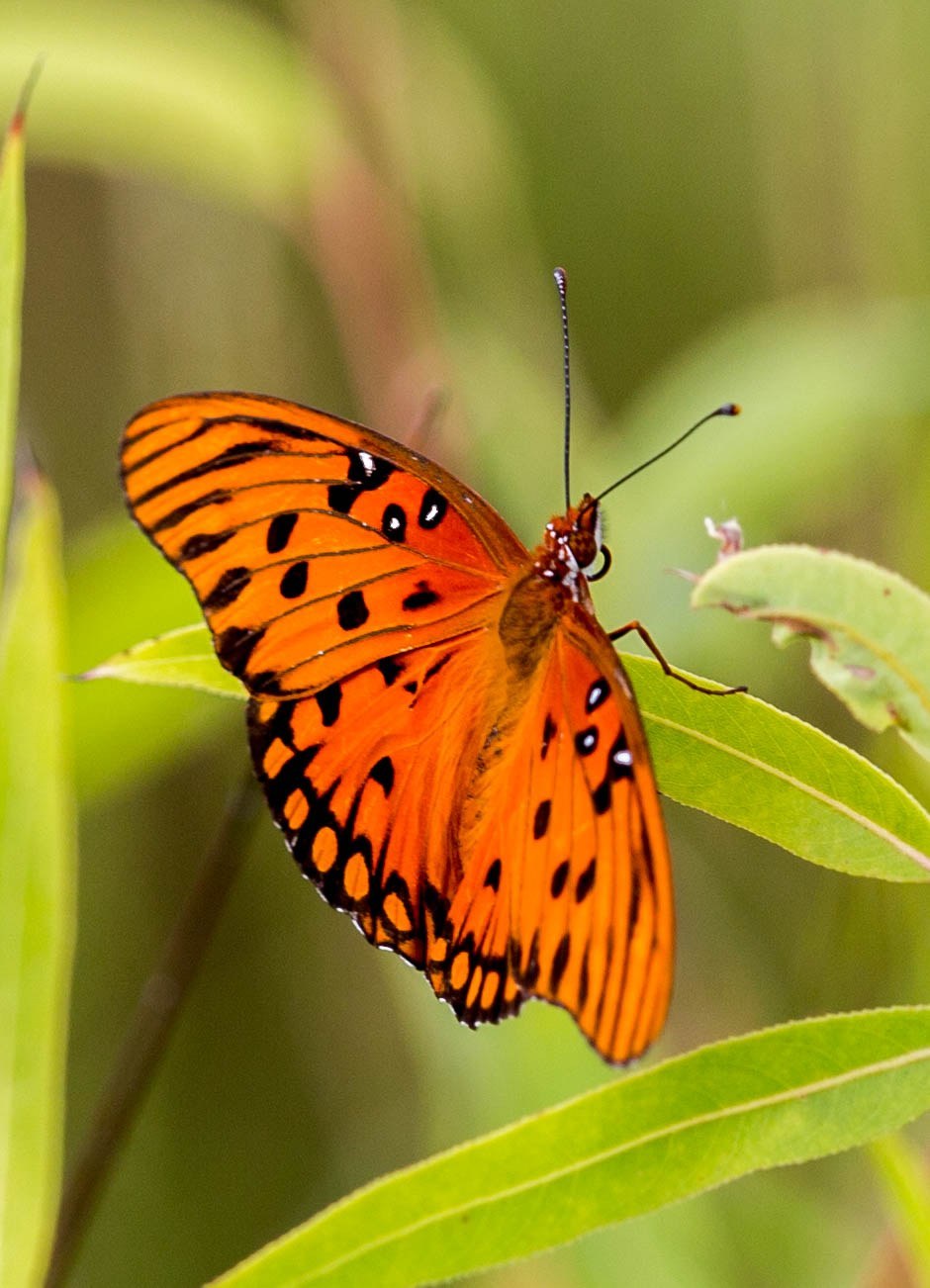
Key Visual Features
The gulf fritillary (Agraulis vanillae) is a vividly colored, elongated-winged butterfly common in warm climates.
- Size: Wingspan of about 2 1/2 to 3 3/4 inches (6.5–9.5 cm).
- Color: Bright, glossy orange upper wings marked with black spots, streaks, and a black-bordered margin.
- Body shape: Slender body typical of longwing (heliconian) butterflies.
- Wings: Wings are notably elongated and narrower than many other orange butterflies, giving a streamlined silhouette in flight.
- Underside: The underside is a warm cinnamon-brown covered in large, elongated, mirror-like silver spots, which is one of the most eye-catching features among North American butterflies and a quick way to confirm identification when the wings are closed.
- Antennae: Slender, clubbed antennae.
Where and When You'll See One
Gulf fritillaries are found throughout the southern United States, Mexico, Central America, and parts of South America, and can stray farther north during warm months. They favor open, sunny habitats including gardens, fields, roadsides, and coastal areas, and are strongly associated with passionflower vines (Passiflora species), which serve as the caterpillar host plant. Adults fly with a fast, direct pattern and are frequent visitors to nectar flowers like lantana and zinnia. In warm regions they can be seen year-round; farther north, sightings peak from summer through fall.
Similar-Looking Bugs
- Great spangled fritillary and other true fritillaries (Speyeria, Boloria): Also orange with black markings and silver-spotted undersides, but these species have shorter, more rounded wings and a stockier build compared to the gulf fritillary's elongated wing shape.
- Variegated fritillary: Similar orange-brown coloring but lacks the large, bold silver spots on the underside, showing a more mottled tan-brown pattern instead.
- Monarch or viceroy: Both have a deeper, more uniform orange with thick black veining, quite different from the gulf fritillary's more elongated wings and metallic underside spotting.
Quick ID Checklist
- Elongated, narrow orange wings with black spots and margins
- Large, mirror-like silver spots covering the underside
- Fast, direct flight style
- Found near passionflower vines in gardens and open sunny areas
- Common throughout the southern U.S. and points further south
Frequently asked questions
What is the most distinctive feature of the gulf fritillary?
The underside of the wings is covered in large, elongated, mirror-like silver spots on a cinnamon-brown background, which is one of the most striking and reliable identification features among North American butterflies.
How is the gulf fritillary different from true fritillaries like the great spangled fritillary?
The gulf fritillary has noticeably longer, narrower wings than true fritillaries, which tend to have a more rounded, stockier wing shape, even though both groups share orange coloring and silver underside spotting.
What plant should I look near to find a gulf fritillary?
Passionflower vines (Passiflora species) are the key host plant for gulf fritillary caterpillars, so gardens or wild areas with passionflower are good places to look for adults and eggs.
Is the gulf fritillary seen year-round?
In warm southern regions and parts of Mexico and Central America it can be seen throughout the year, while in cooler, more northern parts of its range sightings are concentrated from summer into fall.
Gulf Fritillary identified by the community
Recent Gulf Fritillary finds identified with Bug Identifier.