Hickory Horned Devil Identification Guide
Learn to recognize North America's largest caterpillar by its bristling, curved horns and blue-green body.
Read the full Hickory Horned Devil encyclopedia entry →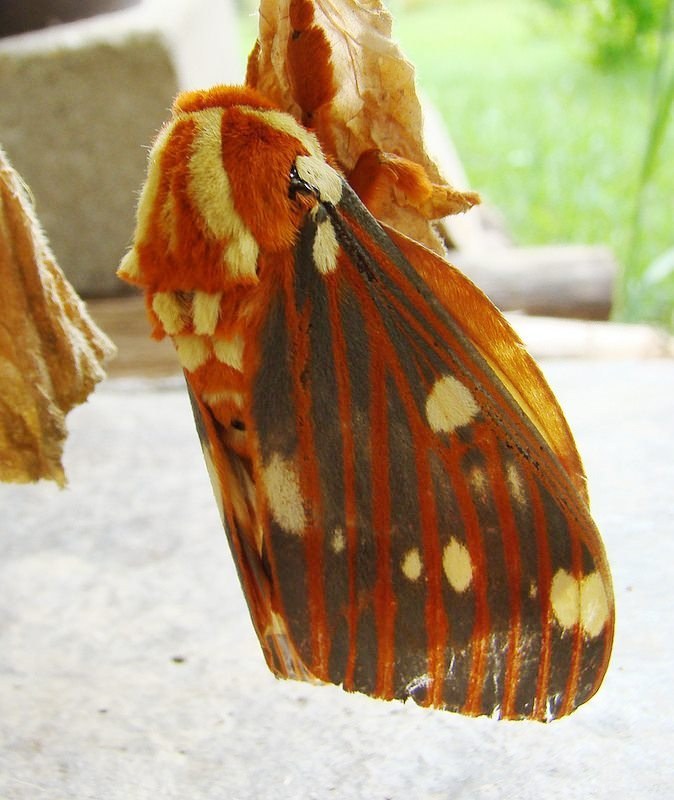
Key Visual Features
The hickory horned devil is one of the largest caterpillars in North America, reaching 4-6 inches when fully grown.
- Body color: Blue-green to turquoise, sometimes with a grayish cast, and a granular or leathery-looking skin texture.
- Horns: The most recognizable trait is the crown of long, curved, spine-like projections (scoli) on the thorax just behind the head. These are typically orange-red at the base and taper to black tips.
- Body spines: Rows of smaller black-tipped orange spines run down the back and sides in addition to the large thoracic horns.
- Head and legs: The head is small relative to the body and orange-brown; true legs near the head are short, and prolegs along the abdomen are stout and blue-green like the body.
- Size and shape: The body is thick and sausage-like, tapering slightly toward the rear, giving it an almost dragon-like silhouette.
Where and When You'll See It
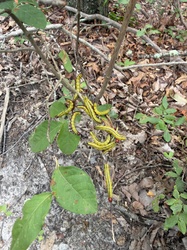
Hickory horned devils are found across the eastern and southeastern United States. Look for them on the leaves of hickory, walnut, pecan, sweetgum, persimmon, and sumac. They are most often spotted in late summer and early fall, when the larvae have reached full size and begin wandering away from their host tree to find a place to burrow into soil.
Similar-Looking Caterpillars
- Regal moth relatives (other Citheronia species): Smaller ranges and slightly different horn coloration, but far less commonly encountered.
- Other horned caterpillars (e.g., rustic sphinx or hornworms): Sphinx moth caterpillars have a single tail horn at the rear rather than a cluster of horns near the head, and are usually green with diagonal side stripes.
- Imperial moth caterpillar: Also large and spiny, but lacks the prominent curved thoracic horns and is typically green or brown with shorter, bristly spines spread evenly over the body.
Quick ID Checklist
- Very large body (up to 6 inches) with a blue-green, leathery appearance
- Cluster of long, curved black-tipped orange horns behind the head
- Smaller black-tipped spines running down the back and sides
- Found on hickory, walnut, sumac, or persimmon leaves in late summer/fall
- No single tail horn (distinguishes it from sphinx moth caterpillars)
Frequently asked questions
What is the hickory horned devil's adult form?
It transforms into the regal moth (also called the royal walnut moth), a large moth with orange and gray wings.
How can I tell a hickory horned devil from a hornworm?
Hornworms have a single spike at the rear end, while the hickory horned devil has a cluster of curved horns near the head and no rear horn.
Why are hickory horned devils sometimes seen crossing sidewalks or roads?
In late summer and fall, mature larvae leave their host tree and travel along the ground searching for loose soil to burrow into before pupating.
Do the color and horn pattern change as the caterpillar grows?
Yes, younger instars are smaller, darker, and less colorful, with proportionally longer horns; the vivid blue-green body and orange-based horns become most obvious in the final instar.
Hickory Horned Devil identified by the community
Recent Hickory Horned Devil finds identified with Bug Identifier.