Hummingbird Clearwing Moth Identification Guide
Learn to spot this hummingbird-mimicking day-flying moth by its clear wings and fan-shaped tail tuft.
Read the full Hummingbird Clearwing Moth encyclopedia entry →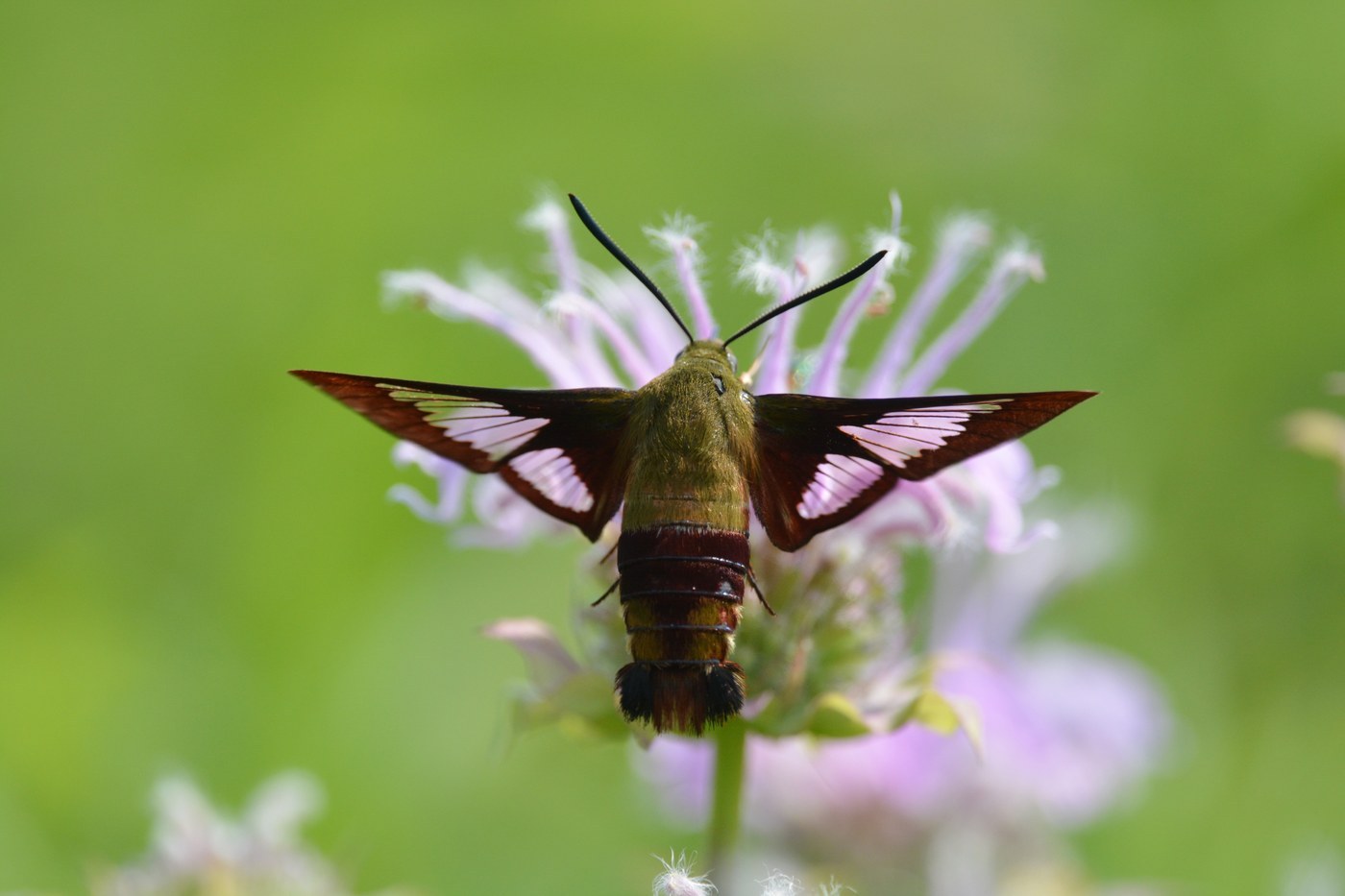
Key Visual Features
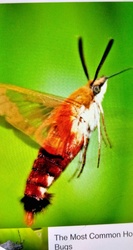
The hummingbird clearwing moth is a day-flying sphinx moth so convincing in its mimicry that it's often mistaken for an actual hummingbird at first glance.
- Size: Wingspan of about 1.5-2 inches (40-50mm), roughly comparable to a large bumblebee.
- Color and pattern: Wings are mostly clear or transparent, bordered with reddish-brown along the edges and veins, and become fully clear soon after the moth first emerges as the fine scales rub off. The body is olive-green to golden-brown on top and burgundy or reddish-brown underneath.
- Body shape: Robust, tapering abdomen ending in a fan-like tuft of hairs resembling a lobster's tail, used to help steer and stabilize during hovering flight.
- Wings: Narrow and rapidly beating, producing an audible hum while hovering, similar in sound to a large bee or small hummingbird.
- Legs and antennae: Antennae are club-shaped and thickened toward the tip, typical of sphinx moths, and legs are relatively long and slender to support hovering flight.
Where and When You'll See It
Look for this moth in gardens, meadows, and woodland edges with abundant nectar flowers such as bee balm, honeysuckle, and phlox. It ranges across much of North America, from open fields to suburban flower beds. Unlike most moths, it is strictly diurnal, most active during sunny afternoons from spring through fall, hovering in place at flowers with its long proboscis extended to feed, moving quickly from bloom to bloom much like an actual hummingbird would.
Similar-Looking Moths
The snowberry clearwing moth is its closest lookalike, sharing the same clear-winged, hovering behavior and general size, but it has a black head and a bumblebee-like yellow-and-black banded body rather than the hummingbird clearwing's more uniform olive-green top and burgundy underside. Checking the head color and overall body banding, rather than wing shape alone, is the quickest way to separate the two species in the field.
Quick ID Checklist
- Fast, hovering flight resembling a hummingbird
- Clear wings with a reddish-brown border
- Olive-green top, burgundy underside
- Fan-shaped tail tuft at the rear of the abdomen
- Active during daylight, especially at flowers
Frequently asked questions
How can I tell a hummingbird clearwing moth from an actual hummingbird?
Look closely for the clear wings, fan-shaped tail tuft, and insect antennae — features no hummingbird has.
What is the difference between this species and the snowberry clearwing moth?
The snowberry clearwing has a black head and yellow-and-black banded body, while the hummingbird clearwing is more uniformly olive-green and burgundy.
Is this moth active at night?
No, it is diurnal and is typically seen flying and feeding during daylight hours, especially sunny afternoons.
What kind of flowers attract this moth?
Nectar-rich flowers like bee balm, honeysuckle, and phlox commonly attract it.
Hummingbird Clearwing Moth identified by the community
Recent Hummingbird Clearwing Moth finds identified with Bug Identifier.