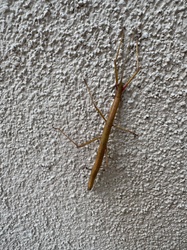
Indian Stick Insect Identification Guide
A slender, twig-mimicking insect with a smooth green or brown body and short spines, popular for its convincing camouflage.
Read the full Indian Stick Insect encyclopedia entry →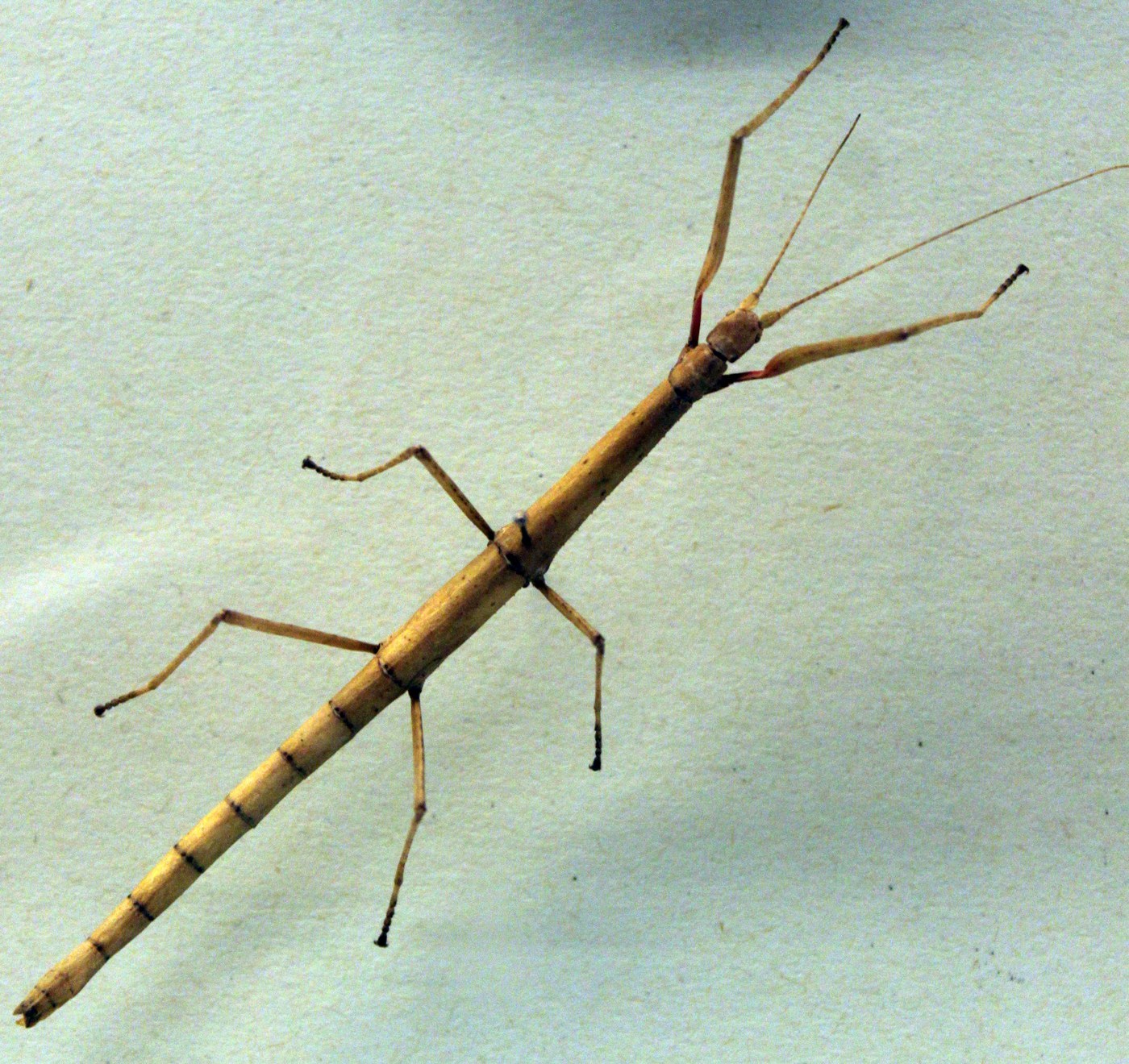
Key Visual Features
The Indian stick insect (Carausius morosus), also called the laboratory stick insect, is a classic example of twig mimicry among phasmids.
- Size: Females typically reach about 3-4 inches (7.5-10 cm); males are smaller and slimmer, around 2.5-3 inches (6-7.5 cm)
- Color: Usually green to olive or brownish, with color capable of subtly shifting somewhat depending on conditions such as lighting and temperature
- Body shape: Long, thin, and cylindrical, closely resembling a twig or plant stem, with a smooth surface lacking major spines or bumps
- Wings: Wingless — Indian stick insects have no functional wings at all, relying entirely on their twig-like shape for camouflage
- Legs: Long, thin legs held close to the body or outstretched to extend the straight, stick-like silhouette; the front legs are often held forward, further elongating the disguise
- Antennae: Fairly short to moderate in length compared to other stick insects, thin and thread-like
- Other markings: Males, when present, tend to have a slimmer body and slightly different leg spination compared to females; this species is also known for often reproducing without males
Where and When You'd See It
Indian stick insects are native to South Asia (India and surrounding regions), where they inhabit shrubs, hedges, and low vegetation in warm, humid environments, feeding at night and remaining motionless by day. Being tropical/subtropical, they can be active year-round in native range conditions, most active after dusk and through the night when they move and feed, while spending daylight hours still and camouflaged among foliage. They are also one of the most commonly kept stick insect species in captivity worldwide.
Similar-Looking Bugs
- Giant walking stick / giant prickly stick insect: Generally larger and bulkier, with the prickly stick insect showing obvious spines that the smooth-bodied Indian stick insect lacks
- Other smooth green/brown phasmid species: Many stick insects share a similar twig-like build; the Indian stick insect's moderate size and lack of prominent spines or leaf-like flanges help distinguish it from spinier or larger relatives
- Actual plant stems or twigs: The resemblance is the entire point of its camouflage — look for the head with small compound eyes, thin antennae, and jointed legs to confirm it's an insect
- Leaf insects: Have a flattened, broad, leaf-shaped body rather than the long, thin, cylindrical shape of a stick insect
Quick ID Checklist
- Long, thin, cylindrical body resembling a twig
- Smooth body surface without major spines
- Completely wingless
- Green to brown coloring, sometimes shifting subtly
- Motionless by day among shrubs/foliage, active and feeding at night
Frequently asked questions
How do I tell an Indian stick insect from other stick insect species?
Its moderate size, smooth body lacking prominent spines, and simple twig-like cylindrical shape distinguish it from spinier or bulkier relatives like the giant prickly stick insect.
Does the Indian stick insect have wings?
No, it is entirely wingless, relying solely on its slender, twig-like body shape for camouflage rather than flight.
When is this insect most active?
It is primarily nocturnal, remaining motionless and camouflaged during the day and becoming active to move and feed after dark.
Can color help identify this species?
Color is a supporting clue, typically green to olive or brown, but it can shift subtly, so body shape and lack of spines are more reliable identification features.
Indian Stick Insect identified by the community
Recent Indian Stick Insect finds identified with Bug Identifier.