
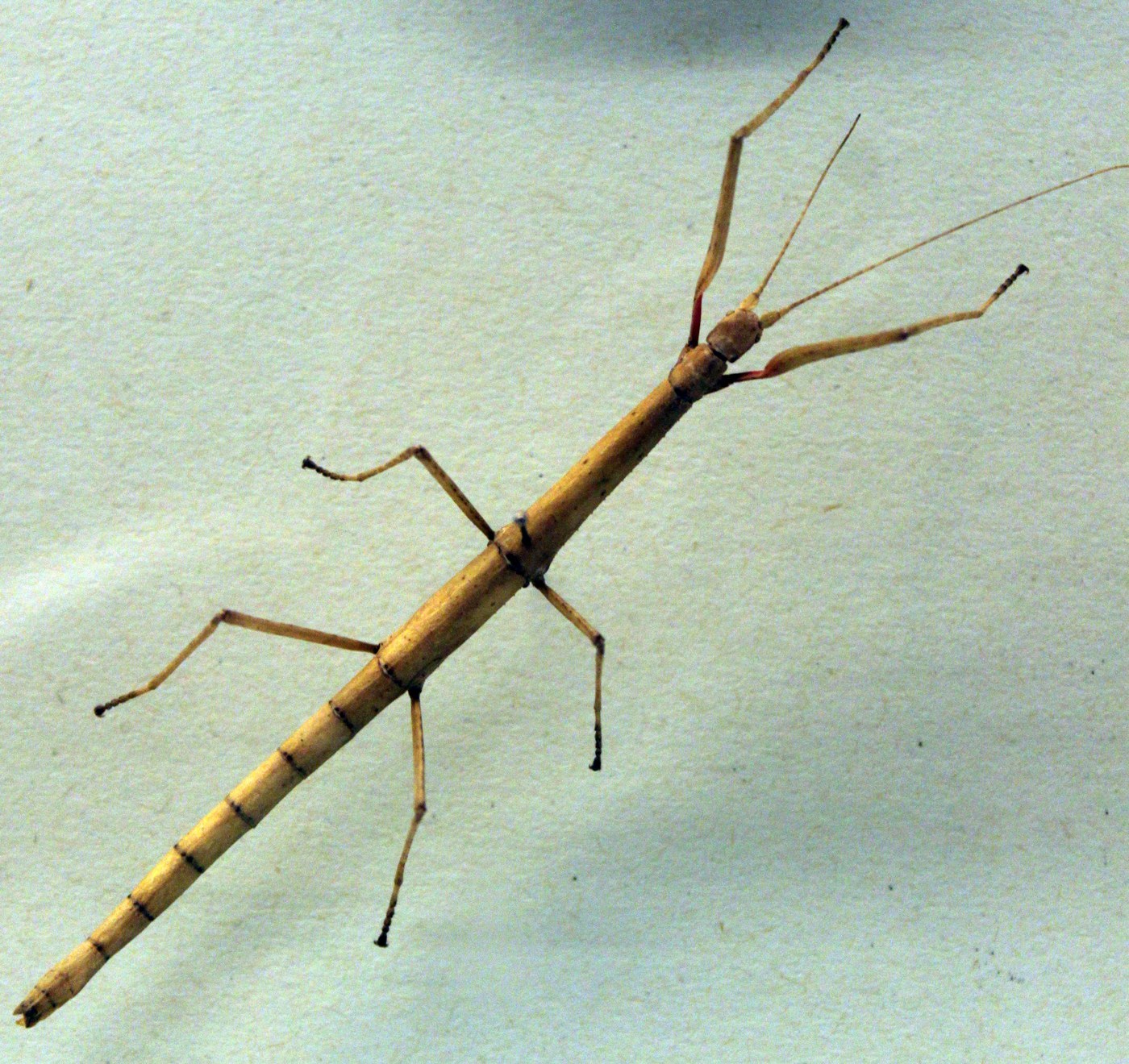
Indian Stick Insect
Carausius morosus
A slender, twig-mimicking insect so unremarkable in stillness that it disappears among the stems it feeds on, one of the most widely raised stick insects in the world.
- Size
- 3-4 in (7.5-10 cm) long
- Habitat
- shrubs and low vegetation in tropical India; widely kept and naturalized elsewhere
- Danger
- Harmless
Spotted a bug like this?
Identify any bug or insect from a photo, free.
Overview
The Indian stick insect is a slender, wingless phasmid native to India, celebrated as one of the most commonly kept and studied stick insects due to its ease of care, hardiness, and largely all-female, self-cloning populations in captivity. Its body is a near-perfect imitation of a slim twig or plant stem, right down to subtle bumps and coloring that mimic bark texture.
The body is elongated and cylindrical, typically green or brown, though captive-bred lines can display color changes influenced by lighting, temperature, and humidity, sometimes shifting between greener and browner tones over successive molts. The legs are long, thin, and held close to the body in a straight line when at rest, further enhancing the twig-like silhouette. This species lacks functional wings entirely, relying solely on camouflage and stillness for defense rather than flight.
A notable biological feature of the Indian stick insect is its capacity for parthenogenesis, meaning females can reproduce without mating, producing viable offspring that are essentially genetic clones of the mother. This trait, combined with the species' hardiness and simple dietary needs of bramble, ivy, and privet leaves, has made it one of the most popular and widely distributed stick insects kept for observation and education worldwide, with escaped or released individuals establishing small naturalized populations in a few mild climates outside its native range.
How to Identify
- Slender, elongated, wingless body closely resembling a plant twig or stem
- Coloration typically green or brown, sometimes shifting between molts depending on environmental conditions
- Long, thin legs held close to the body in a straight line at rest, enhancing camouflage
- No functional wings; relies entirely on stillness and mimicry for defense
- Long, thread-like antennae proportionate to body length
- Populations are predominantly or entirely female, reproducing without males
Habitat & Range
The Indian stick insect is native to tropical regions of India, where it inhabits shrubs, hedgerows, and low vegetation with access to suitable host plants such as bramble and privet. Due to its long history in captivity, it is also widely kept as an educational and hobbyist insect around the world, and small naturalized populations have become established in a handful of mild, humid climates outside its native range where escaped individuals have survived outdoors.
Behavior & Diet
This species is entirely dependent on camouflage and stillness for defense, remaining motionless among foliage for long periods and swaying gently to mimic a twig moving in a breeze when disturbed. It is nocturnal, feeding mainly at night on the leaves of bramble, ivy, privet, and related plants, while resting motionless during the day to avoid detection by predators. As a slow-moving herbivore with no active defenses beyond camouflage, it depends entirely on remaining unnoticed, and if seized it can shed a leg, which may be partially regenerated over subsequent molts in younger nymphs.
Life Cycle
The Indian stick insect undergoes incomplete metamorphosis with egg, nymph, and adult stages, and no pupal phase. Females that reproduce parthenogenetically, without mating, lay eggs that resemble small seeds and are simply dropped onto the ground below the host plant, where they can take several months to hatch. Nymphs emerge as miniature versions of the adult and pass through a series of molts, growing larger and losing a leg's tissue only to occasionally regenerate partial limbs, before reaching full adult size after several months. Because reproduction can occur without males, captive colonies are often composed almost entirely of females across many generations.
Frequently asked questions
Can Indian stick insects reproduce without mating?
Yes, females can reproduce through parthenogenesis, laying viable eggs without a male, which is one reason the species is so easy to keep and breed.
Do Indian stick insects have wings?
No, this species is entirely wingless and relies on camouflage rather than flight for defense.
What do Indian stick insects eat?
They feed on the leaves of plants such as bramble, ivy, and privet.
Why is the Indian stick insect so commonly kept as a pet?
Its hardiness, simple leafy diet, and ability to reproduce without a male make it one of the easiest and most widely raised stick insect species.
Indian Stick Insect guides
In-depth guides for identifying, understanding, and living alongside Indian Stick Insect.
Indian Stick Insect identified by the community
Real finds identified with Bug Identifier.
Other bugs you may enjoy
Walking Stick Insect
Trees, shrubs and leaf litter in forests, woodlands and gardens
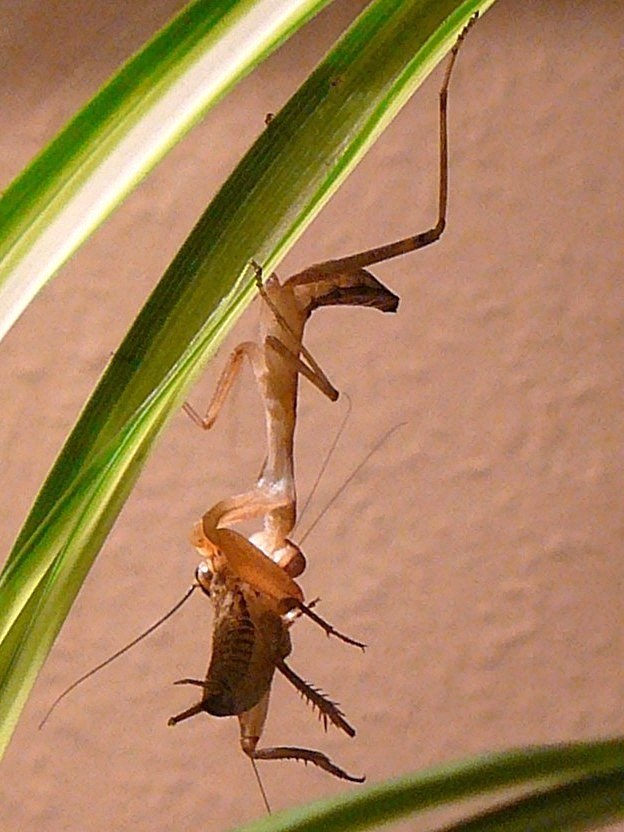
African Mantis
grasslands, shrubs, and gardens across sub-Saharan Africa
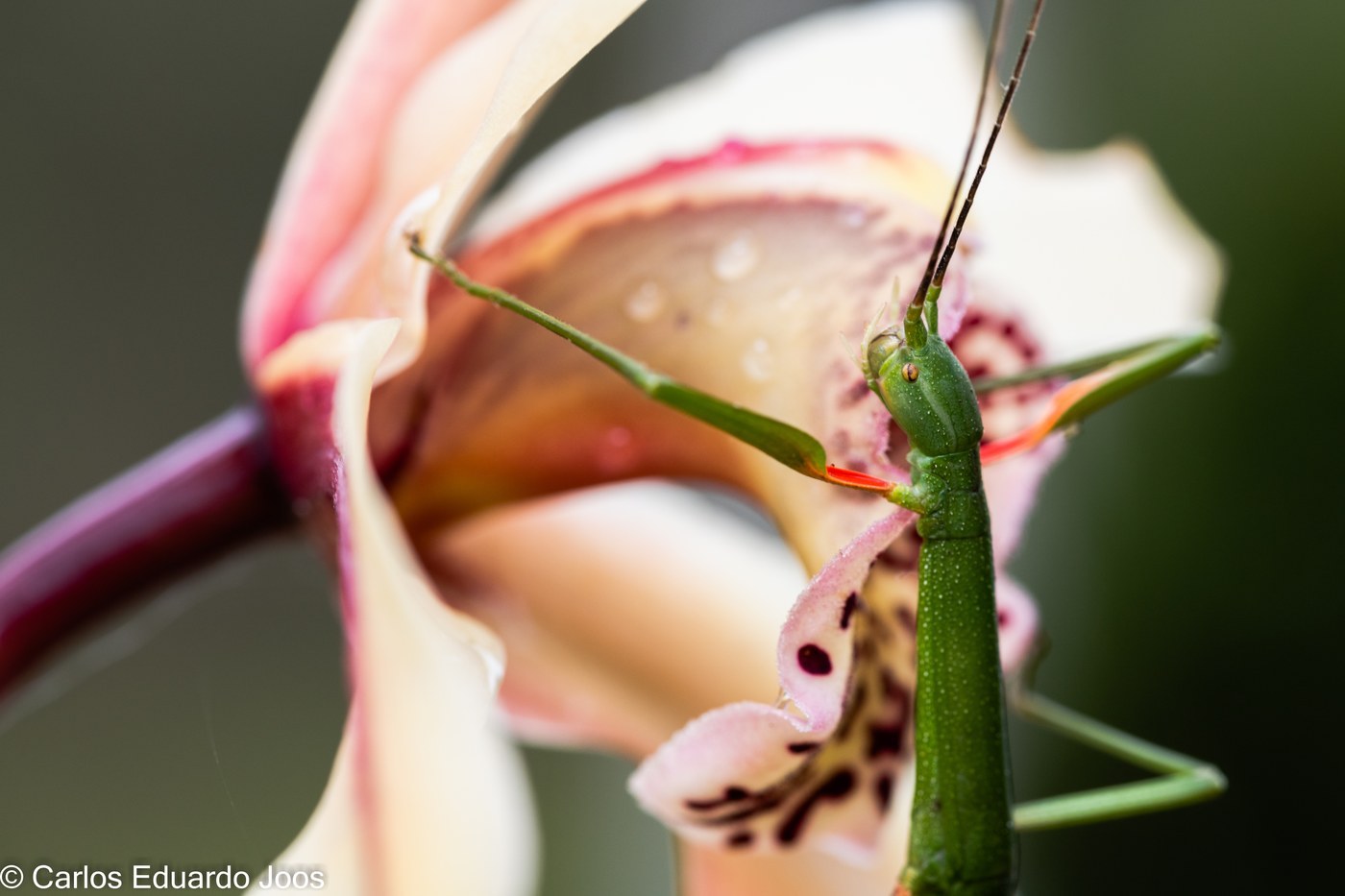
Walking Stick
Deciduous woodlands, forest edges, and shrubby vegetation
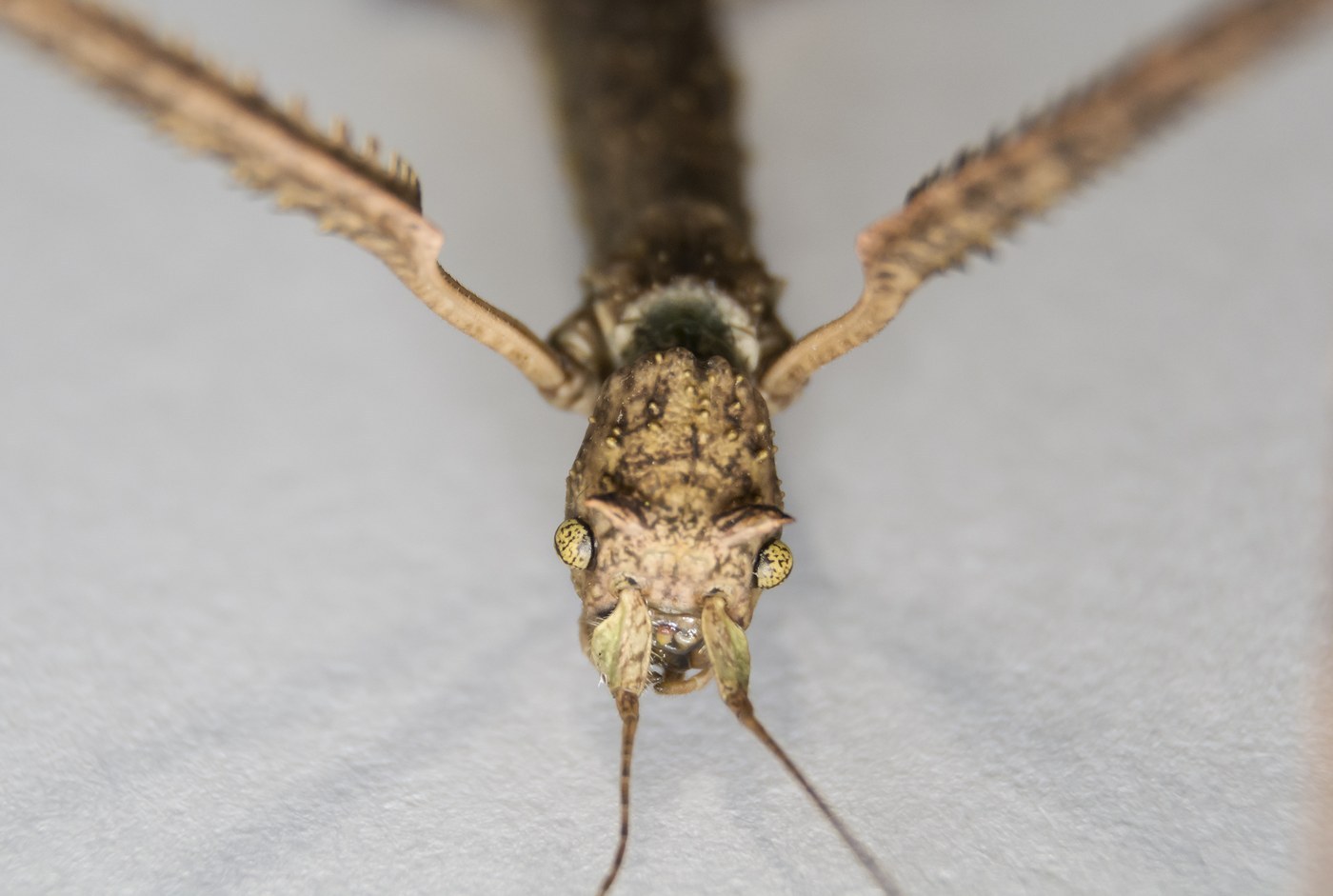
Vietnamese Walking Stick
tropical forests of Vietnam; widely kept in captivity worldwide
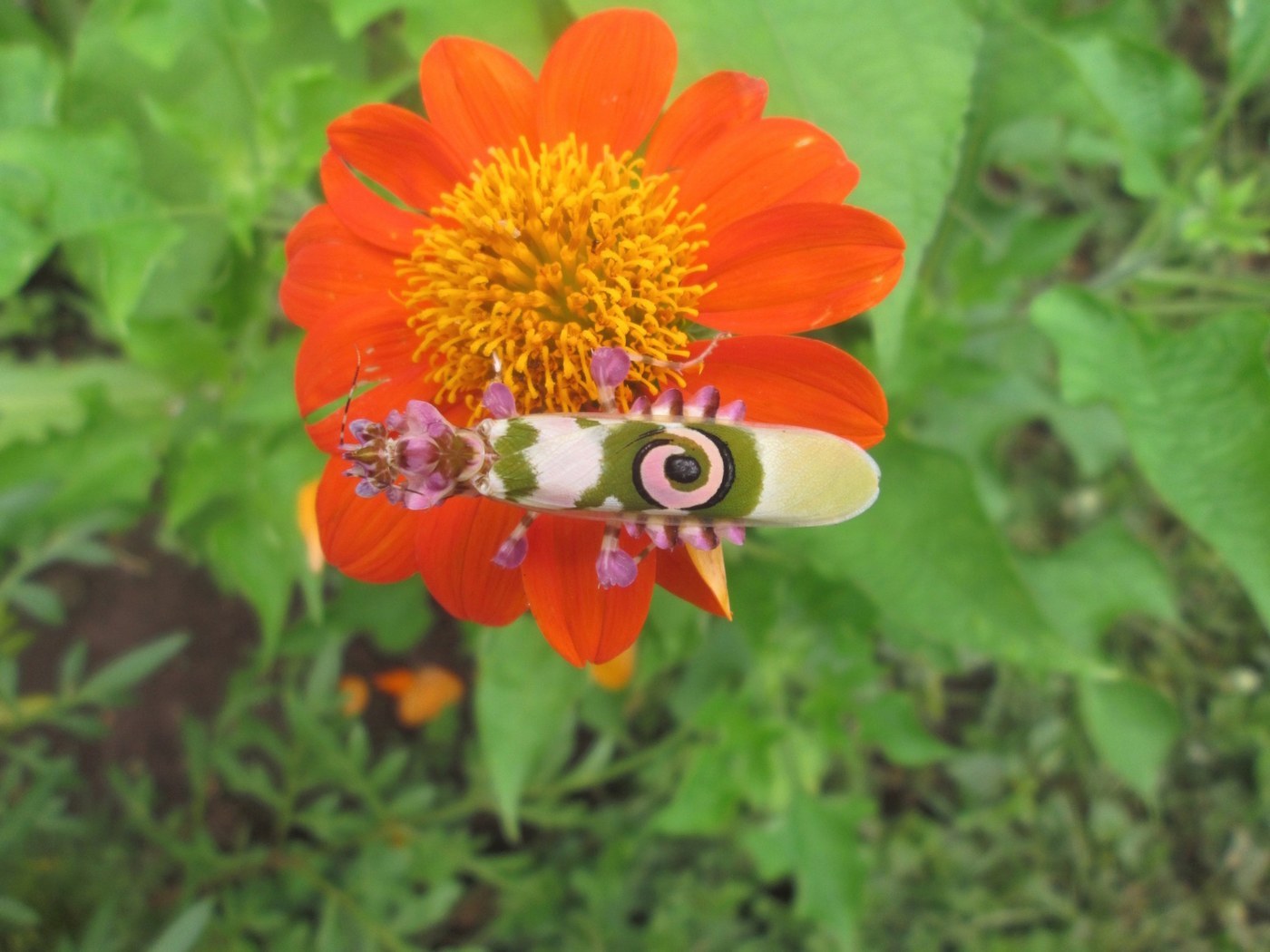
Spiny Flower Mantis
African savanna and woodland shrubs and flowering plants
Northern Walkingstick
deciduous forests and woodland edges of the eastern and central United States and southern Canada
Praying Mantis
Gardens, meadows, shrubs, and tall grass
Orchid Mantis
tropical rainforests and flowering shrubs of Southeast Asia
Goliath Stick Insect
Tropical and subtropical eucalypt forests and woodland canopy
Giant Prickly Stick Insect
eucalyptus forests and shrubland of eastern Australia and New Guinea
Javanese Leaf Insect
Tropical lowland and montane forest foliage
Giant Walking Stick
Deciduous woodlands, forest edges, and shrubby thickets