Io Moth Identification Guide
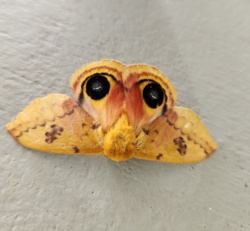
Learn to identify this eye-spotted moth and its striking yellow-vs-reddish-brown color difference between sexes.
Read the full Io Moth encyclopedia entry →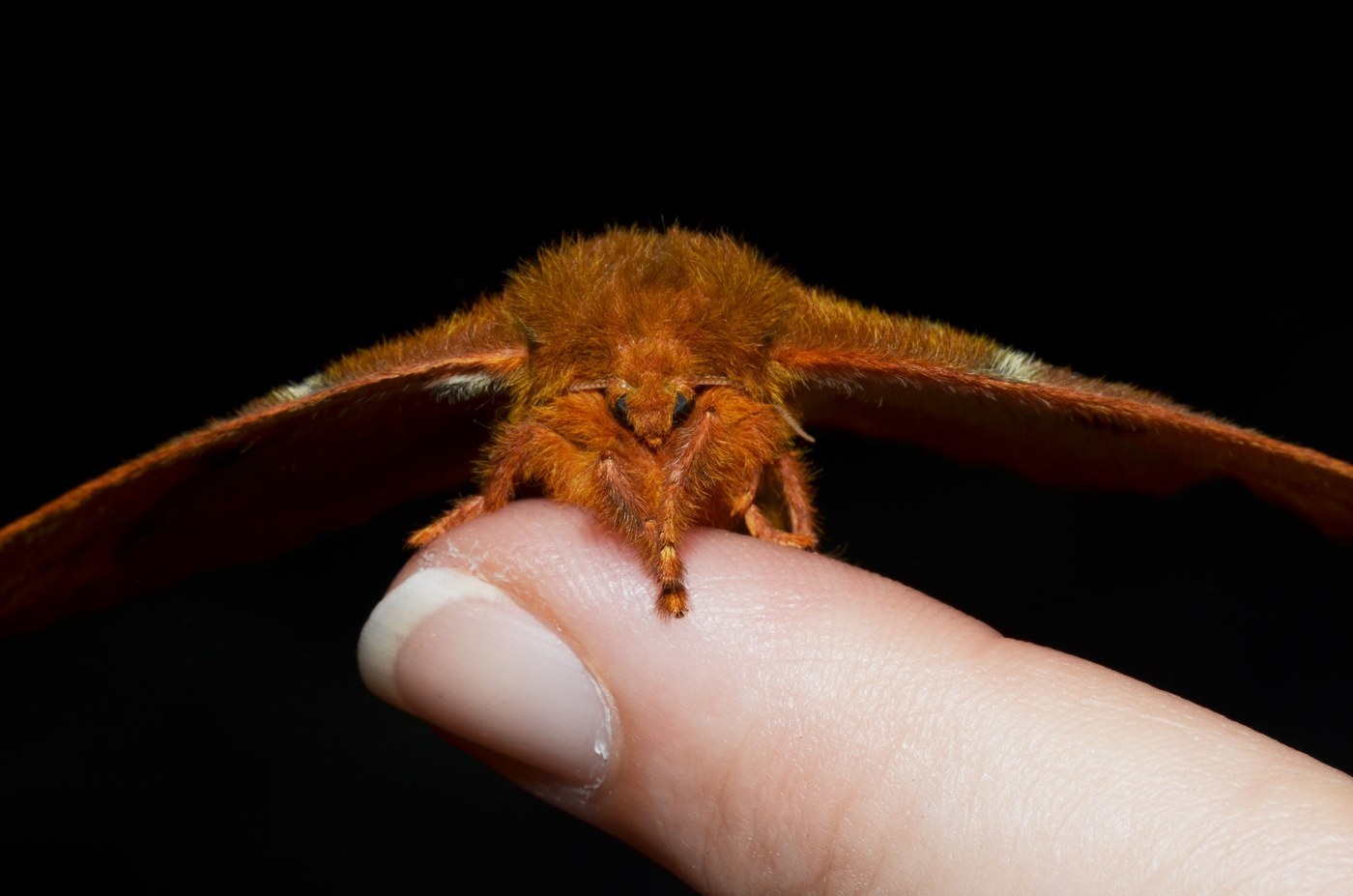
Key Features
- Medium-sized moth, wingspan about 6–8 cm (2.4–3.1 inches)
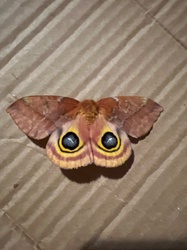
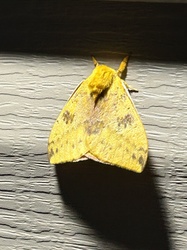
- Strong sexual dimorphism: males have bright yellow forewings and hindwings, while females are reddish-brown to purplish-brown, making the two sexes look almost like different species
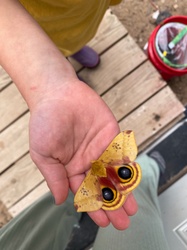
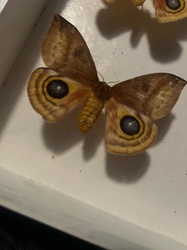
- Each hindwing bears a large, striking eyespot — a black center surrounded by blue and white rings on a yellow or dark background — that is normally hidden under the forewings at rest
- When disturbed, the moth flicks its forewings forward to suddenly reveal the large eyespots, a startle display meant to look like the eyes of a larger animal and momentarily surprise a would-be predator
- Forewings are relatively plain with fine reddish or brown lines and a small central spot near the leading edge
- Stout, furry body matching the wing color, with moderately feathery antennae, more developed in males
Where & When to Spot One
- Found throughout much of North America, from southern Canada through the eastern and central United States into Mexico
- Inhabits deciduous woodlands, forest edges, fields, and suburban areas with a variety of host trees and shrubs, since the caterpillars feed on many different plants
- Nocturnal and attracted to lights; most often seen resting on walls, tree trunks, or near porch lights after dark
- Adults fly primarily in late spring through summer, with one or two generations depending on latitude and local climate
Similar Species
- Other Automeris species elsewhere in the Americas have similar eyespot patterns but differ in ground color and geographic range
- Polyphemus Moth also has large hindwing eyespots but is much larger overall, tan-brown in both sexes, and has a more oval wing shape
- Luna Moth caterpillars and adults share some habitat but look entirely different, with pale green wings and long tails, ruling out confusion
- The bright yellow male Io Moth is fairly distinctive in North America, while the reddish-brown female can be mistaken for other brown moths until the hindwing eyespots are revealed
Quick ID Checklist
- Large blue-and-black eyespot on each hindwing
- Males bright yellow, females reddish-brown
- Medium size (6–8 cm wingspan)
- Startle display flashing eyespots when disturbed
- Nocturnal, drawn to outdoor lights in wooded/suburban areas
Frequently asked questions
Why do male and female Io Moths look so different?
The species shows strong sexual dimorphism, with males colored bright yellow and females a deeper reddish-brown, though both share the hindwing eyespots.
What is the purpose of the eyespots?
They're a startle display — normally hidden, the moth flashes them by moving its forewings when disturbed, mimicking the eyes of a larger animal to deter predators.
Where are Io Moths commonly seen?
Near outdoor lights at night, in wooded areas, forest edges, and suburban yards across much of North America.
When do Io Moths fly?
Mainly from late spring through summer, with timing depending on regional climate.
Io Moth identified by the community
Recent Io Moth finds identified with Bug Identifier.