
Javanese Leaf Insect Identification Guide
Learn how to spot this remarkable insect that has evolved to look exactly like a living leaf.
Read the full Javanese Leaf Insect encyclopedia entry →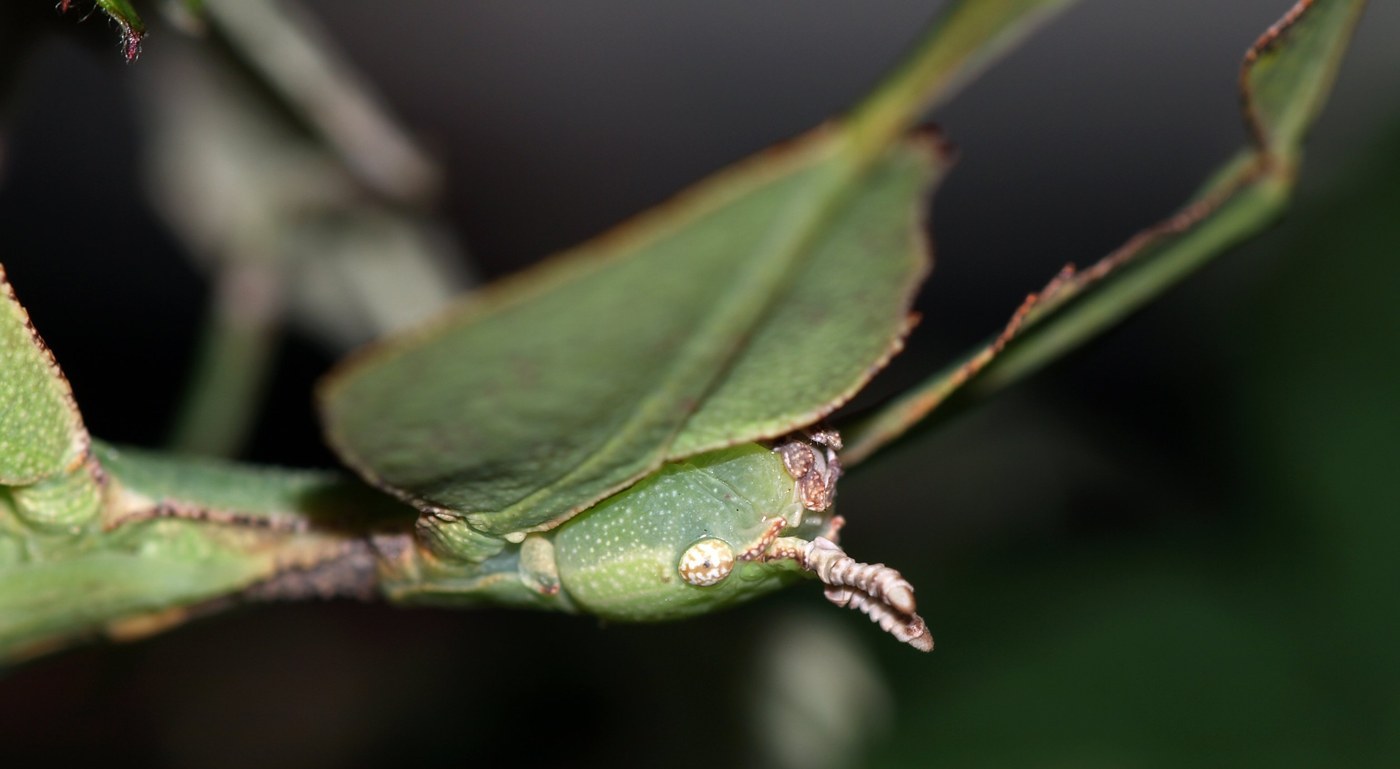
Key Visual Features
The Javanese leaf insect (genus Phyllium) is one of the most convincing masters of camouflage in the insect world. Look for these traits:
- Flattened, leaf-shaped body with a broad, rounded abdomen that mimics the outline of a real leaf
- Bright to olive green coloring, occasionally with brown or yellow blotches that resemble decaying leaf patches
- Vein-like lines running across the wings and body, mirroring the midrib and veins of foliage
- Leaf-shaped wing covers (tegmina) in females, which are broad and largely flightless; males have slimmer bodies and fully functional wings for flying between plants
- Short antennae relative to true stick insects, and legs with small lobed extensions that continue the leaf illusion
- Size typically 7–10 cm (2.8–4 inches) in length, with females noticeably larger and heavier-bodied than males
Where and When You'd See It
Javanese leaf insects are native to the humid tropical forests of Java and other parts of Indonesia and Southeast Asia. They cling to broad-leaved shrubs and trees, feeding on foliage such as guava, bramble, and oak leaves in captivity. They are most active at night (nocturnal), resting motionless by day to avoid detection by predators. Because they sway gently to imitate a leaf rustling in the breeze, patient observers may notice a rocking motion that gives away an otherwise perfectly hidden insect.
Similar-Looking Bugs
- Stick insects (Phasmatidae): elongated and twig-like rather than flat and leaf-shaped
- Other Phyllium species: distinguished by subtle differences in vein pattern, wing shape, and regional range
- Katydids: also green and leaf-like, but katydids have long, thread-like antennae and jumping hind legs, while leaf insects have short antennae and walking legs only
- Dead-leaf mimicking moths: some moths fold their wings into a leaf-like shape at rest, but they lack the leaf insect's flattened walking legs and characteristic slow, rocking gait
Careful observation of leg shape and movement style is often the easiest way to separate a true leaf insect from other camouflaged foliage-dwellers, since the rocking motion and lobed leg extensions are rarely matched by unrelated mimics.
Quick ID Checklist
- Flattened, broad, leaf-shaped body outline
- Green or mottled brown coloring with vein-like markings
- Short antennae (not long and thread-like)
- Females bulkier with reduced flight wings; males slimmer and winged
- Found resting motionless on broad-leaved tropical foliage
Frequently asked questions
How can I tell a male from a female Javanese leaf insect?
Males are smaller, slimmer, and have fully developed wings that let them fly, while females are larger, heavier-bodied, and have broad, leaf-like wing covers that are not used for flight.
What makes this insect look so much like a leaf?
Its flattened body, rounded leaf-shaped outline, green coloring, and raised vein-like lines across the wings all combine to mimic the exact appearance of living foliage.
Is the Javanese leaf insect the same as a stick insect?
No. Both belong to the order Phasmatodea, but leaf insects have flat, broad, leaf-shaped bodies while stick insects have long, thin, twig-like bodies.
When is the best time to spot one in the wild?
They are easiest to notice at night when they move to feed, since during the day they stay still on leaves and blend in almost perfectly.