Jewel Bug Identification Guide
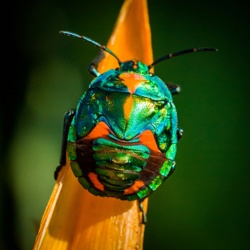
Recognize the metallic, gem-like shell coloring that gives jewel bugs their eye-catching name.
Read the full Jewel Bug encyclopedia entry →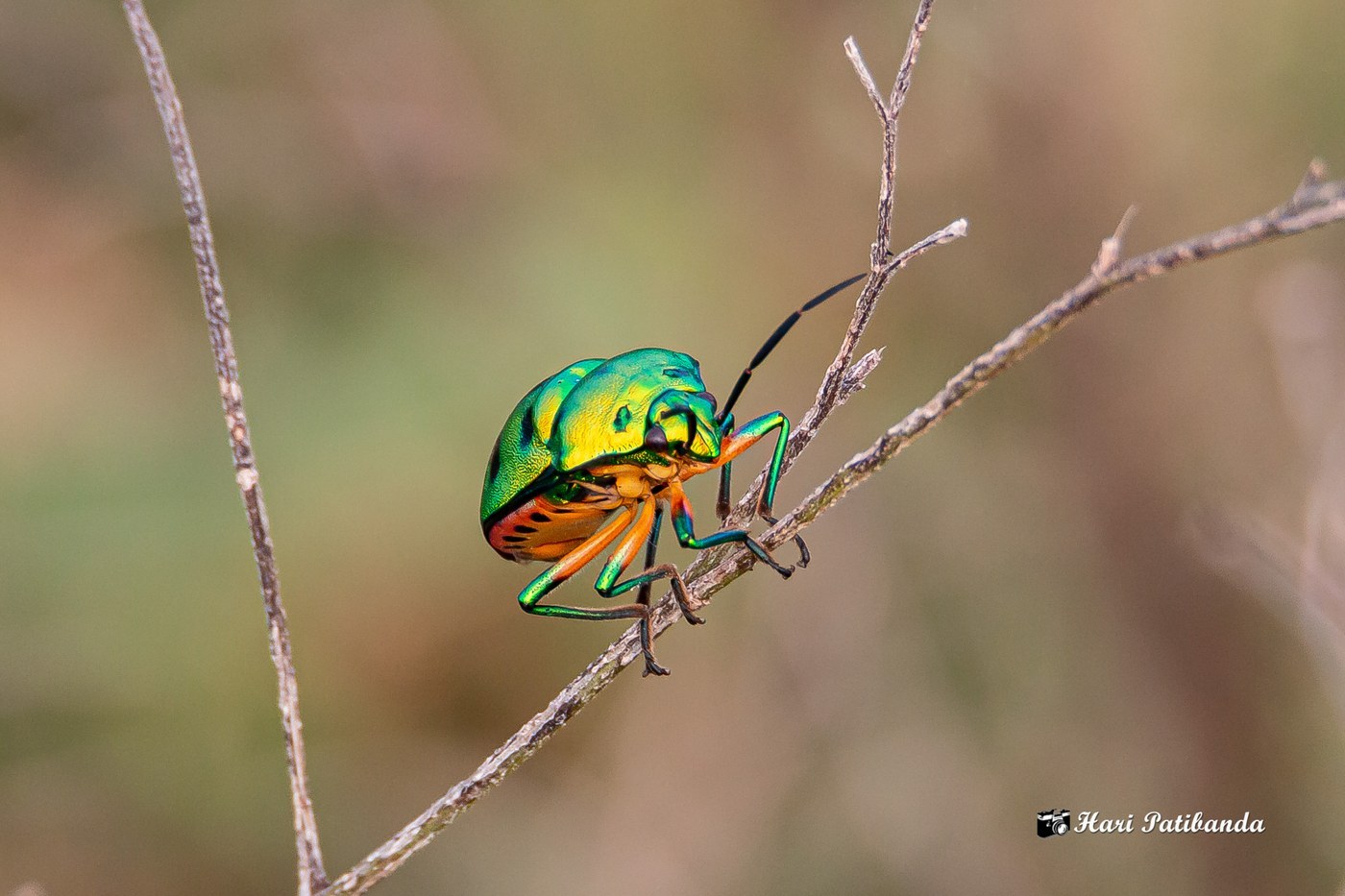
Key Visual Features
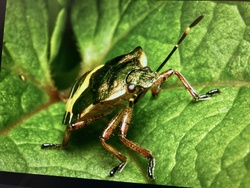
- Body is broad, rounded, and shield-shaped, generally 0.4-1 inch (1-2.5 cm) long, similar in outline to other shield bugs.
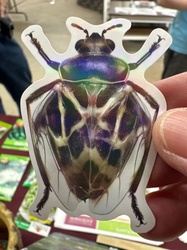
- Most distinctive trait is a glossy, metallic sheen in colors such as emerald green, gold, copper, blue, or a combination of iridescent hues.
- A large, rounded to triangular scutellum plate often covers most or all of the back, sometimes extending to cover the wings almost entirely, adding to the polished "jewel" appearance.
- Legs and antennae are typically dark and contrast against the bright metallic body.
- Some species show additional spots, stripes, or color-banding on the shell surface in a contrasting metallic tone.
- The overall look is smooth, domed, and highly reflective compared to the duller, matte finish of many other true bugs.
Where and When You'd See It
- Found on leaves, stems, and flowers of a variety of host plants in warm and tropical to subtropical regions.
- Most visible during the day, particularly in bright sunlight, when the metallic shell reflects light most vividly.
- Active during warmer months, often resting or feeding on foliage rather than in flight.
- Found in gardens, forest edges, and agricultural areas within their native range.
Similar-Looking Species
- Ordinary shield bugs and stink bugs share the same broad body outline but have a matte, non-metallic brown, green, or gray coloring instead of the glossy jewel-like sheen.
- Some metallic beetles, such as certain scarab or leaf beetles, can share the shiny coloring but have a harder, more domed shell and a distinctly beetle-like head and antennae rather than the true bug's piercing mouthpart and shield-shaped scutellum.
- Tortoise beetles can also appear shiny and rounded but lack the true bug body plan and have a more disc-like, flattened edge around the body.
Quick ID Checklist
- Glossy, metallic body coloring (green, gold, copper, or iridescent blue).
- Broad, rounded, shield-shaped outline similar to other true bugs.
- Large scutellum plate often covering most of the back.
- Smooth, highly reflective shell surface, unlike matte-bodied relatives.
- Found resting on leaves or stems in sunny, warm habitats.
Frequently asked questions
What makes a jewel bug look shiny compared to other shield bugs?
Its shell has a glossy, metallic finish in colors like green, gold, or copper, produced by the structure of the outer cuticle, unlike the flat, matte coloring typical of most other shield and stink bugs.
How can I tell a jewel bug from a metallic beetle?
Jewel bugs have the broad, shield-shaped body and large scutellum plate typical of true bugs along with a piercing mouthpart, while beetles have a harder domed shell split down the middle and chewing mouthparts.
What kind of habitat is best for finding a jewel bug?
Warm and tropical to subtropical gardens, forest edges, and agricultural areas with plenty of leafy host plants are the most likely places to spot one, especially in bright daylight.
Do jewel bugs have any patterns besides solid metallic color?
Some species show additional spots, stripes, or contrasting metallic bands on the shell, though the defining trait across the group is the overall glossy, reflective finish.
Jewel Bug identified by the community
Recent Jewel Bug finds identified with Bug Identifier.