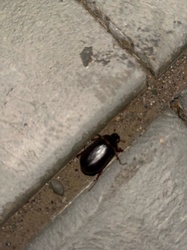
June Bug Identification Guide
Learn to recognize the reddish-brown scarab beetles known as June bugs by their glossy oval bodies and clumsy nighttime flight.
Read the full June Bug encyclopedia entry →Key Features
- Stout, oval beetle, typically 1.2–2.5 cm (0.5–1 inch) long depending on species (the name "June bug" covers various Phyllophaga and related scarab species across North America)
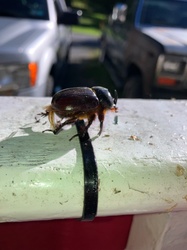
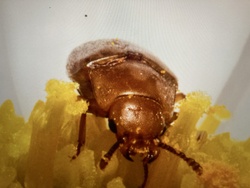
- Coloring ranges from reddish-brown to chestnut or tan, with a smooth, somewhat glossy exterior that can catch the light under a porch bulb
- Six legs equipped with small spines used for digging and gripping; short, clubbed antennae that fan out into small lamellae (leaf-like segments) used to sense scent
- Rounded, convex back typical of scarab beetles, with hardened wing covers (elytra) that meet in a straight line down the middle
- Relatively large, robust body compared to many other beetles of similar length, giving it a heavy, bumbling appearance in flight
- Underside is usually paler than the back, sometimes with a faint reddish or amber tone
Where & When to Spot One
- Widespread across North America, especially in areas with grassy lawns, fields, and woodland edges where the underground larvae (grubs) develop over one to several years
- Adults are nocturnal and strongly attracted to porch lights, streetlights, and lit windows, often heard bumping loudly against screens or glass on warm evenings
- Most active from late spring through early summer (the "June" in the name), though timing varies by region and species, with some appearing as early as May in warmer areas
- Clumsy fliers, often seen buzzing erratically around outdoor lights at dusk and after dark, sometimes landing on porches, walls, or people
Similar Species
- Japanese Beetles are similarly rounded but show a distinct metallic green-and-copper two-tone coloring, unlike the more uniform brown of June bugs
- Green June Beetles are larger and a dull metallic green rather than brown, and tend to fly during the day rather than at night
- Various Phyllophaga species look nearly identical to each other and are difficult to tell apart without close examination; for casual identification, the reddish-brown color, size, and clumsy nighttime flight to lights are the key clues that group them all as "June bugs"
Quick ID Checklist
- Reddish-brown to tan, oval, glossy body
- About 1.2–2.5 cm long
- Clubbed, fan-tipped antennae
- Nocturnal, clumsy flight toward lights
- Common near lawns and grassy areas in late spring/early summer
Frequently asked questions
Why do June bugs keep bumping into windows and lights at night?
They're nocturnal and strongly attracted to artificial light, and they're clumsy fliers, so they often collide with lit surfaces while heading toward the light source.
Is "June bug" one specific species?
No, it's a common name applied to several similar brown scarab beetles, mainly in the genus Phyllophaga, that share a similar look and season of activity.
When are June bugs most active?
Primarily from late spring into early summer, hence the common name, though timing can shift with regional climate.
How can I tell a June bug from a Japanese Beetle?
June bugs are a more uniform reddish-brown or tan, while Japanese Beetles have a distinct metallic green thorax and coppery wing covers.
June Bug identified by the community
Recent June Bug finds identified with Bug Identifier.