
Karner Blue Identification Guide
Learn to identify this small, habitat-specific blue butterfly closely tied to wild lupine.
Read the full Karner Blue encyclopedia entry →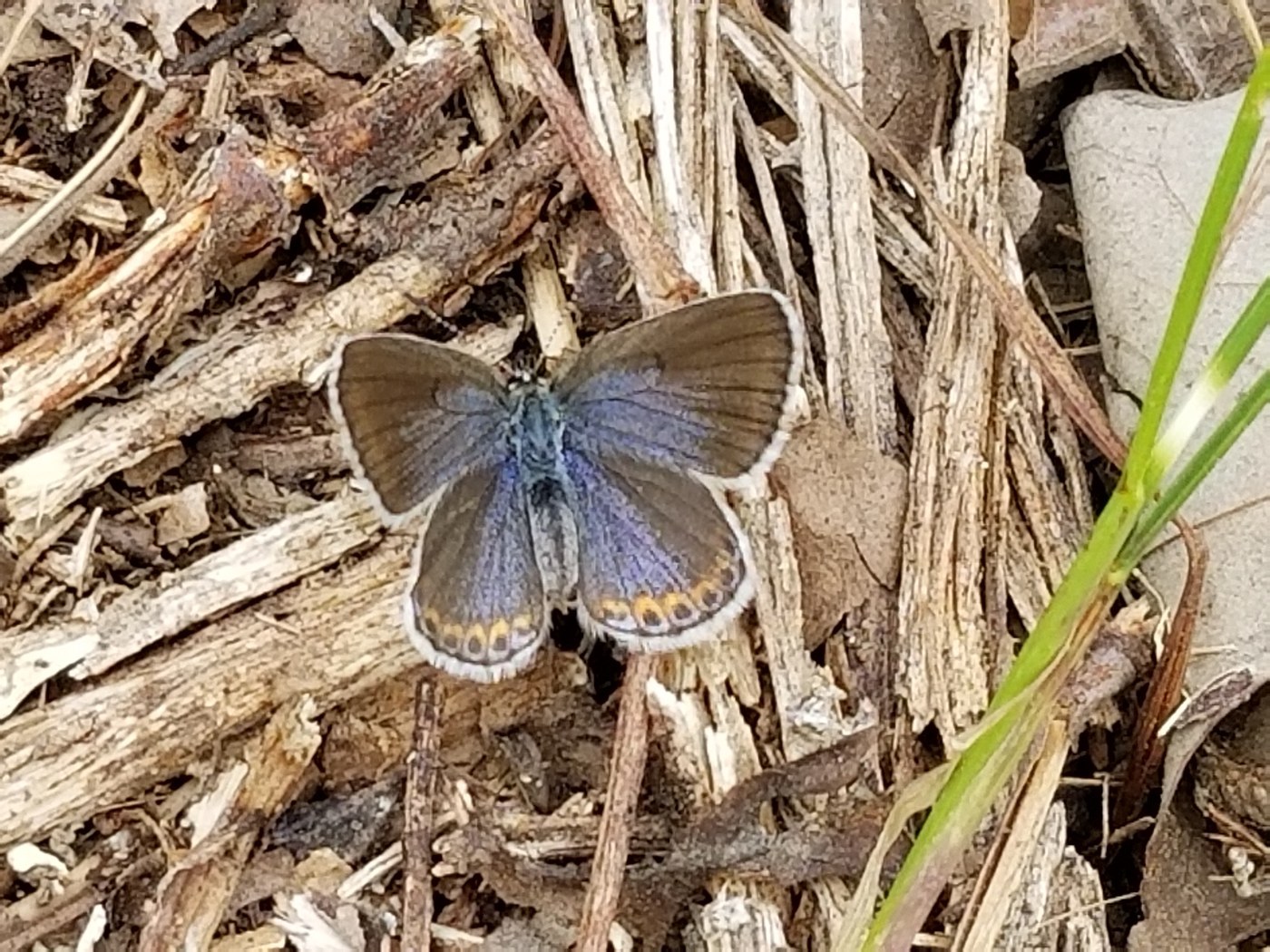
Key Visual Features
The Karner Blue (Lycaeides melissa samuelis) is a small butterfly with a wingspan of about 1 inch, showing clear differences between males and females.
- Males: Dorsal wings are a bright, silvery blue with a narrow dark border and a fine white fringe along the wing edges.
- Females: Dorsal wings are more brownish-gray, often with a row of small orange crescents along the hindwing margin and some blue dusting near the wing base.
- Underside (both sexes): Pale gray with rows of small black spots ringed in white, plus a band of orange crescents along the outer margin of the hindwing.
- Body: Small, slender gray-brown body.
- Wing shape: Rounded wings typical of blues, without tails.
Where and When You'll See It
Karner Blues are highly habitat-specific, found only in oak and pine barrens with sandy soils that support wild lupine, their sole larval host plant. Their range is limited to parts of the Great Lakes region and scattered locations in the northeastern United States, most notably Wisconsin, New York, Michigan, and New Hampshire. They are rare and localized due to this habitat dependency. Adults fly low over lupine patches and typically appear in two broods per year, one in late spring and a second in midsummer.
Similar-Looking Species
- Eastern Tailed-Blue: Similar small blue color, but has a thin thread-like tail on the hindwing, which Karner Blues lack.
- Spring Azure: Lacks the band of orange crescents on the ventral hindwing that Karner Blues show.
- Other regional blues: Many small blue butterflies look superficially similar; habitat association with wild lupine in oak/pine barrens is often the strongest clue for confirming a Karner Blue sighting.
Quick ID Checklist
- Small size, about 1-inch wingspan
- Males silvery blue above; females brownish-gray with orange crescents
- Pale gray underside with white-ringed black spots and orange crescent band
- No tails on the hindwing
- Found specifically near wild lupine in sandy oak/pine barren habitat
Frequently asked questions
What plant is most associated with Karner Blue sightings?
Wild lupine is the key indicator, as it is the only plant used by Karner Blue caterpillars, so adults are almost always found near lupine patches.
How do male and female Karner Blues differ in color?
Males show a bright silvery-blue upper wing surface, while females are more brownish-gray with a row of small orange crescents along the hindwing edge.
Where can Karner Blues typically be found?
They are restricted to specific oak and pine barren habitats with sandy soils, mainly in parts of the Great Lakes region and the northeastern United States.
How many generations of Karner Blue appear each year?
There are typically two broods per year, one flying in late spring and a second in midsummer.