Kissing Bug Identification Guide
Identify a kissing bug by its cone-shaped head, dark body, and orange or red banding along the edge of its abdomen.
Read the full Kissing Bug encyclopedia entry →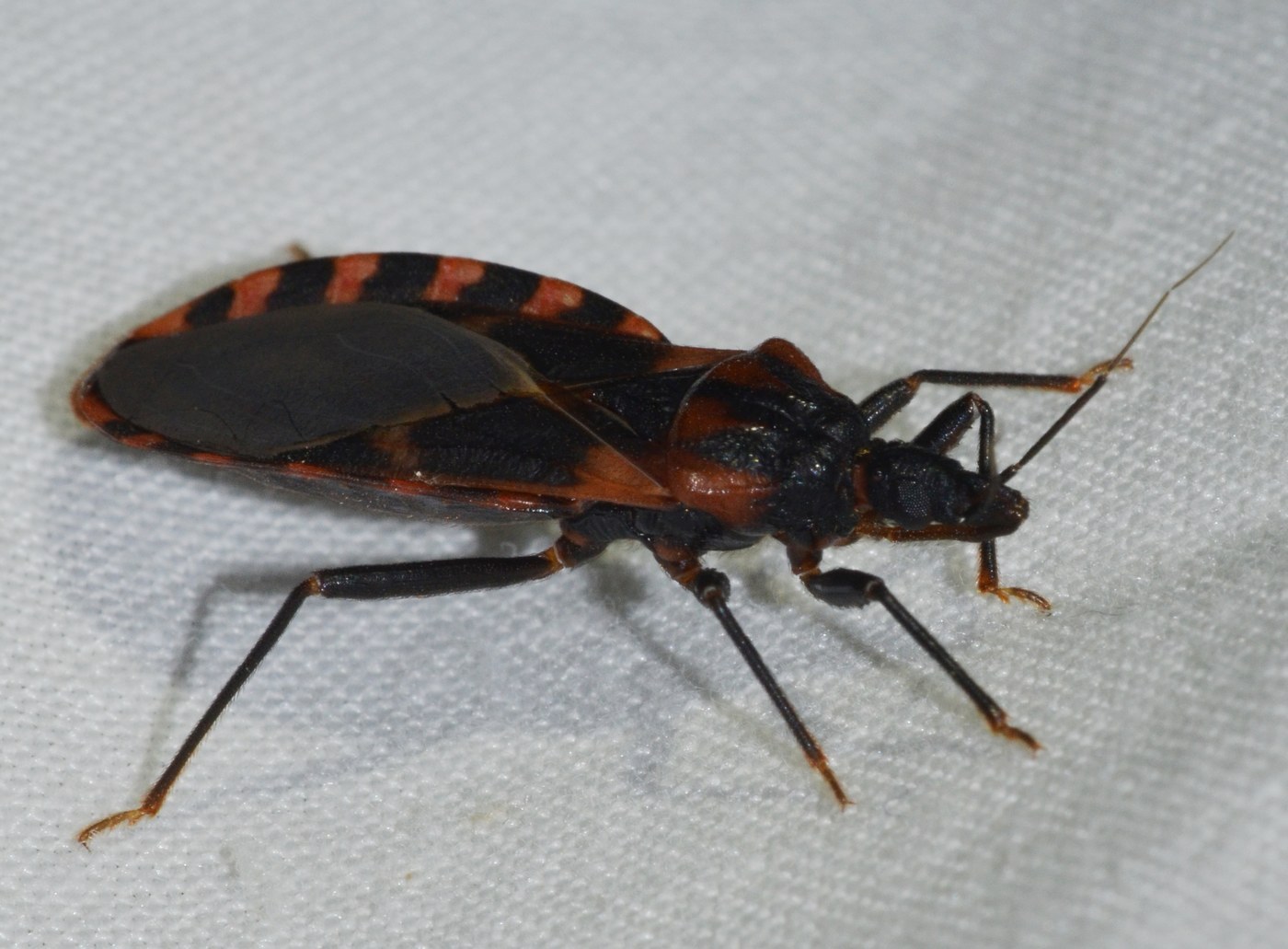
Key Visual Features
Kissing bugs (Triatoma species) are a group of assassin bugs with a fairly distinctive shape and pattern.
- Size: Elongated oval body, typically 16-28mm long.
- Color: Dark brown to black base color with bold orange, red, or yellow banding along the outer edges of the abdomen.
- Body shape: Narrow, cone-shaped head that extends forward from the body, distinct from the broader thorax and abdomen.
- Antennae: Long and thin, held forward from the head.
- Legs: Six long, thin legs adapted for walking.
- Wings: Two pairs folded flat over the back at rest, with the abdomen's colorful banded edge often visible along the sides beneath the folded wings.
Where and When You'll See It
Kissing bugs are most often found in and around the nests or resting areas of wild animals, including rock piles, wood piles, animal burrows, and beneath porches or outbuildings. In warmer regions, including the southern United States, Mexico, and parts of Central and South America, they may occasionally enter structures through small gaps, particularly at night, since they are drawn to light. They are primarily active after dark, spending daylight hours hidden in cracks, crevices, or debris piles.
Similar-Looking Bugs
- Other assassin bugs: Species like the masked hunter are similarly shaped but typically lack the bold orange-red banding along the abdomen edge that kissing bugs display.
- Boxelder bugs: Show red-orange and black coloring but have a rounder, more compact body and lack the kissing bug's elongated cone-shaped head.
- Wheel bugs: Larger assassin bugs with a distinctive crest on the thorax, easily told apart by that unique cog-like structure, which kissing bugs do not have.
Quick ID Checklist
- Elongated oval body around 16-28mm
- Cone-shaped, narrow head projecting from the body
- Dark body with bold orange or red banding along the abdomen edge
- Long thin antennae and legs
- Found near animal nests, wood piles, or rock piles, most active at night
Frequently asked questions
What features distinguish a kissing bug from other assassin bugs?
The combination of a narrow, cone-shaped head and bold orange or red banding along the edge of a dark abdomen is the clearest way to distinguish kissing bugs from other assassin bug species.
Where do kissing bugs typically hide during the day?
They tend to shelter in cracks, crevices, wood piles, rock piles, and around animal nests or burrows, becoming active mainly after dark.
How can I tell a kissing bug from a boxelder bug?
Boxelder bugs have a rounder, more compact body without an elongated cone-shaped head, while kissing bugs have a distinctly narrow, projecting head in front of a broader body.
What time of day are kissing bugs most active?
They are primarily nocturnal, becoming active and moving about after dark and often being drawn toward artificial light sources.
Kissing Bug identified by the community
Recent Kissing Bug finds identified with Bug Identifier.