Lace Weaver Spider Identification Guide
Identify the lace weaver spider by its intricate blue-white cribellate web and mottled gray-brown body.
Read the full Lace Weaver Spider encyclopedia entry →Key Visual Features
Lace weaver spiders are named for the fine, lacy, bluish-white webs they spin using a specialized silk-combing structure called a cribellum.
- Size: Body length generally 8-15 mm, with a fairly robust build.
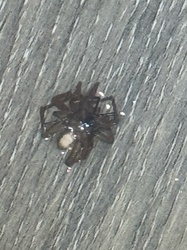
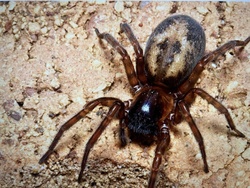
- Color: Mottled gray, brown, and tan patterning across the abdomen, providing effective camouflage against bark and stone.
- Body shape: Moderately stout, with a somewhat flattened abdomen bearing a leaf-like or chevron pattern in many species.
- Legs: Eight legs, banded in alternating light and dark tones, often held close to the body when at rest in a retreat.
- Silk: The web has a distinctive fluffy, bluish, woolly-looking texture created by combing silk with the hind legs — this cribellate silk is one of the best identification clues, since it looks and feels different from the smooth, sticky silk of typical orb weavers.
- Web structure: An irregular sheet or funnel of lacy silk built against bark, rock crevices, or wall surfaces, usually with a tubular retreat to one side.
Where and When You'd See It
Lace weaver spiders favor sheltered vertical surfaces — tree bark, stone walls, fence posts, and the sides of buildings. Their webs are most conspicuous at night or in early morning light when dew highlights the fine woolly strands. The spiders themselves are largely nocturnal, remaining hidden in a silk retreat during the day and emerging after dark to repair the web and wait for prey.
Similar-Looking Bugs
- Mesh web weavers: Also cribellate web builders with a similarly woolly silk texture, but generally build webs low in vegetation rather than against bark or stone.
- Funnel-web type spiders: Build a funnel retreat too, but their silk is smooth rather than the fluffy, combed texture of lace weaver silk.
- Orb weavers: Build organized circular webs with smooth, sticky spiral silk, quite different from the irregular lacy sheet of a lace weaver.
Quick ID Checklist
- Mottled gray-brown body camouflaged against bark or stone
- Fluffy, bluish-white lacy silk texture, unlike smooth orb-weaver silk
- Irregular sheet web with a tubular retreat built into a crevice
- Found on tree trunks, stone walls, or building exteriors
- Mostly nocturnal, most active and visible after dark
Behavior Notes
The comb-like cribellate silk snags the fine hairs and claws of walking insects, so this spider relies on texture rather than stickiness to trap prey, then rushes from its retreat to subdue anything caught in the mesh.
Frequently asked questions
What makes lace weaver silk different from other spider silk?
It has a fluffy, bluish-white, woolly texture produced by combing silk fibers with the hind legs, rather than the smooth sticky strands seen in typical orb-weaver webs.
Where should I look for a lace weaver spider?
Check sheltered vertical surfaces like tree bark, stone walls, and building exteriors, where the spider builds an irregular lacy sheet web with a tubular retreat.
Is a lace weaver web the same as a typical spider web shape?
No, it's an irregular sheet or funnel of woolly silk rather than the neat, circular pattern of an orb weaver's web.
When is the best time to see a lace weaver spider active?
They are mostly nocturnal, so they're most likely to be seen out of their retreat and moving on the web after dark.
Lace Weaver Spider identified by the community
Recent Lace Weaver Spider finds identified with Bug Identifier.