
Lappet Moth Identification Guide
A large, richly colored moth with scalloped, deeply notched wings that make it look remarkably like a curled dead leaf at rest.
Read the full Lappet Moth encyclopedia entry →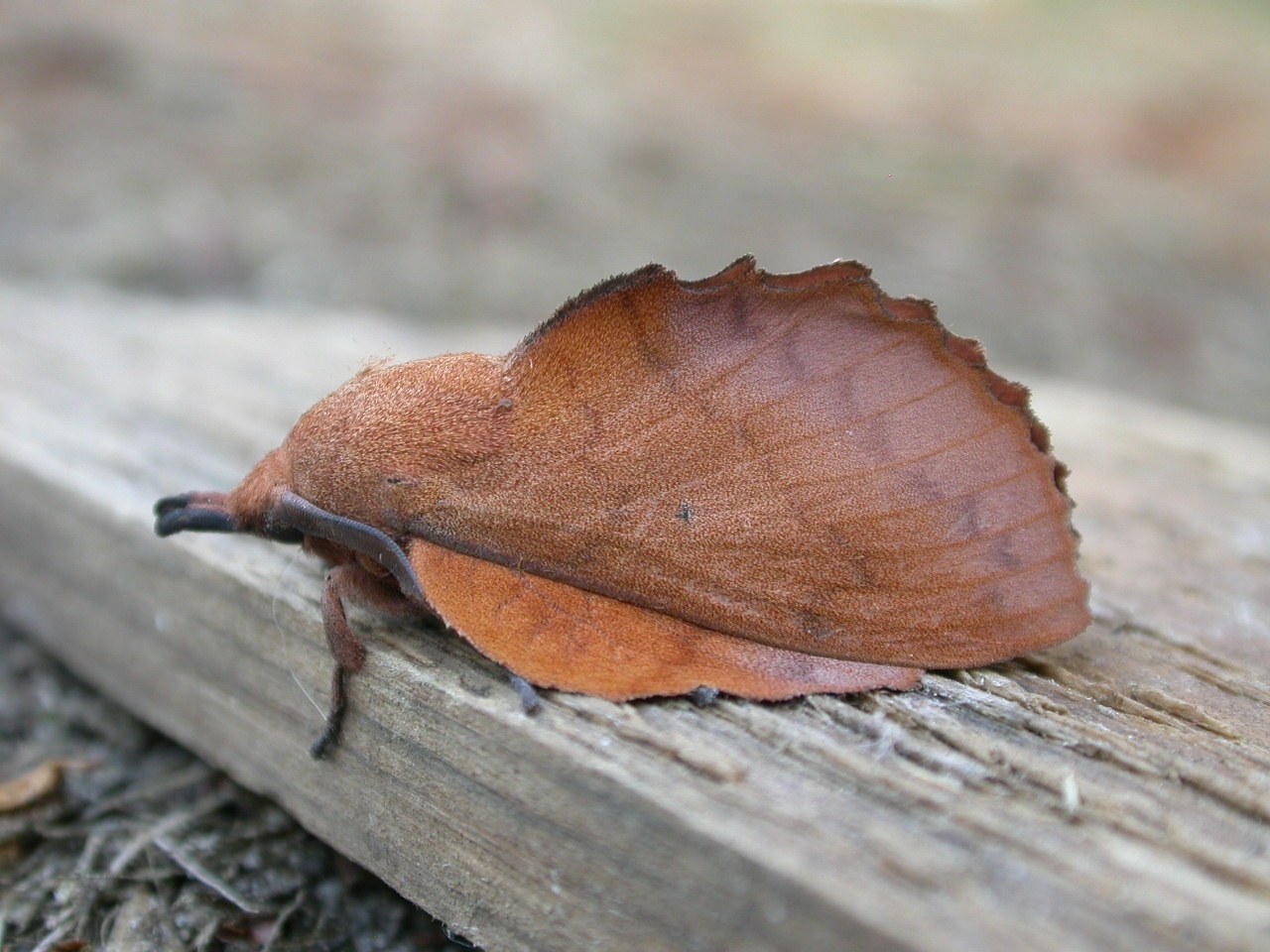
Key Visual Features
The lappet moth is a bulky, distinctively shaped moth built for leaf camouflage:
- Size: Large moth, wingspan typically 6-8 cm (2.4-3.1 in), with females generally larger than males.
- Color: Warm reddish-brown to chestnut or grayish-brown wings, often with darker wavy cross-lines resembling dried leaf veins.
- Wing shape: Deeply scalloped, irregular wing margins that create a ragged, leaf-like outline rather than a smooth edge.
- Resting posture: Wings held overlapping and slightly uneven, with the hindwing edges often protruding past the forewings — a key feature that enhances the curled dead leaf illusion.
- Body: Thick, heavily furred body, especially noticeable along the thorax.
- Antennae: Broad, feathery (bipectinate) antennae, particularly prominent in males.
Where and When You're Likely to See It
Lappet moths inhabit hedgerows, orchards, woodland edges, and scrubby grassland, especially where blackthorn, hawthorn, and fruit trees grow, as these serve as caterpillar host plants. Adults fly at night during summer and are attracted to lights, though they are seen less often than many other moths since they don't travel far from resting sites. During the day, they rest motionless among dead leaves, twigs, and low branches, where their scalloped, mottled wings blend in almost perfectly with dry foliage.
Similar-Looking Moths
- Buff-tip moth: Also camouflaged at rest, but mimics a broken twig with smooth wing edges rather than a curled leaf with scalloped edges.
- Other lasiocampid (eggar) moths: Share the furry body and feathery antennae, but usually lack the extreme scalloped wing margin of the true lappet moth.
- Large yellow underwing and other bulky owlet moths: Similarly large and brownish, but have smoother wing edges and lack the leaf-mimicking silhouette.
Quick ID Checklist
- Large size with reddish-brown to chestnut coloring
- Deeply scalloped, ragged wing edges
- Hindwing edges peeking past the forewings at rest
- Thick, furry body and broad feathery antennae
- Resembles a curled dead leaf when resting
Frequently asked questions
What makes the lappet moth's camouflage so effective?
Its scalloped wing margins and uneven, overlapping resting posture mimic the curled, ragged shape of a dead leaf, breaking up its outline against leaf litter or bark.
How big does a lappet moth get?
It is one of the larger moths in its family, with a wingspan commonly reaching 6-8 cm, and females tend to be noticeably larger than males.
When are lappet moths active?
Adults fly at night during the summer months and are occasionally drawn to lights, though they tend to stay closer to resting cover than more active flyers.
Where should I look for a resting lappet moth?
Check among dead leaves, low twigs, and dense hedgerow vegetation near hawthorn or blackthorn, where its coloring and shape blend into leaf litter.