
Leafcutter Ant Identification Guide
Spot Leafcutter Ants by their spiny reddish-brown bodies and the leaf fragments they carry overhead.
Read the full Leafcutter Ant encyclopedia entry →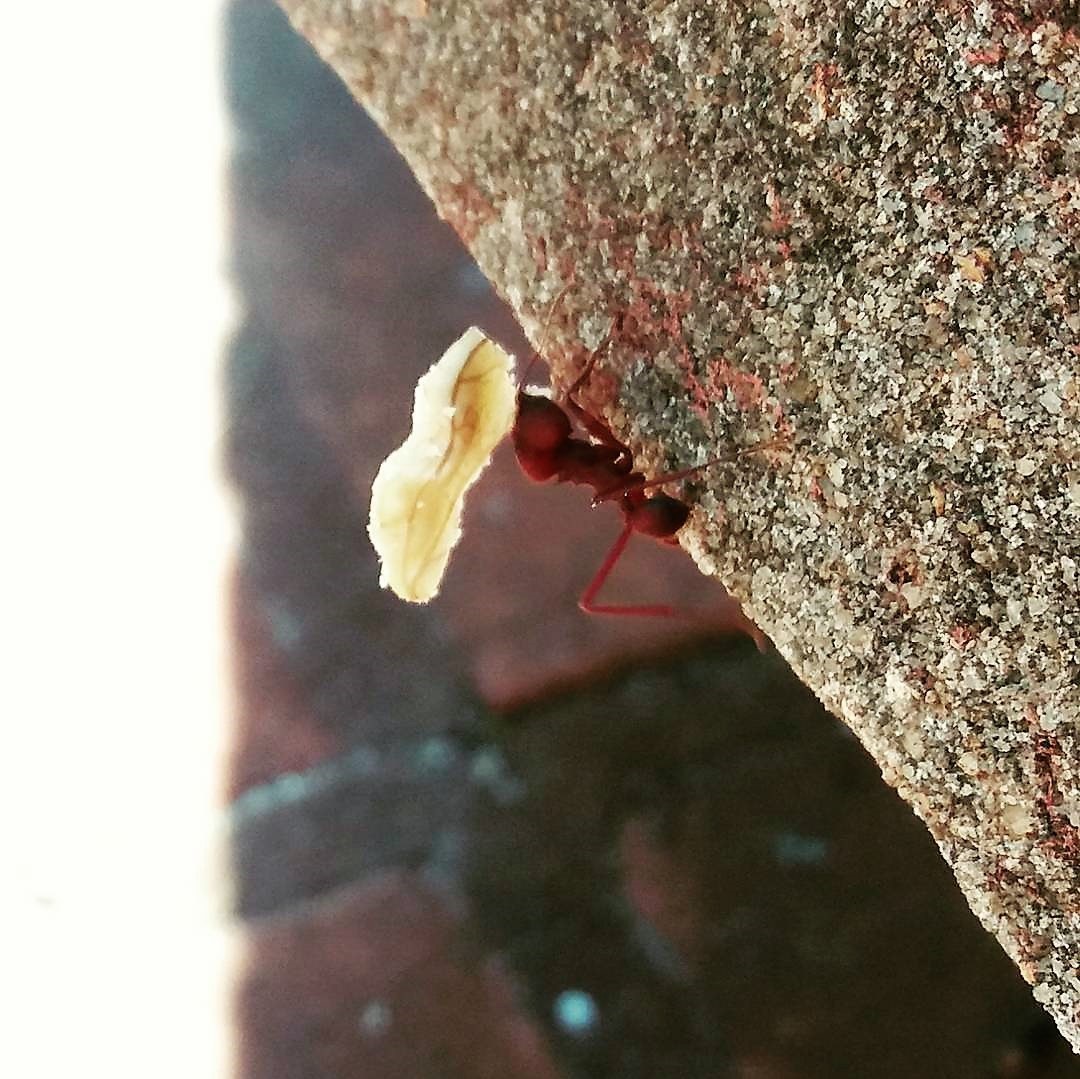
Key Visual Features
- Reddish-brown to dark brown ants with a noticeably spiny, armored thorax covered in small projecting points.
- Workers show striking size variation within the same colony (polymorphism), ranging from tiny minor workers a few millimeters long to large major workers (soldiers) over a centimeter long.
- Large mandibles relative to body size, adapted for slicing through plant material.
- Antennae are long, thin, and elbowed, used to navigate along established scent trails.
- The most recognizable trait is behavioral: workers are often seen carrying cut leaf, flower, or petal fragments held vertically above their bodies like a sail.
Where and When You're Likely to See It
- Native to Central and South America, found in tropical and subtropical forests, forest edges, and agricultural or garden areas within their range.
- Colonies are massive underground nests, sometimes housing millions of individuals, marked at the surface by large mounds of excavated soil with multiple entrance holes.
- Distinct foraging trails, worn bare and visible as cleared paths through leaf litter, run from the nest to nearby trees and shrubs.
- Active both day and night, though many populations shift toward more nocturnal foraging in warmer conditions to avoid the hottest part of the day.
- Foraging trails are most obvious after these ants have been cutting fresh vegetation, when a steady stream of workers can be seen carrying leaf pieces back toward the nest.
Similar-Looking Species
- Other Camponotus (carpenter) ants are also large but lack the heavily spined thorax and do not carry leaf fragments.
- Army ants travel in large moving swarms but do not carry plant material and lack the spiny thorax of leafcutters.
- Harvester ants carry seeds rather than leaf pieces and have a more uniformly robust, less spiny body.
- Weaver ants are typically brighter orange-red and build nests of woven leaves rather than underground fungus gardens.
Quick ID Checklist
- Reddish-brown ants with a visibly spiny thorax.
- Marked size variation between workers in the same trail.
- Long, elbowed antennae and oversized cutting mandibles.
- Workers seen carrying leaf or petal fragments overhead.
- Well-worn foraging trails leading to a large mounded underground nest.
Frequently asked questions
Why do Leafcutter Ants carry pieces of leaves?
Workers cut and transport leaf fragments back to the nest, where the material is used to cultivate a fungus garden that the colony depends on.
How can I tell different Leafcutter Ant workers apart?
Colonies show strong size variation, with tiny minor workers, mid-sized foragers, and much larger major workers all present along the same trail.
Where are Leafcutter Ant nests usually located?
They build large underground nests, often visible at the surface as mounds of loose soil with several entrance holes connected by cleared foraging trails.
Are Leafcutter Ants active during the day or night?
They can forage at any time, but many populations become more active after dark, especially in warmer weather.