
Lesser Water Boatman Identification Guide
Learn to identify this small, streamlined pond bug by its patterned back, oar-like hind legs, and right-side-up swimming style.
Read the full Lesser Water Boatman encyclopedia entry →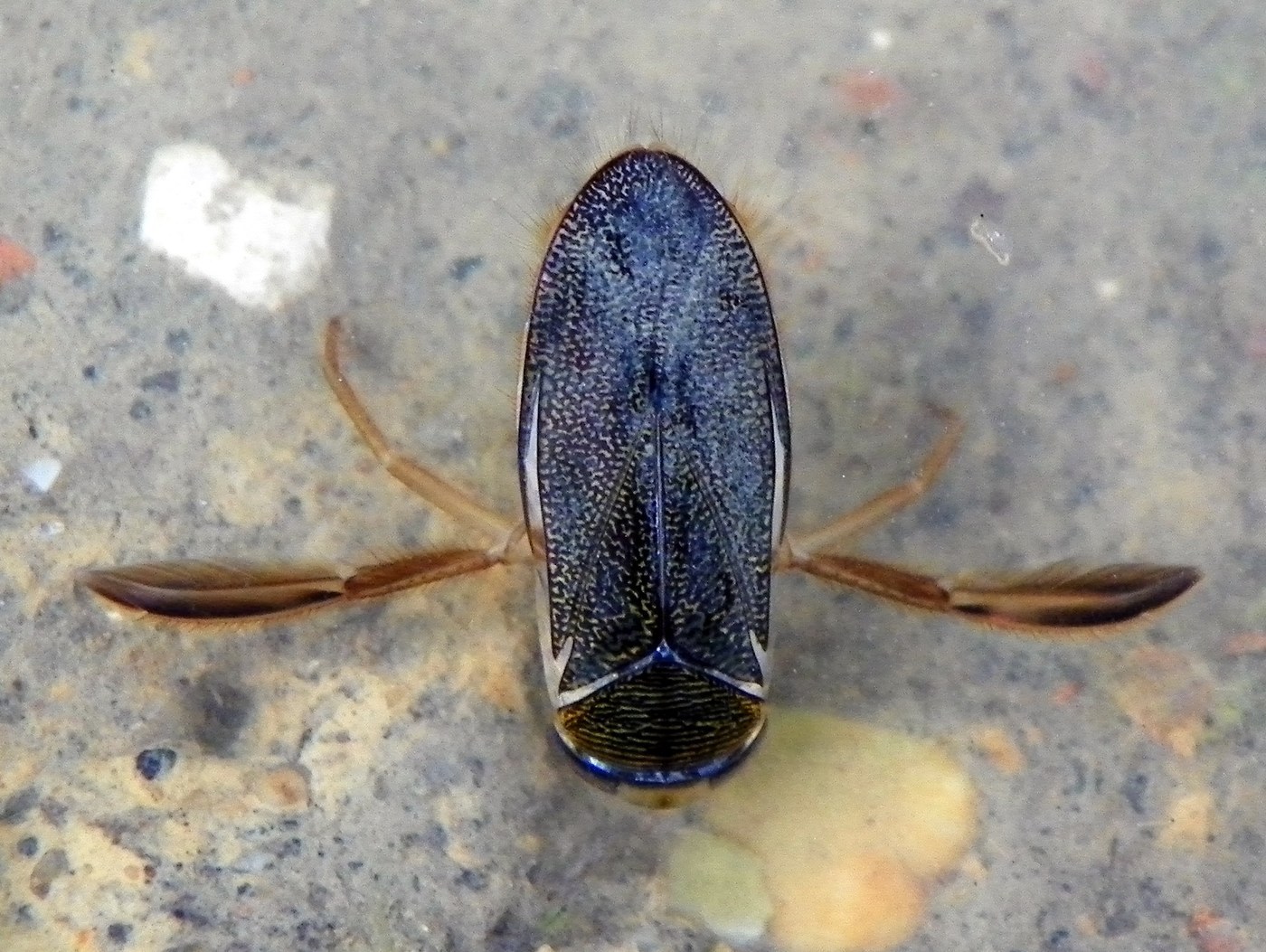
Key Visual Features
The lesser water boatman is a small, common true bug that rows through still water using paddle-like legs.
- Size: Small, typically 6-13 mm long, more slender and compact than many other aquatic bugs.
- Color: The back (wings) usually shows fine, wavy brown or golden-brown transverse lines or mottling on a paler background, creating a distinctive streaked pattern; the underside is often paler.
- Body shape: Elongated, oval, and streamlined, flattened enough to move efficiently through water but narrower than the broad, rounded saucer bug.
- Legs: The hind legs are long, flattened, and fringed with fine hairs, functioning as oars for swimming; the front legs are short and used for scooping food from the substrate rather than grasping prey.
- Wings: Wings lie flat over the back at rest, showing the characteristic fine patterned lines.
- Swimming orientation: Swims right-side up (dorsal side up), distinguishing it from the upside-down swimming backswimmers it superficially resembles.
Where and When You'd See It
Lesser water boatmen are common in still or slow-moving freshwater such as ponds, lakes, ditches, and even garden ponds, often seen swimming actively in open water or resting near the bottom among sediment and detritus, which they feed on. They surface periodically to renew an air supply trapped against the body. Active year-round in mild conditions, they are most frequently observed from spring through autumn and are strong fliers capable of colonizing new ponds.
Similar-Looking Bugs
- Backswimmers: Swim upside down with the pale belly facing up, and have a more strongly keeled, boat-hull-shaped body, while water boatmen swim right-side up.
- Saucer bugs: Broader, flatter, and more rounded overall, without the fine streaked wing pattern typical of water boatmen.
- Other water boatman species: Very similar in general shape; close attention to exact size and the fineness of the back patterning is needed to separate closely related species.
Quick ID Checklist
- Small (6-13 mm), streamlined, oval body
- Fine wavy brown or golden lines patterning the back
- Long, flattened, hair-fringed hind legs used as oars
- Swims right-side up (unlike backswimmers)
- Common in still ponds, ditches, and garden ponds
Frequently asked questions
How do you tell a lesser water boatman from a backswimmer?
A water boatman swims right-side up with its patterned back facing up, while a backswimmer swims upside down with its pale belly facing up and a more strongly keeled body.
What pattern helps identify the lesser water boatman's back?
The wings typically show fine, wavy brown or golden-brown transverse lines on a paler background, giving a streaked appearance distinct from plainer or more mottled water bugs.
What are the front legs used for compared to the hind legs?
The short front legs are used for scooping food from the substrate, while the long, flattened, hair-fringed hind legs act as oars for swimming.
Where is the lesser water boatman commonly found?
It is common in still or slow freshwater habitats including ponds, lakes, ditches, and garden ponds, often swimming in open water or resting near the bottom.