
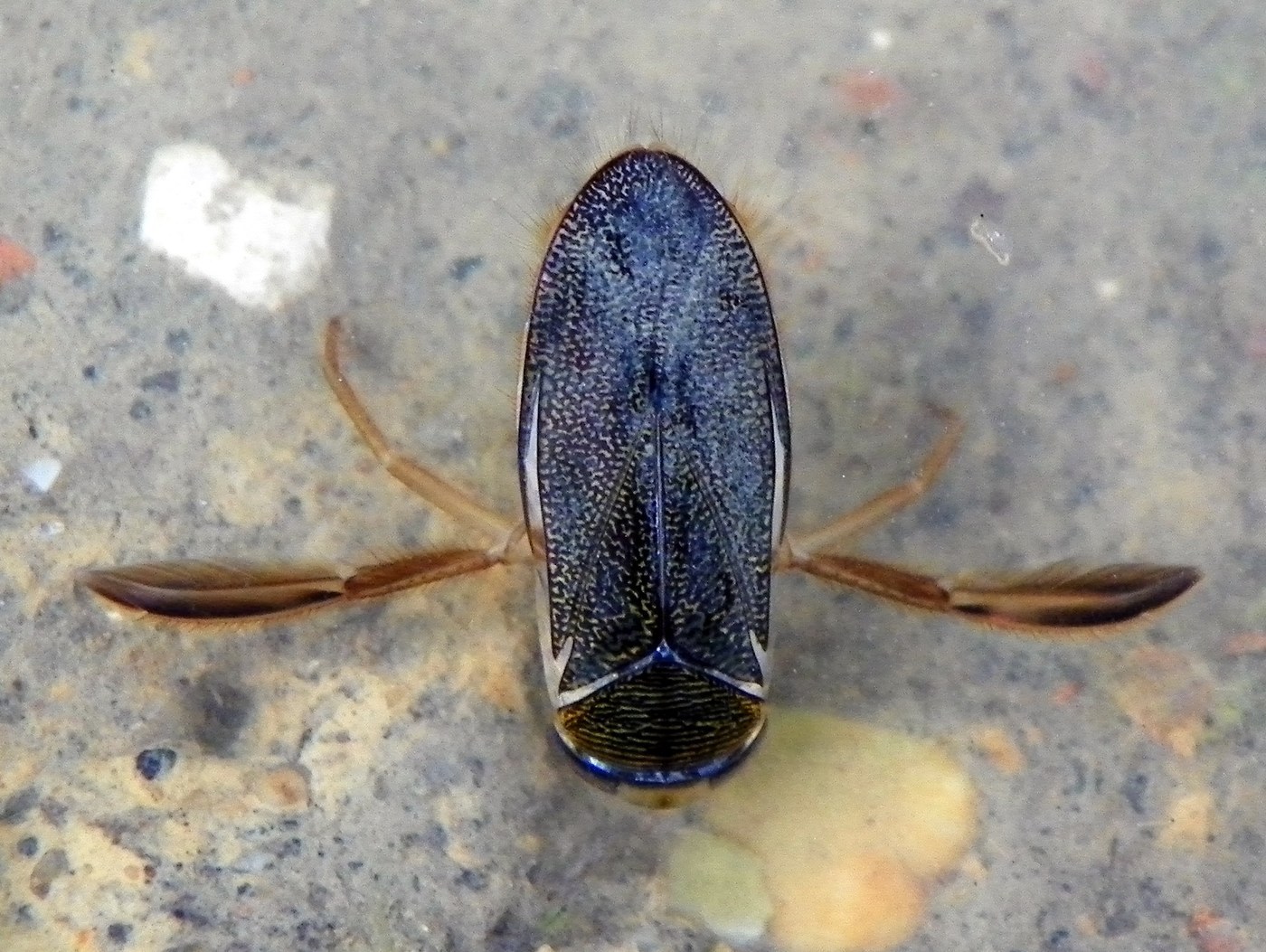
Lesser Water Boatman
Corixa punctata
A flat-backed, oar-legged true bug that rows through pond water with fringed hind legs, surfacing periodically to trap a silvery bubble of air against its body.
- Size
- 6-15 mm (0.25-0.6 in)
- Habitat
- Ponds, lakes, ditches and slow streams with vegetation
- Danger
- Harmless
Spotted a bug like this?
Identify any bug or insect from a photo, free.
Overview
The lesser water boatman is one of the most familiar insects of still and slow-moving fresh water across Europe and temperate Asia. Despite its aquatic lifestyle it is a true bug (order Hemiptera), related to shield bugs and aphids rather than to beetles, and it spends its entire life either swimming through the water column or resting near the bottom among silt and decaying plant matter.
Its common name distinguishes it from the unrelated "greater water boatman," an older folk name sometimes applied to the backswimmer, a different family that swims upside down. Corixids like the lesser water boatman always swim right side up, using their oar-like hind legs to propel themselves in short, jerky bursts.
Water boatmen are important members of pond food webs, both as consumers of algae and detritus and as prey for fish, larger aquatic insects, and waterbirds. Their presence in large numbers is often taken as a sign of a healthy, well-vegetated pond.
How to Identify
- Body oval and dorsoventrally flattened, boat-shaped in outline
- Grey to olive-brown upper surface with fine, dense dark mottling or cross-hatching
- Pale, unmarked underside
- Long, flattened, fringe-lined hind legs used as paddles; the middle pair is slender and used for gripping surfaces
- Front legs short and scoop-like, used to gather algae and organic debris
- Wings folded flat over the back, capable of strong flight between water bodies
- Lacks the elongated, curved back and swims right-side up, unlike the similar-looking backswimmer which floats belly-up
Habitat & Range
Lesser water boatmen live in still or slow-flowing fresh water: garden ponds, lakes, canals, ditches and marshes, usually where there is silt, submerged plants or algae to feed on. They are tolerant of a range of water conditions and can turn up quickly in newly dug ponds because adults fly well and readily colonise new water bodies, often at night when they are drawn to reflective surfaces. The species is widespread across Europe and into parts of Asia, and close relatives in the same family occupy similar habitats worldwide.
Behavior & Diet
Adults and nymphs swim in short darting movements, rowing with their fringed hind legs, and periodically rise to the surface to renew a bubble of air trapped by fine hairs on the body, which also acts as a physical gill allowing extended time underwater. They feed mainly on algae, diatoms and organic detritus that they scrape or filter from submerged surfaces and sediment using their scoop-shaped front legs, making them primarily grazers and detritivores rather than active predators. Some related corixids produce faint clicking or rasping sounds by rubbing the front leg against the head, a behaviour linked to communication. Water boatmen form an important link in aquatic food chains, converting algae and detritus into biomass eaten by fish, newts, and predatory insects.
Life Cycle
Females lay eggs attached to submerged plants, stones or other underwater surfaces in spring and summer. Nymphs hatch resembling small, wingless versions of the adults and develop through five gradually larger instars, a simple (incomplete) metamorphosis with no pupal stage. Growth is fastest in warm water, and in temperate regions there are typically one to two generations per year. Adults overwinter in the mud or debris at the bottom of ponds and become active again as water temperatures rise in spring, when they also disperse by flight to colonise new water bodies.
Frequently asked questions
Does the lesser water boatman bite?
It is not known for biting people; its short front legs are adapted for scraping algae rather than piercing skin, unlike the backswimmer, which can jab defensively if handled.
How is it different from a backswimmer?
Water boatmen swim right side up with a mottled grey-brown back, while backswimmers (family Notonectidae) swim upside down and have a pale, keeled back and are active predators rather than grazers.
What does it eat?
Mainly algae, diatoms and decaying plant material scraped or filtered from underwater surfaces and sediment.
Why do water boatmen suddenly appear in new ponds?
Adults are strong fliers that actively search out and colonise fresh water, often arriving within days of a new pond being filled.
Lesser Water Boatman guides
In-depth guides for identifying, understanding, and living alongside Lesser Water Boatman.
Other bugs you may enjoy
Bagrada Bug
Arid gardens, crucifer fields, desert-adjacent croplands
Assassin Bug
Gardens, meadows, and vegetation worldwide
Water Boatman Bug
Ponds, lakes, and slow-moving freshwater
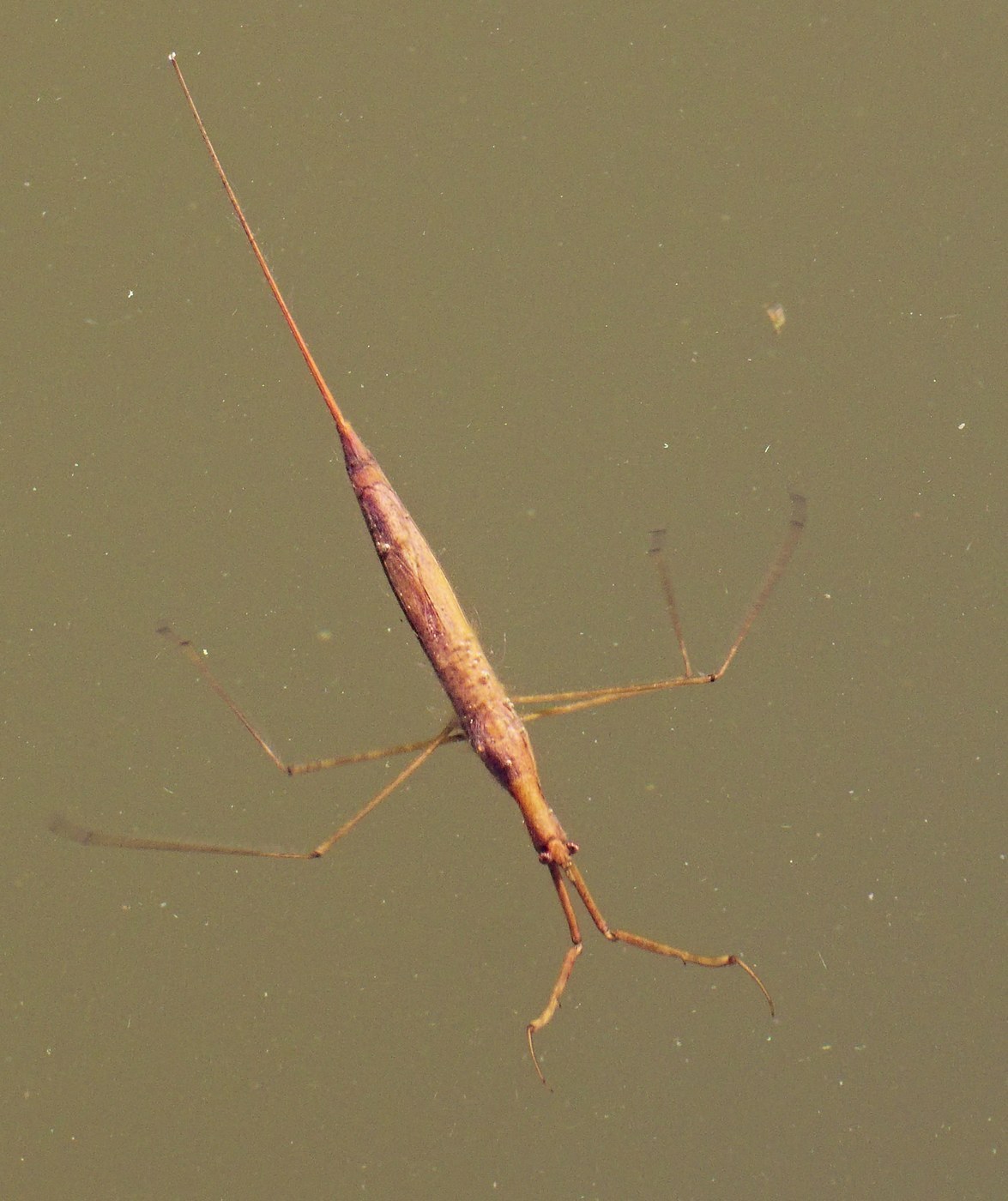
Water Stick Insect
Still and slow-moving water with dense submerged vegetation
Rough Stink Bug
Tree bark, woodlands, orchards, and shrubby vegetation
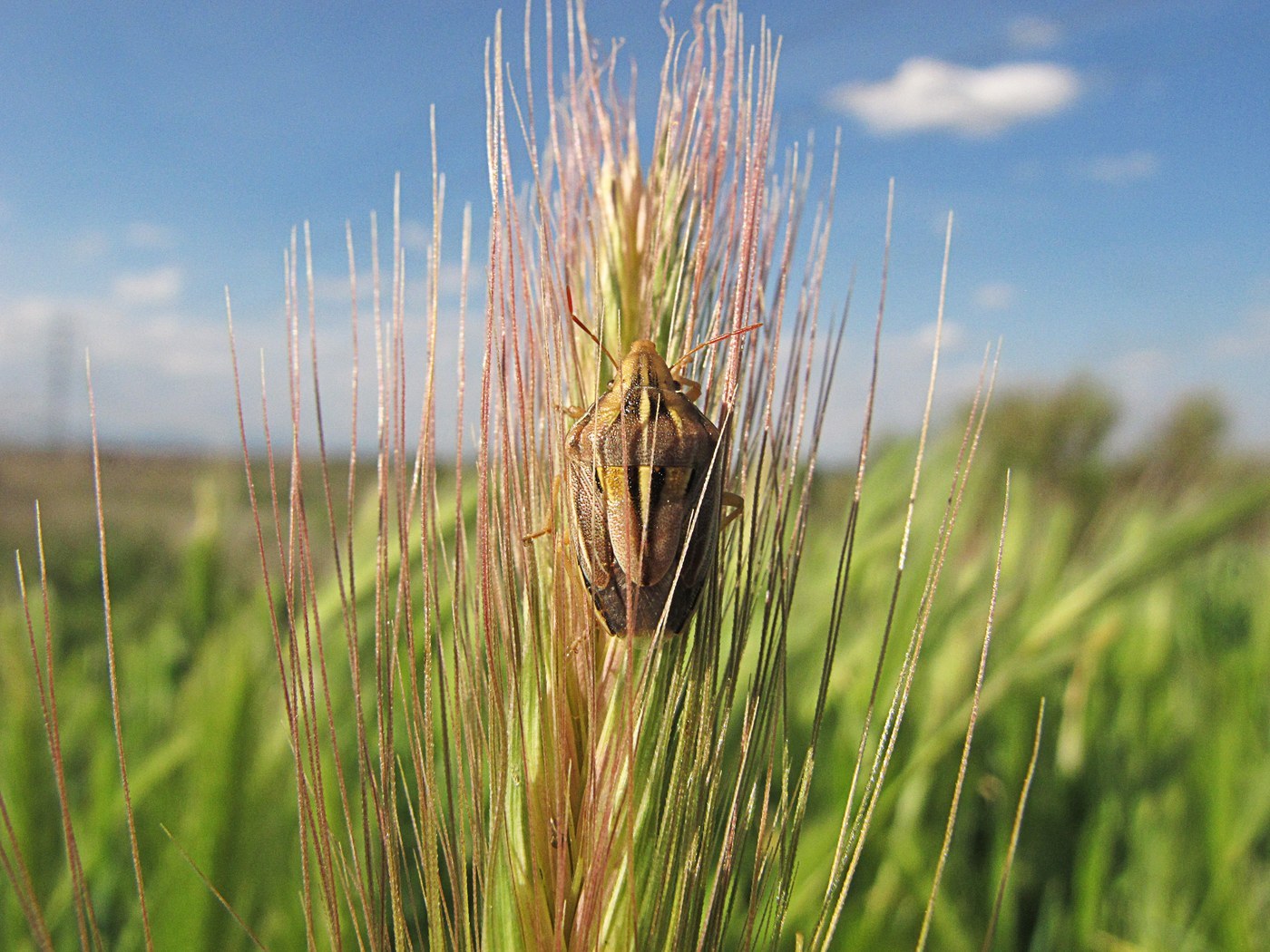
Stink Bug
Gardens, crop fields, and woodlands across temperate and subtropical regions
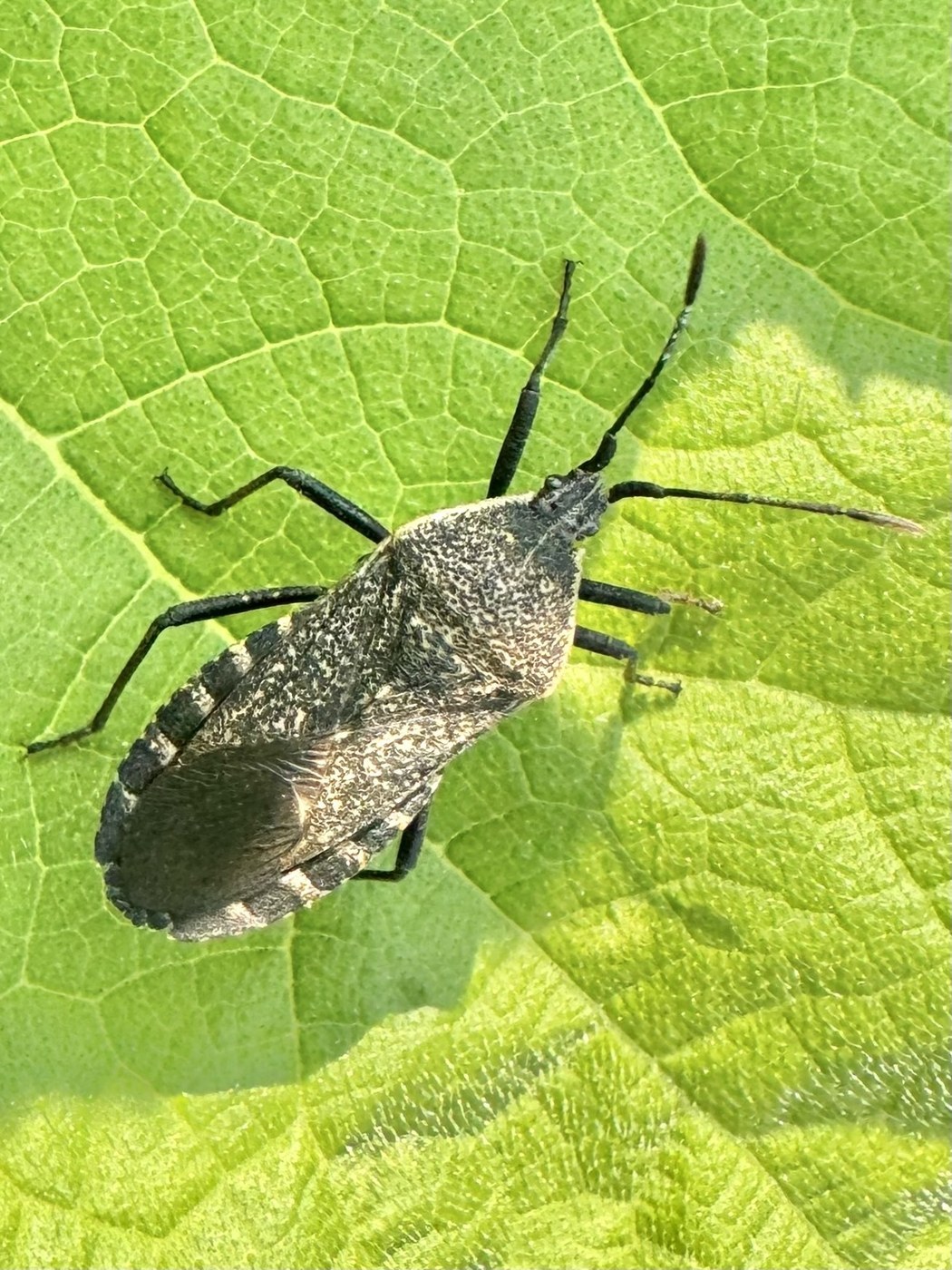
Squash Bug
Vegetable gardens and farm fields growing squash, pumpkin, and other cucurbits
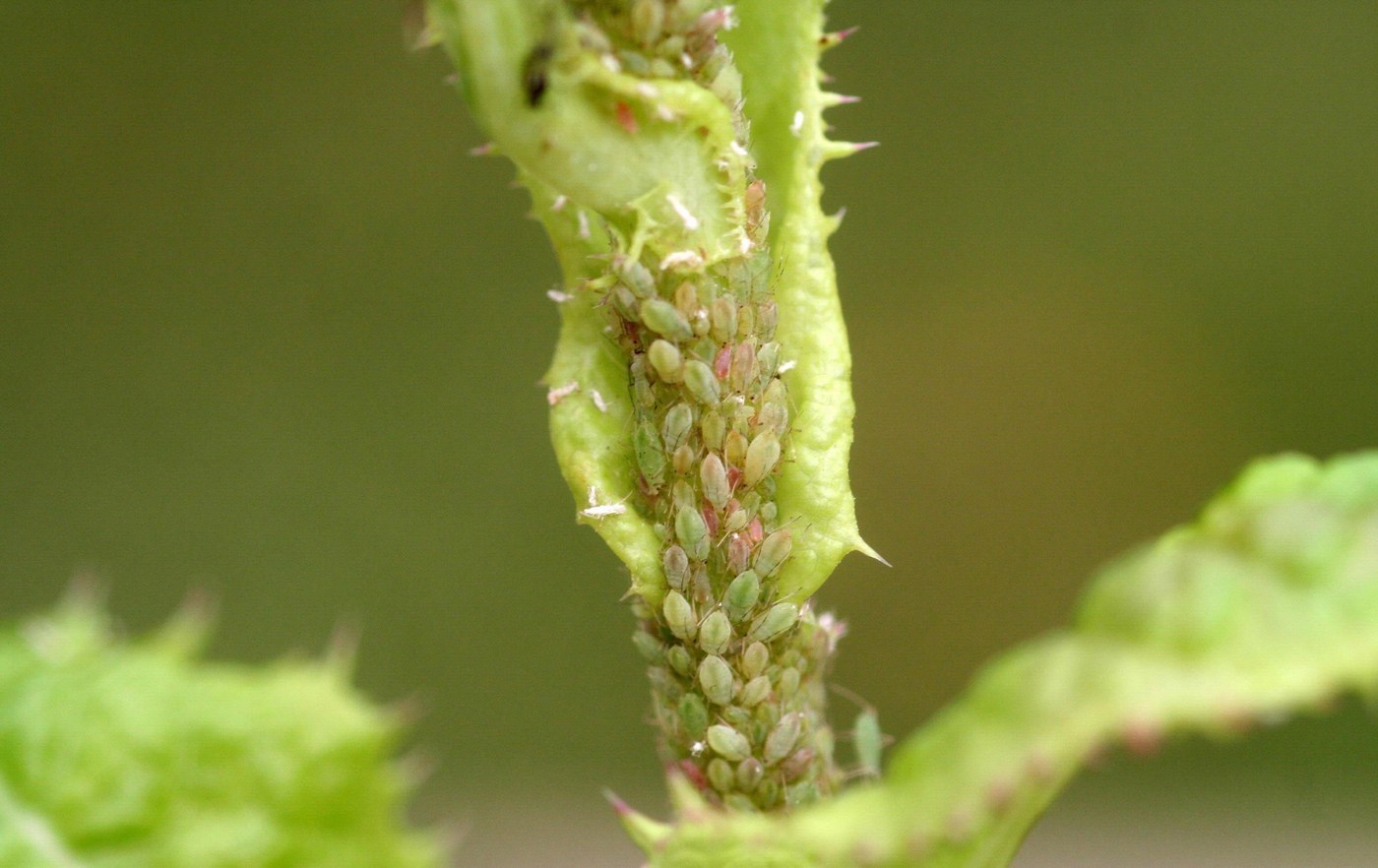
Aphid
On stems, leaves, and buds of a very wide range of host plants
Woolly Aphid
Bark crevices, root collars, and twigs of apple, elm, and alder trees
Whitefly
Greenhouses, gardens, and undersides of leaves on host plants
Water Measurer
Quiet edges of ponds, marshes, and slow streams
Two-Spotted Stink Bug
Gardens and fields with potato and nightshade-family plants