
Little Yellow Identification Guide
A tiny, pale lemon-yellow butterfly with a thin black wing border and a fast, low, fluttery flight.
Read the full Little Yellow encyclopedia entry →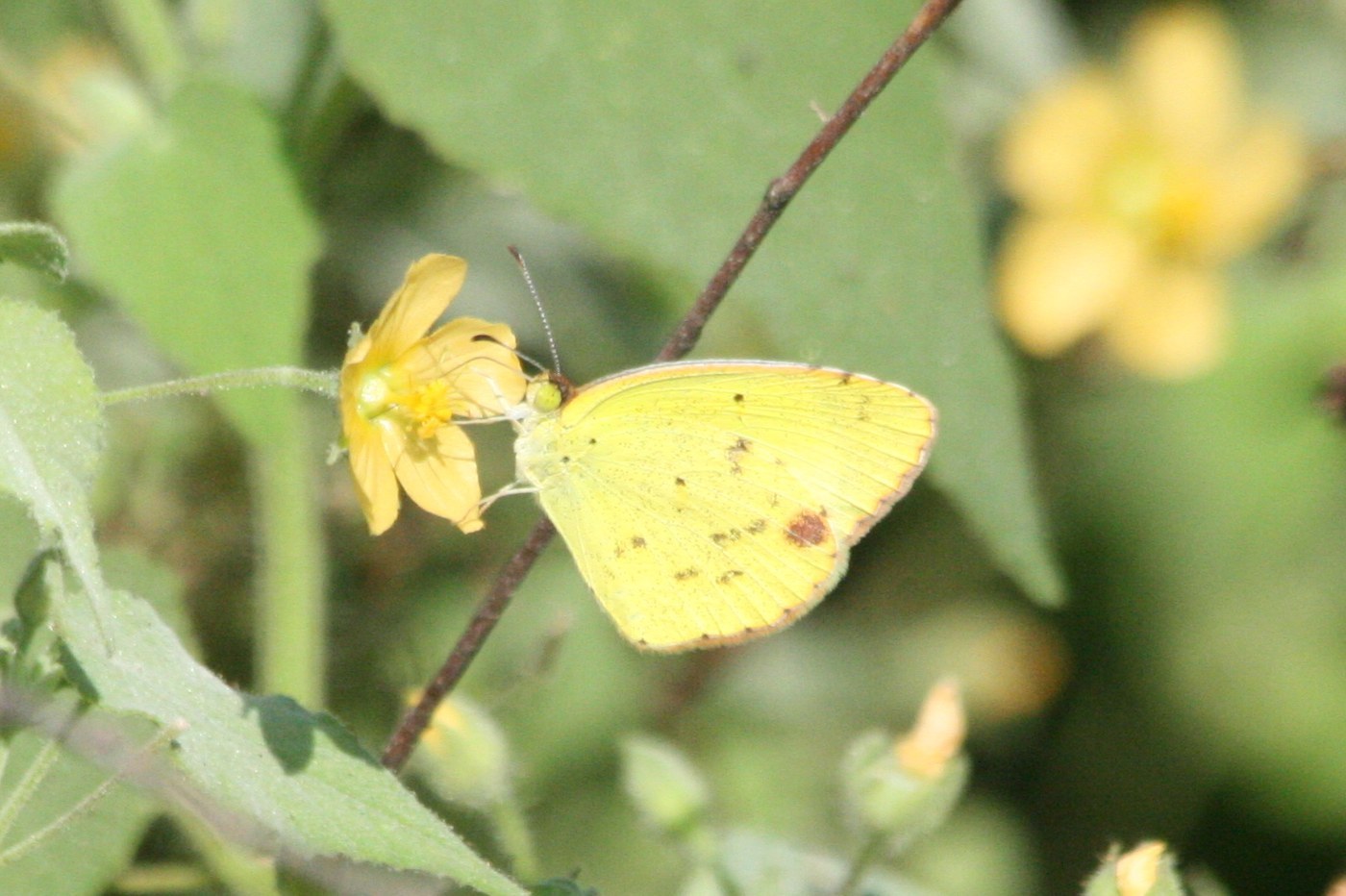
Key Features
The little yellow (Pyrisitia lisa) is one of the smallest sulphur butterflies, with a wingspan of only about 1 to 1.75 inches. Distinguishing features include:
- Pale lemon-yellow upperside, sometimes nearly white in some females.
- A relatively thin, well-defined black border along the outer edge of the forewing.
- Small black spots scattered near the outer margin of the forewing, visible on close inspection.
- Underside is pale yellow with tiny scattered dark speckles rather than bold markings.
- Compact, rounded wings and a fast, low, erratic flight pattern close to the ground.
Where and When to Spot It
This species is common across the southeastern and southern United States, straying north in summer months. It favors open, sunny habitats such as fields, lawns, gardens, roadsides, and vacant lots, often flying just inches above the vegetation. Little yellows are active from spring through fall in most of their range and can be seen year-round in the warmest parts of the Gulf Coast and Florida. Their caterpillar host plants include partridge pea and other legumes, so look for them clustered around these low-growing plants.
Similar Species
- Sleepy orange: Noticeably larger and orange rather than pale yellow.
- Dainty sulphur: Smaller still, with a more patchy gray-and-yellow pattern and a different, more fluttery flight.
- Orange-barred sulphur: Much larger, with bold orange coloring on males. The little yellow's diminutive size combined with its pale, clean lemon color and thin black forewing border helps separate it from these relatives.
Quick ID Checklist
- Very small sulphur butterfly, under 2-inch wingspan
- Pale lemon-yellow color, sometimes near-white in females
- Thin black border and small dark spots on the forewing
- Fast, low, erratic flight close to the ground
- Found around partridge pea and open sunny habitats
FAQs
Frequently asked questions
How can I tell a little yellow from a dainty sulphur?
The little yellow is somewhat larger and more uniformly pale yellow, while the dainty sulphur is smaller with a patchier gray-and-yellow pattern.
What plants attract little yellows?
Partridge pea and related low-growing legumes serve as caterpillar host plants and are a reliable place to spot adults.
Why is this butterfly so hard to photograph?
It flies fast, low, and erratically close to the ground, rarely pausing for long, which makes it a challenging subject to photograph.
Are all little yellows the same shade of yellow?
No, coloring can vary from bright lemon-yellow to a much paler, almost whitish tone, particularly in some female individuals.