Louse Fly Identification Guide
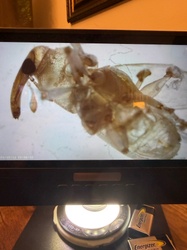
Recognize louse flies by their flattened, leathery bodies, clinging legs, and habit of scuttling sideways through fur or feathers rather than flying away.
Read the full Louse Fly encyclopedia entry →Key Visual Features
Louse flies (family Hippoboscidae) are unusual, highly adapted flies built for clinging to a host's body rather than flying freely.
- Size: Roughly 4-8 mm depending on species, varying with the host they are adapted to.
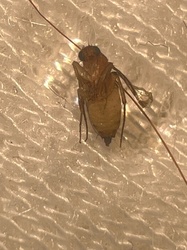
- Color: Brownish, tan, or dark gray, often with a leathery, dull sheen rather than a shiny fly-like appearance.
- Body shape: Distinctly flattened top to bottom, wide and tough-bodied, quite unlike the rounded profile of most flies — an adaptation for squeezing between hairs or feathers.
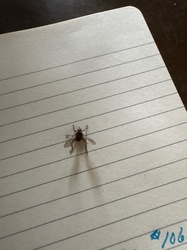
- Wings: Some species have functional wings held flat over the back, while others (especially those on birds or bats) have reduced or absent wings.
- Legs: Strong, stout, and equipped with sharp claws for gripping tightly onto fur or feathers, making them hard to dislodge.
- Antennae: Small and tucked into pits on the head, largely inconspicuous.
- Distinctive traits: A tough, leathery exoskeleton and a sideways, crab-like scuttling movement through fur or feathers rather than typical fly walking or quick flight.
Where and When You'll See Them
Louse flies are found directly on their host animals — commonly birds, deer, or other mammals — rather than in open habitats, so they are usually spotted while examining feathers or fur closely, particularly around the base of feathers or in dense coat areas. They can be active year-round on their hosts, though sightings by people often happen during warmer months when host animals (like deer) are more frequently encountered outdoors.
Similar-Looking Bugs
- Bed bugs: Also flattened and reddish-brown, but bed bugs lack wings entirely, have a rounder oval outline, and are not found gripping onto living animal fur/feathers the way louse flies are.
- Ticks: Similarly flattened and host-associated, but ticks have eight legs as arachnids and a distinctly different, rounder body without wings, while louse flies have six legs and may retain wings.
- House flies: Rounded, shiny-bodied, and free-flying, contrasting sharply with the flattened, leathery, clinging body of a louse fly.
Quick ID Checklist
- Flattened, tough, leathery brown or tan body
- Strong clawed legs gripping fur or feathers
- Wings present in some species, reduced or absent in others
- Sideways, crab-like scuttling movement rather than typical fly walking
- Found directly on host animals (birds, deer, mammals) rather than in the open
Frequently asked questions
How is a louse fly different from a regular fly in appearance?
Louse flies have a distinctly flattened, tough, leathery body built to squeeze between hairs or feathers, unlike the rounded, shinier body of typical free-flying flies like house flies.
Do all louse flies have wings?
No, wing development varies by species — some retain functional wings, while others adapted to life on birds or bats have reduced or entirely absent wings.
Where would I typically encounter a louse fly?
Almost always directly on a host animal, such as within the feathers of a bird or the fur of a deer, rather than flying freely in the open.
Why do louse flies move sideways instead of walking normally?
Their flattened body and strong clawed legs are adapted for scuttling crab-like through dense fur or feathers, which is a more effective way to navigate that environment than typical forward walking.
Louse Fly identified by the community
Recent Louse Fly finds identified with Bug Identifier.