Maggot Identification Guide
Learn the basic features that identify a maggot, the legless larval stage of flies.
Read the full Maggot encyclopedia entry →Key Visual Features
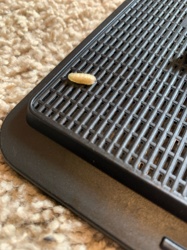
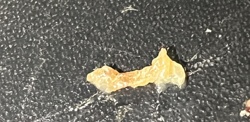
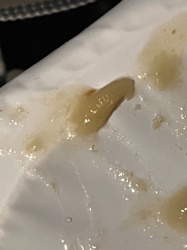
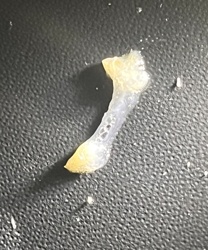
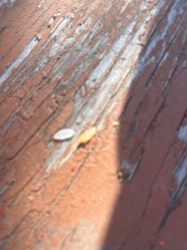
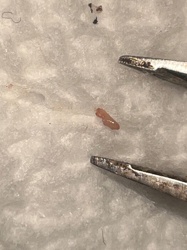
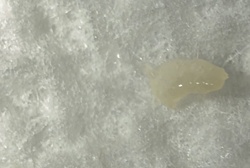
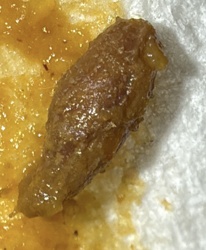
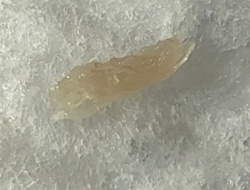
- Smooth, legless, worm-like body with no visible head capsule, legs, or eyes
- Tapered, cone-shaped front end that narrows to a point, with a wider, blunter rear end
- Off-white, cream, or pale yellow coloring, sometimes appearing slightly translucent
- Body surface is soft, segmented faintly by shallow ring-like grooves, and lacks any hair, spines, or hard plates
- Tiny dark hook-like mouth structures sometimes visible at the narrow front tip under close inspection
- Size varies widely by species and age, from a few millimeters up to about half an inch or more at full growth
Where and When You'd See Them
- Found in decaying organic material such as spoiled food, garbage, compost, or other decomposing matter
- Can appear indoors or outdoors any time conditions are warm and a suitable decaying food source is present
- Most abundant in warm months when fly activity and development are fastest, since the entire life cycle from egg to adult can move quickly in the heat
- Tends to cluster in groups feeding on the same material rather than being found singly, often shifting position together as they feed
- Typically stays within or very near the decaying material itself, seeking out the moist, sheltered conditions found there before eventually moving away to pupate in nearby soil or debris
Similar-Looking Bugs
- Mealworms have a hard, shiny, segmented body with small legs near the head, unlike the legless, soft maggot.
- White grubs are thick-bodied, C-shaped, and have obvious legs and a hard head capsule, all of which maggots lack.
- Wireworms are stiff, shiny, and yellow-brown with a hardened body, very different from a maggot's soft, pale, legless form.
- Small fly pupae are oval, hardened, and motionless capsules rather than the mobile, soft-bodied larval maggot stage.
- Fungus gnat larvae are similarly slender and pale but usually have a visibly dark head capsule, unlike the more uniformly pale, indistinct front end of many common maggots.
Quick ID Checklist
- Smooth, legless, worm-like body with no visible legs or head capsule
- Pointed, tapered front end and blunter rear end
- Pale white, cream, or yellowish color
- Found in clusters on decaying organic material
- Soft body with faint ring-like segmentation, no hair or spines
Frequently asked questions
How can I tell a maggot from a mealworm?
Maggots are completely legless and soft-bodied with a smooth, tapered shape, while mealworms have a hard, shiny, segmented exoskeleton and small visible legs near the head.
Does a maggot have a visible head?
Not a distinct hardened head capsule — the front end is simply narrower and pointed, sometimes showing small dark hook-like mouth structures up close.
Where are maggots typically found?
They are found in decaying organic material such as spoiled food or compost, usually in groups feeding on the same source.
What time of year are maggots most commonly seen?
They are most abundant during warm weather, when fly life cycles move quickly and decaying material breaks down faster.
Maggot identified by the community
Recent Maggot finds identified with Bug Identifier.