
Marbled White Identification Guide
Spot this grassland butterfly by its bold black-and-white checkerboard wings.
Read the full Marbled White encyclopedia entry →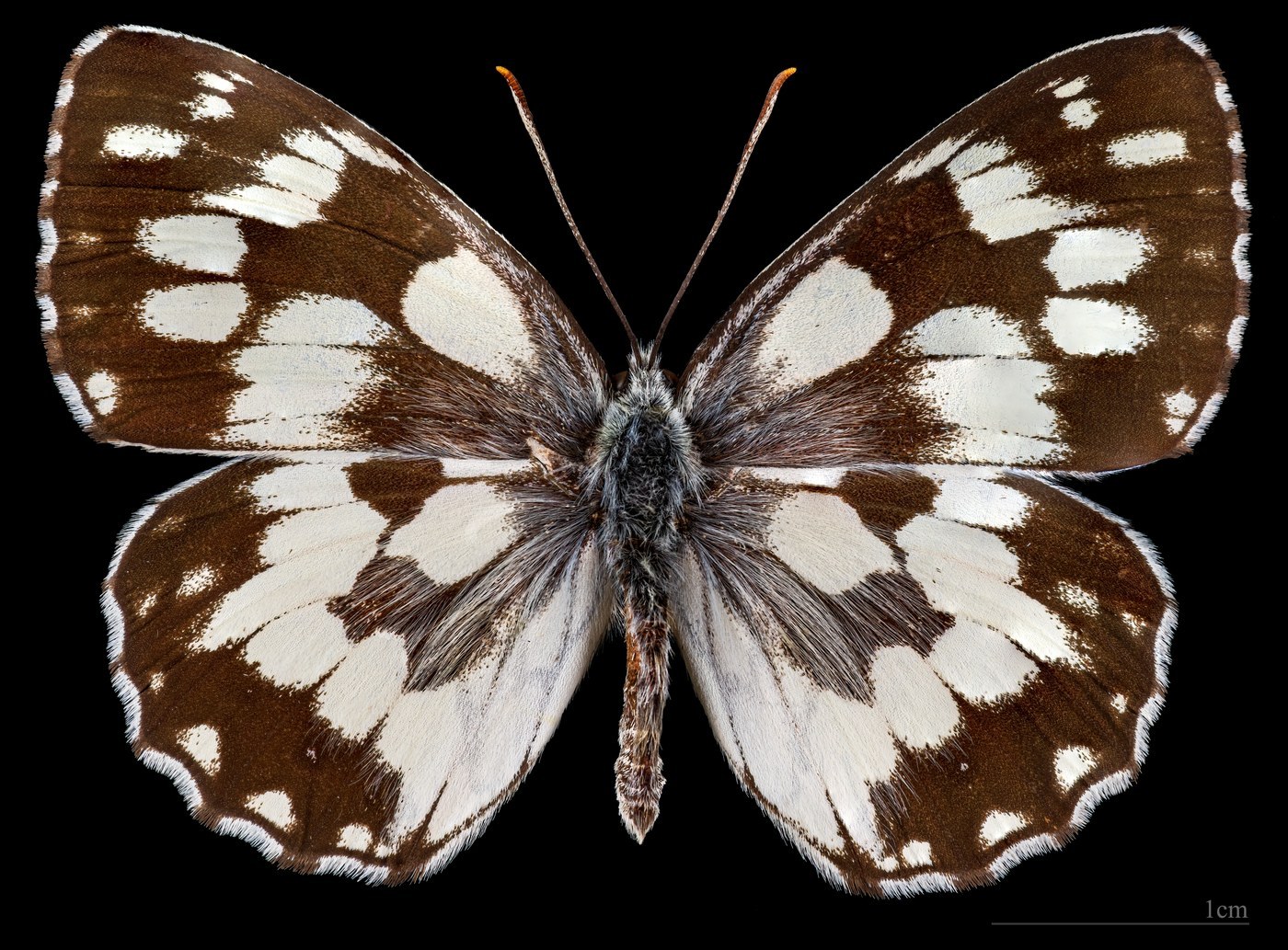
Key Features
- Medium-sized butterfly, wingspan roughly 5–5.8 cm (2–2.3 inches)
- Bold black-and-white checkerboard pattern on both wing surfaces, giving a strongly contrasting marbled look that is unlike the coloring of most other grassland butterflies
- Underside of the hindwings is paler, with grayish-white ground color and a row of small dark eyespots along the margin, each with a faint pale center
- Rounded, moderately broad wings with a somewhat scalloped outer edge
- Black body with fine white/gray hairs; antennae are clubbed with an orange-tipped tip
- Pattern intensity can vary slightly between individuals, with some showing more black and others appearing whiter overall
Where & When to Spot One
- Found in unimproved chalk and limestone grasslands, flower-rich meadows, road verges, and rough grassy areas across much of Europe
- Single flight period per year, typically from mid-June through August, with numbers often peaking in July
- Flies in warm, sunny weather, often seen nectaring on knapweed, scabious, and thistles with wings held flat or half-open while feeding
- Roosts on tall grass stems in cooler mornings and evenings, wings closed, showing the pale marbled underside, and can be surprisingly well camouflaged against dry grass seed heads
- Caterpillars feed on various grasses and the species overwinters as a small, dormant caterpillar low in the grass tussocks
Similar Species
- No other common butterfly shares the same bold black-and-white checkerboard pattern in most of its range, making it fairly distinctive once learned
- From a distance it can be mistaken for a moth or a worn White butterfly, but the sharp black-and-white blocks (rather than a solid or lightly marked color) set it apart
- Some fritillaries and skippers share grassland habitat but have orange-and-brown patterning rather than black-and-white, so color alone rules them out
- Marbled Fritillary and other checkered species elsewhere in the world can look superficially similar but occur in different regions and habitats
Quick ID Checklist
- Sharp black-and-white checkerboard wing pattern
- Medium size, rounded wings
- Found in flower-rich grassland in mid-to-late summer
- Pale underside with small marginal eyespots
- Slow, low, fluttering flight over grasses
Frequently asked questions
What habitat is best for finding Marbled Whites?
Unmown chalk or limestone grassland and flower-rich meadows with plenty of grasses and nectar plants.
When is peak season for this butterfly?
Mid-June through August in most of its European range.
Could a Marbled White be mistaken for a moth?
At a glance yes, due to the strong pattern, but its clubbed antennae and daytime flight confirm it's a butterfly.
Do males and females look different?
They are similar, though females tend to be slightly larger and can show a hint of yellowish tone on the underside.