
March Brown Mayfly Identification Guide
An early-season mayfly with mottled brown wings, often one of the first big hatches of the year on cold streams.
Read the full March Brown Mayfly encyclopedia entry →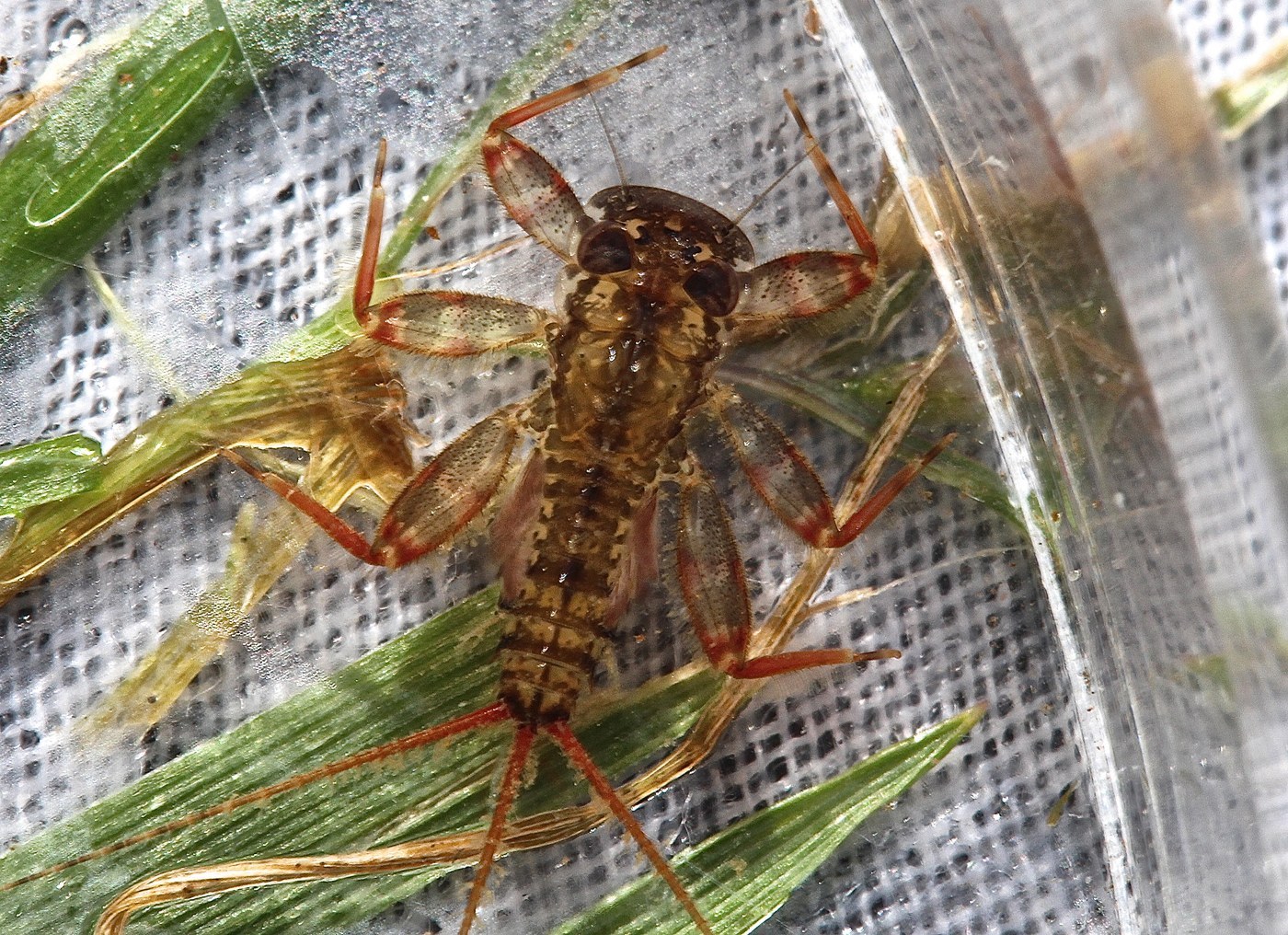
Key Visual Features
The March Brown Mayfly is a medium-to-large mayfly, generally around 0.5 to 0.7 inches (13 to 18 mm) in body length, known for its early-season appearance and mottled brown coloring.
- Wings: Upright, triangular wings held together above the body at rest, showing a distinctive mottled brown and tan pattern with prominent dark veins, which gives the species its "brown" name.
- Body color: The body ranges from tan to reddish-brown, often with darker brown banding or mottling along the abdomen.
- Tails: Two or three long, slender tail filaments extend from the rear of the body, typically patterned with faint dark bands.
- Legs: Slim legs with subtle brown mottling, matching the overall body tone.
- Body shape: A slightly humped thorax where the wings attach, tapering to a long, segmented abdomen, typical of mayflies overall.
Where and When You'd See It
March Brown Mayflies are found on clean, cold, moderately fast-flowing streams and rivers, often in regions with rocky or gravelly stream beds. True to their name, they are known for emerging notably early in the season, sometimes as soon as late winter into early spring, well before many other mayfly species appear. Adults are often seen fluttering over riffles or resting on streamside rocks and vegetation during daylight hatches, in contrast to some other mayflies that emerge mainly at dusk.
Similar-Looking Species
- Green Drake Mayfly: Emerges later in the season, generally late spring to early summer, and shows more of an olive-green tint in its mottled wing pattern rather than the browner tone of the March Brown.
- Giant Mayfly: Considerably larger overall with paler, less mottled wings, and tied to slower, siltier waters rather than the faster, rockier streams March Browns prefer.
- Other early-season mayflies: Several smaller species can show brownish mottled wings; body size and the specifically early emergence timing help distinguish March Brown from these look-alikes.
The clearest combination of clues for this species is its relatively early flight season, mottled brown wing pattern, and preference for cooler, faster-flowing streams.
Quick ID Checklist
- Mottled brown and tan wings with prominent dark veins
- Tan to reddish-brown body with darker banding
- Two to three long, faintly banded tail filaments
- Found on cold, rocky, fast-flowing streams and rivers
- Known for emerging notably early in the season, often before other large mayflies
Frequently asked questions
Why is timing such a useful clue for identifying the March Brown Mayfly?
This species is known for emerging earlier than many other large mayflies, sometimes as early as late winter or early spring, so spotting a large mottled-brown mayfly on a cold stream at that time of year is a strong hint it may be a March Brown.
How does the March Brown differ in color from the Green Drake?
The March Brown tends to show a warmer, more reddish-brown mottled pattern, while the Green Drake typically has a cooler olive-green tint mixed into its mottling.
What kind of stream is most likely to have March Brown Mayflies?
Look for cold, clean, moderately fast-flowing streams and rivers with rocky or gravelly bottoms, which suit the nymphs of this species.
Are March Brown Mayflies active during the day or at night?
They are often seen during daylight hatches, fluttering over riffles or resting on streamside rocks and plants, unlike some mayfly species that emerge mainly around dusk.