
Marsh Treader Identification Guide
Learn to recognize the thread-thin marsh treader as it walks slowly across the still, vegetated edges of ponds and marshes.
Read the full Marsh Treader encyclopedia entry →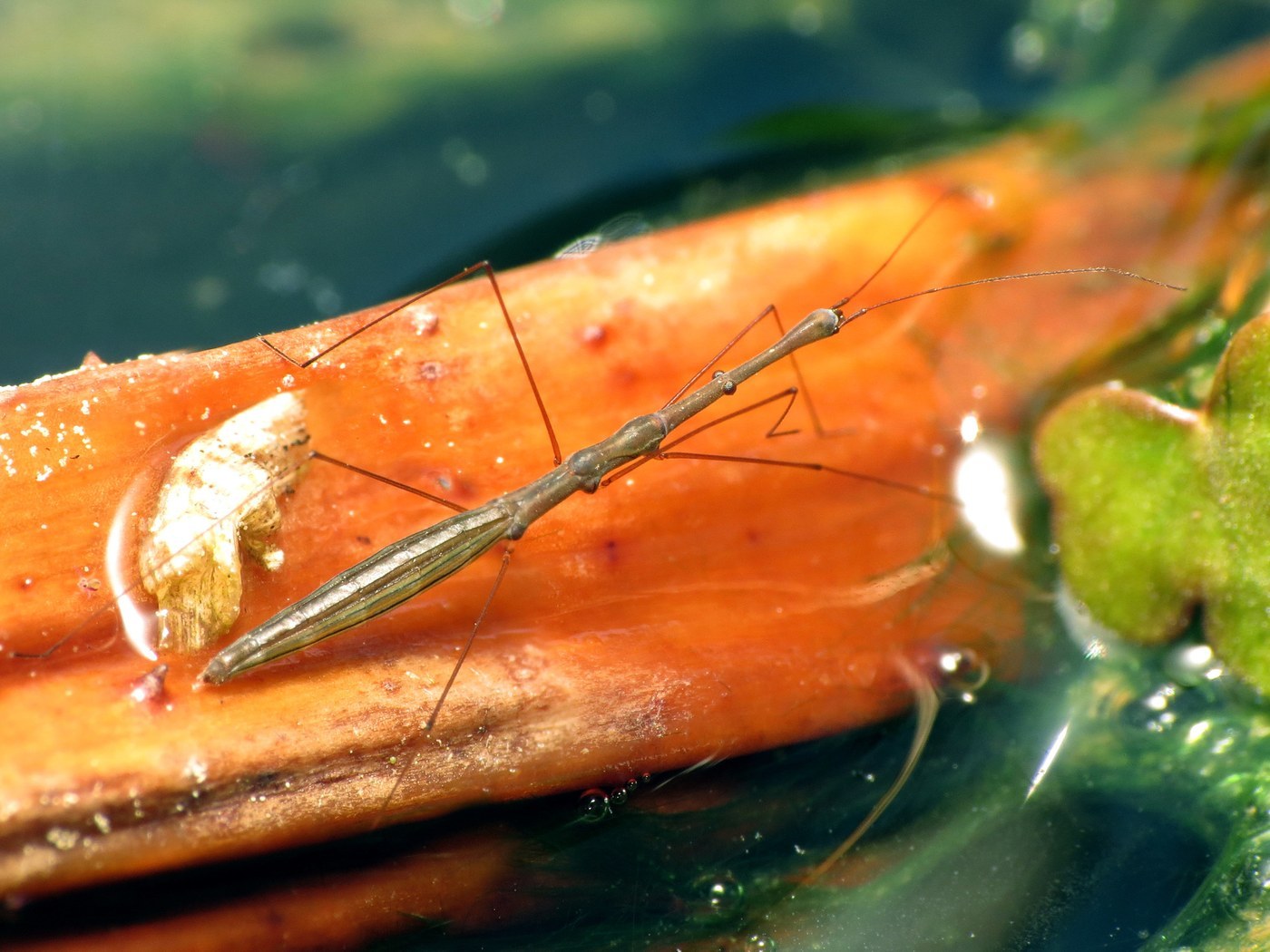
Key Features
- Extremely slender, thread-like body, often over 10mm long but only about 1mm wide
- Long, thin legs held out like stilts, spacing the body well above the water film
- Elongated, narrow head that is almost as long as the thorax, tipped with short, thread-like antennae
- Dull brown, gray, or blackish coloring that blends with mud, algae, and dead vegetation
- Most individuals are wingless, though some populations produce short-winged or fully winged forms
- Overall silhouette resembles a tiny walking twig more than a typical bug
Where and When to Look
- Found along the still, shallow edges of marshes, ponds, bogs, and slow-moving streams
- Prefers areas with dense mats of algae, duckweed, or emergent vegetation that it can walk across without sinking
- Most active from late spring through early fall in temperate regions
- Typically seen walking slowly and deliberately across the surface film rather than skating or jumping
- More often spotted near the shoreline than out over open water
Similar-Looking Bugs
- Water striders (Gerridae) have a much shorter, broader body and long, oar-like middle and hind legs used for rapid skating; marsh treaders move slowly and have a stick-thin build
- Water scorpions share the elongated shape but are larger, carry pincer-like front legs, and typically stay submerged or clinging to plants rather than walking on the surface
- Walking stick insects share the twiggy silhouette but live on land in shrubs and trees, not on water
Life Cycle and Behavior
Marsh treaders overwinter as adults in leaf litter near the water's edge, becoming active again once temperatures warm in spring. They feed by piercing small insects and other invertebrates trapped in the surface film, walking with slow, careful steps so as not to break the water's surface tension. Eggs are laid on plant stems or debris near the waterline, and nymphs resemble smaller, wingless versions of the adults.
Quick ID Checklist
- Thread-thin body and legs, far longer than wide
- Slow, deliberate walking motion across still water
- Elongated head nearly as long as the thorax
- Found at vegetated pond and marsh edges, not open water
- Dull brown or gray coloring that blends with debris
Frequently asked questions
Do marsh treaders fly?
Most are wingless, though short- or long-winged forms occur occasionally and can disperse by flight.
How can I tell a marsh treader from a water strider at a glance?
Look at body shape and movement: marsh treaders are thread-thin and walk slowly, while water striders are stockier and skate quickly across the water.
What time of year are marsh treaders most visible?
Late spring through early fall, when marsh and pond edges are ice-free and well vegetated.
Where exactly on a pond should I look?
Check the quiet, vegetated margins rather than open water, since marsh treaders favor mats of algae or duckweed near the shore.