Mason Bee Identification Guide
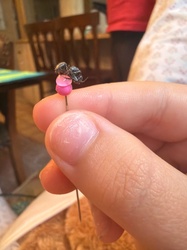
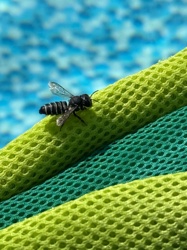
Discover how to recognize a mason bee by its metallic blue-black sheen and its habit of sealing nest cavities with mud.
Read the full Mason Bee encyclopedia entry →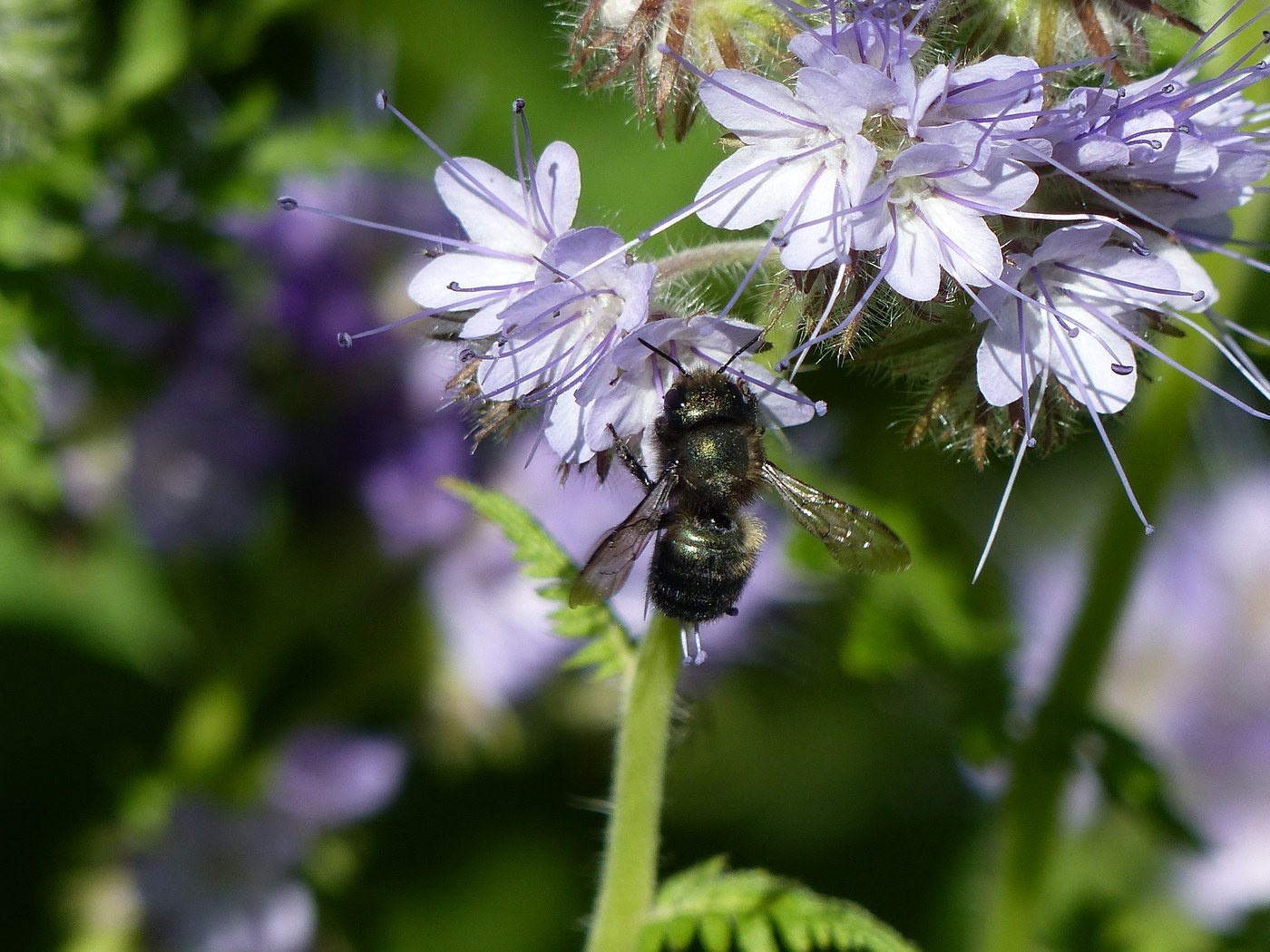
Key Visual Features
Mason bees are compact, solitary bees best known for their metallic sheen and mud-based nesting habits.
- Size: Small to medium, typically 0.4-0.6 inch (10-15 mm) long — noticeably smaller and stockier than a honey bee.
- Body shape: Robust, slightly rounded body with a dense covering of hair, especially on the underside of the abdomen where females carry pollen (a trait called "belly pollination").
- Coloring: Often a shiny metallic blue, green, or black, sometimes with a bronze or purple sheen depending on the light and species.
- Wings: Clear to lightly smoky, held flat over the back at rest.
- Legs and antennae: Dark legs with dense hairs; short, elbowed antennae typical of bees.
Where and When You'll See It
Mason bees are among the earliest bees active in spring, often appearing before many flowers have even opened, and they remain active into early summer. They favor existing narrow cavities — hollow plant stems, abandoned beetle borer holes in wood, or gaps in masonry — rather than digging their own tunnels. After provisioning a cavity with pollen and laying an egg, a female seals the chamber with a plug of mud, then repeats the process down the tunnel. This mud-capping is the clearest sign of mason bee activity: look for tidy mud seals over small holes in wood, brick, or bee hotels. They are usually seen flying low and fast around gardens, orchards, and wooded edges on mild, sunny days.
Similar-Looking Bugs
- Honey bee: Slimmer, golden-brown and black striped, and lacks the metallic blue-green sheen of a mason bee.
- Leafcutter bee: Similar size and belly-pollen carrying habit, but leafcutter bees seal cavities with neatly cut, layered leaf pieces instead of mud.
- Metallic sweat bee: Also shiny green or blue but much smaller and slimmer, and nests in soil rather than sealing cavities with mud.
Quick ID Checklist
- Small, stocky bee with a metallic blue-black or green sheen
- Dense pollen-carrying hairs on the underside of the abdomen
- Active very early in spring, flying low around blossoms
- Uses existing holes/cavities rather than digging its own
- Mud plugs sealing small holes in wood or masonry nearby
Frequently asked questions
What makes a mason bee look different from a honey bee?
Mason bees are stockier and have a metallic blue, green, or black sheen, while honey bees are more slender with golden-brown and black banding and no metallic shine.
How do I know a hole was used by a mason bee rather than another cavity-nesting insect?
Mason bees cap their sealed nest cavities with mud, so a neat mud plug over a small hole in wood or a bee hotel tube is a strong identification clue.
Why do I see mason bees so early in the year?
Many mason bee species are among the first bees to emerge in spring, timed to coincide with early-blooming trees and shrubs.
Do mason bees carry pollen on their legs like other bees?
No, mason bees carry pollen in dense hairs on the underside of their abdomen rather than in leg baskets, giving them a dusty yellow belly when foraging.
Mason Bee identified by the community
Recent Mason Bee finds identified with Bug Identifier.