
Meadow Fritillary Identification Guide
A small, unsilvered fritillary with a distinctively squared-off forewing tip, common in open northern meadows.
Read the full Meadow Fritillary encyclopedia entry →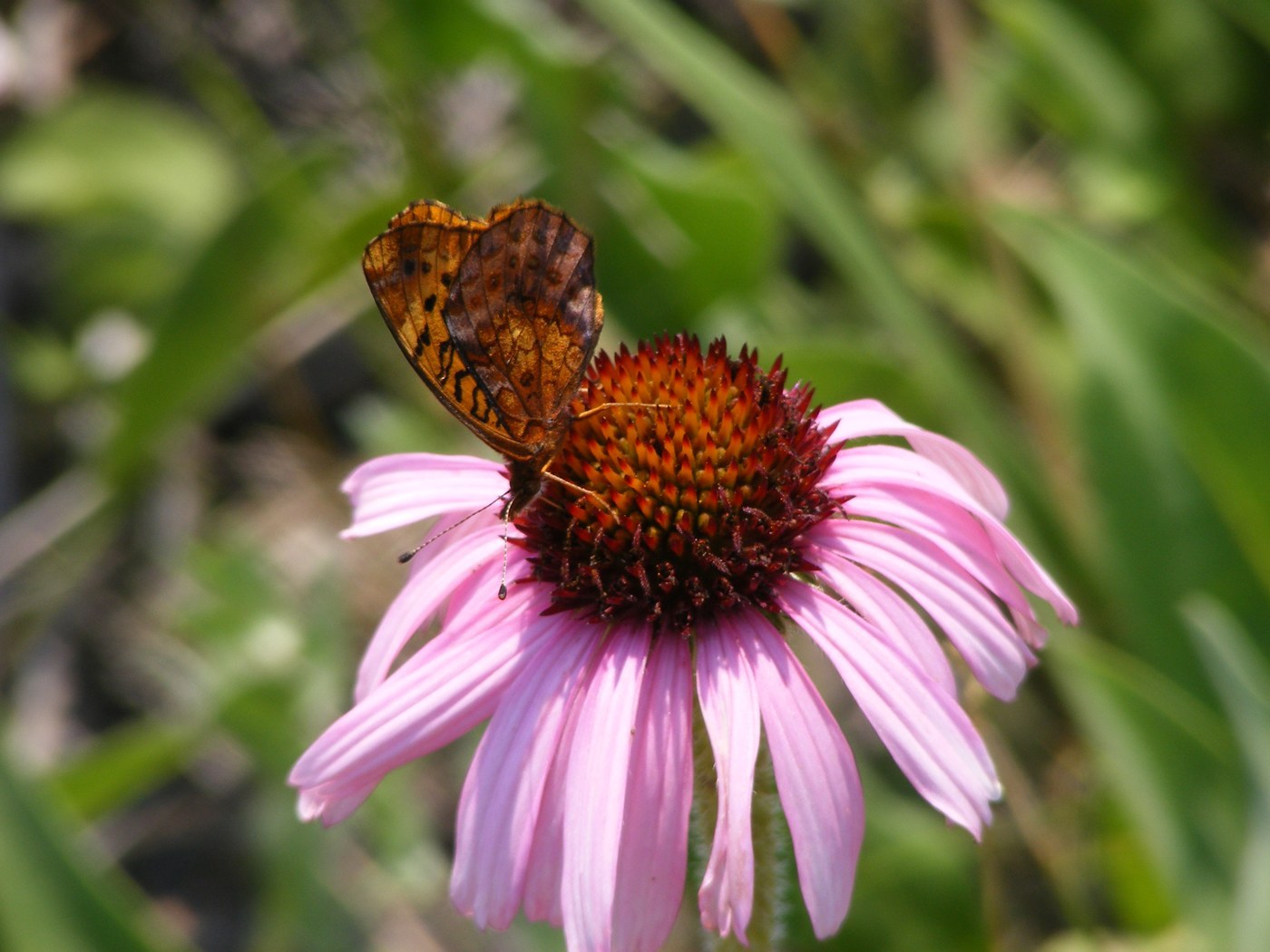
Key Visual Features
The Meadow Fritillary (Boloria bellona) is a small member of the fritillary group, with a wingspan of about 1.4 to 1.9 inches, noticeably smaller than the great spangled fritillaries.
- Upperside is bright orange with a moderate scattering of black spots, bars, and chevrons
- The forewing apex (tip) appears somewhat squared-off or truncated rather than sharply pointed, a helpful field mark when the butterfly is seen in flight or at rest
- Underside hindwing is yellowish-brown to purplish-tan with a mottled, patchy look, but without the bright metallic silver spots found in the larger Speyeria fritillaries
- Body is small and slender, matching the orange wing tone
- Wings are held mostly flat when nectaring, showing the full upperside pattern
Where and When to Look
This species favors open, moist meadows, pastures, roadside ditches, and bog edges across the northern United States and much of Canada. It flies low and often, weaving through grasses and low wildflowers rather than making long flights. Multiple broods occur through the warm season, so adults can be found from May through September in much of its range, with peak numbers in early to mid-summer.
Similar-Looking Species
- Silver-bordered Fritillary: another small Boloria species, but it shows a row of bright silver spots along the hindwing underside margin, which the Meadow Fritillary lacks
- Variegated Fritillary: larger, with more elongated wings and a more intricately marbled underside pattern
- Greater fritillaries (Speyeria species): noticeably larger overall, with bold silver spotting below that the Meadow Fritillary does not have
The combination of small size, squared forewing tip, and a plain, unsilvered underside is the quickest way to confirm a Meadow Fritillary over its look-alikes.
Quick ID Checklist
- Small fritillary, under 2 inches wingspan
- Squared-off (truncated) forewing tip
- Orange upperside with moderate black spotting
- Mottled tan-brown underside, no silver spots
- Found in open, moist meadows and pastures across northern latitudes
Frequently asked questions
What is the fastest way to spot a Meadow Fritillary in the field?
Look for a small, orange fritillary with a noticeably squared-off forewing tip flying low over open meadow vegetation; its plain, unsilvered underside also sets it apart from larger fritillary relatives.
Does the Meadow Fritillary have silver spots like other fritillaries?
No, its underside hindwing is mottled tan to purplish-brown without the metallic silver spotting seen in greater fritillaries or the Silver-bordered Fritillary.
Where is the best habitat to search for this species?
Open, moist habitats such as meadows, pastures, roadside ditches, and bog edges in the northern U.S. and Canada are most productive.
How many generations does the Meadow Fritillary have each year?
It typically produces multiple broods through the warm season, so adults can be seen from May into September depending on location.