Mexican Redknee Tarantula Identification Guide
Recognize the Mexican redknee tarantula by its jet-black body and the bold orange-red bands marking each leg joint.
Read the full Mexican Redknee Tarantula encyclopedia entry →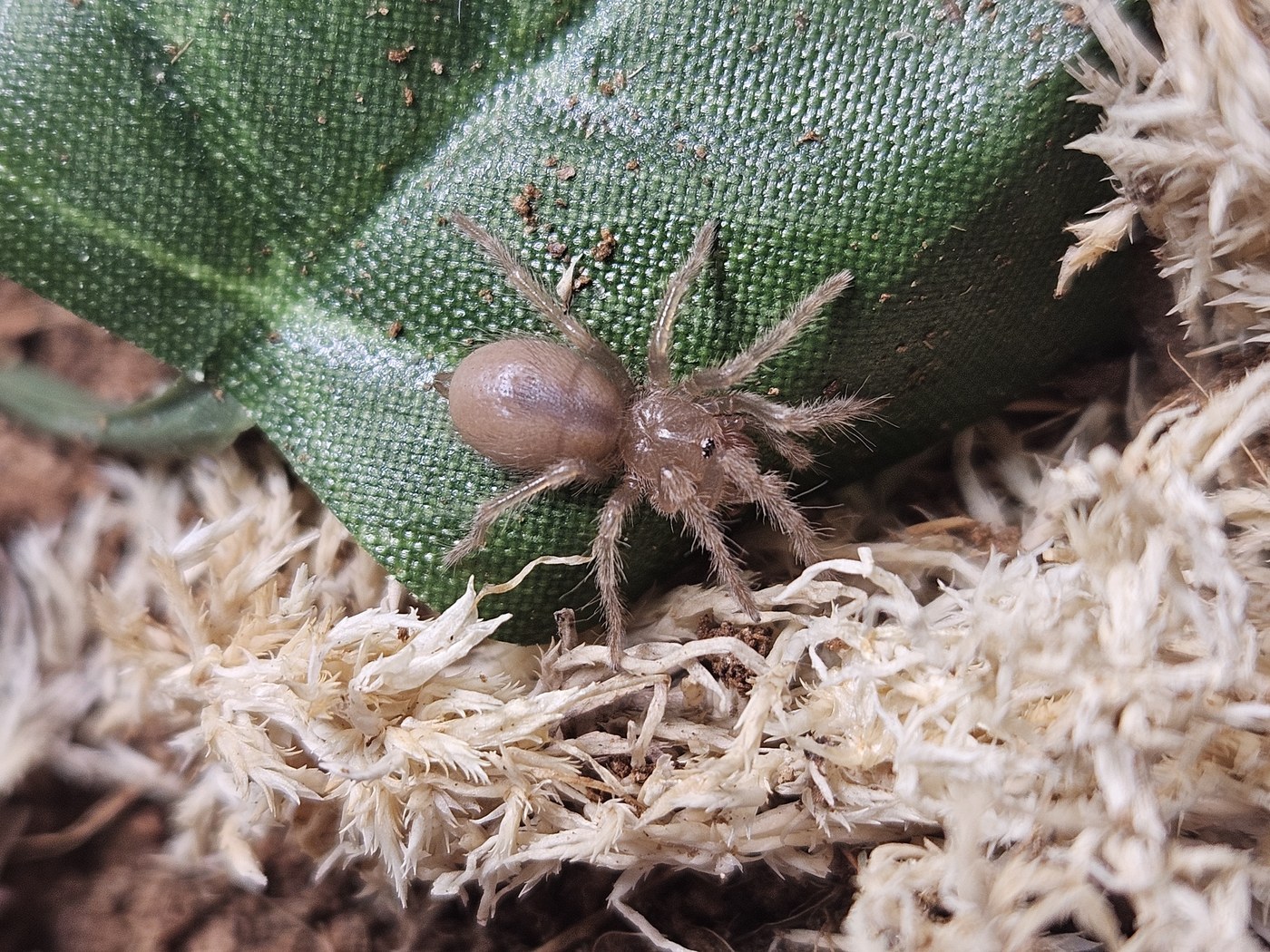
Key Visual Features
The Mexican redknee tarantula is one of the most visually striking and easily identified tarantula species:
- Color: A deep black to dark brown body contrasted sharply with bright orange or reddish bands at each leg joint, giving the species its common name.
- Size: Leg span typically 5-6 inches in mature females, with males slightly smaller and more slender.
- Body shape: A robust, hairy abdomen and thick carapace typical of tarantulas, covered in short, dense black hairs.
- Leg markings: The knee joints and sometimes the "elbow" segments show the clearest orange-red coloring, while the rest of each leg stays mostly black.
- Abdomen hairs: Fine urticating hairs cover the top of the abdomen, used defensively by flicking them toward a perceived threat.
Where and When You'll See One
This species is native to the Pacific coastal region of Mexico, where it digs or occupies burrows in dry, scrubby terrain and forest edges. It is a ground-dwelling, largely nocturnal spider that stays hidden in its burrow during the heat of the day and emerges at dusk to hunt near the entrance. Because of its calm temperament and bold coloring, it is also one of the most commonly kept tarantulas in the pet trade, so it may be encountered in captivity as often as in the wild.
Similar-Looking Spiders
- Other Brachypelma species: Several related Mexican tarantulas show similar black bodies with orange or red leg markings, differing mainly in the exact shade and placement of the color bands.
- Rose hair tarantula: Lacks the sharp orange-red banding, instead showing a more uniform pink-brown to tan coloring across the body and legs.
- Goliath birdeater: Much larger overall with a more uniform brown coloring and no distinct red-orange knee bands.
Quick ID Checklist
- Black body with bold orange-red bands at each leg joint
- Dense black hairs covering a robust abdomen and carapace
- Leg span of roughly 5-6 inches in mature adults
- Burrow-dwelling and most active at dusk and after dark
- Native to dry scrub and forest-edge habitat along Mexico's Pacific coast
Frequently asked questions
What is the most distinctive feature of the Mexican redknee tarantula?
The bright orange-red bands at each leg joint against an otherwise black body make it one of the easiest tarantulas to identify at a glance.
How can I tell this species apart from other black-and-orange tarantulas?
Compare the exact placement and shade of the color bands, since several related species show similar patterns; the Mexican redknee's markings are concentrated specifically at the leg joints.
Is the Mexican redknee tarantula active during the day?
It is primarily nocturnal, staying in its burrow through daylight hours and emerging near dusk to hunt close to the burrow entrance.
What habitat does this tarantula naturally occupy?
It's native to dry, scrubby terrain and forest edges along Mexico's Pacific coast, where it digs or occupies ground burrows.
Mexican Redknee Tarantula identified by the community
Recent Mexican Redknee Tarantula finds identified with Bug Identifier.