Millipede Identification Guide
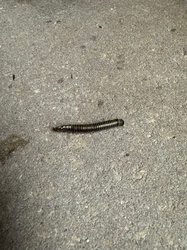
Recognize a millipede by its cylindrical, many-segmented body with two pairs of legs per segment and its slow, curling movement.
Read the full Millipede encyclopedia entry →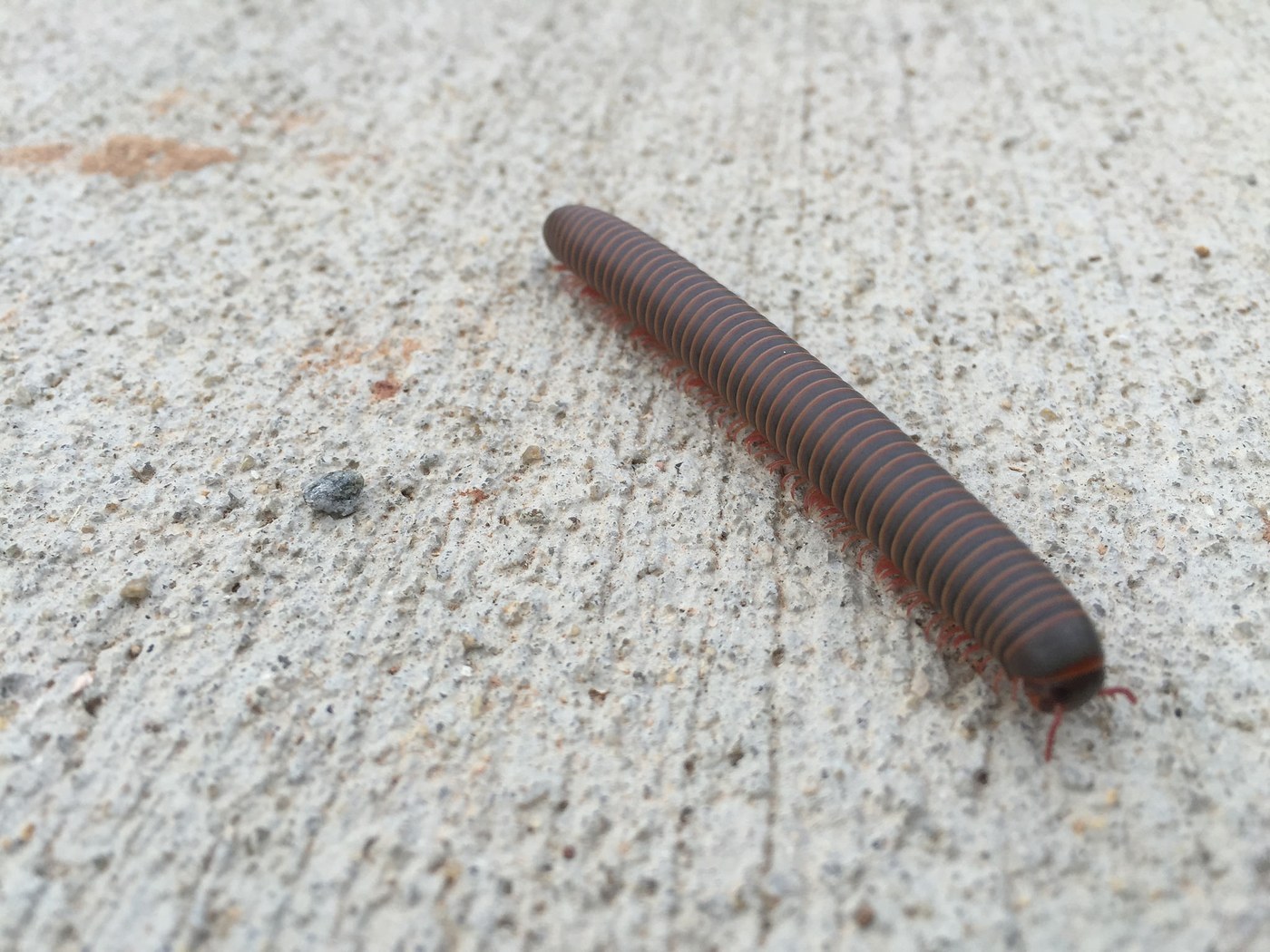
Key Visual Features
Millipedes are elongated arthropods best identified by their leg arrangement and body shape.
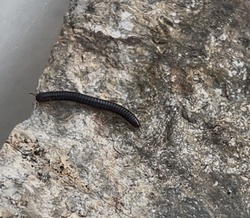
- Body shape: Long, cylindrical, and worm-like, made up of many hard, rounded segments.
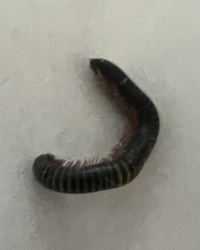
- Legs: The defining trait—each body segment (except the first few) bears TWO pairs of legs, giving millipedes a dense, comb-like row of legs along the underside.
- Size: Ranges from under an inch to several inches long depending on species.
- Color: Typically brown, black, gray, or reddish-brown, often a uniform color, though some species show banding.
- Antennae: Short, segmented antennae used to feel out the surroundings as it moves.
- Head: Small and rounded compared to the rest of the body, with simple eyes clustered on either side.
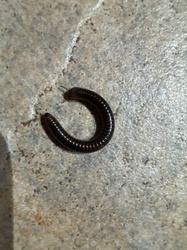
- Behavior cue: When disturbed, most millipedes coil tightly into a flat spiral rather than running away.
Where and When You'll See Them
Millipedes favor damp, dark environments rich in decaying plant matter—leaf litter, mulch beds, under logs, rocks, and stones, and around garden borders. They're most active and visible after rainfall or during humid nights, and populations often become noticeable in fall when some species migrate in search of overwintering sites. They move slowly and steadily compared to centipedes.
Similar-Looking Bugs
- Centipede: The most common mix-up—centipedes have only ONE pair of legs per segment, longer legs that trail visibly to the sides, and move quickly rather than slowly.
- Earthworms: Lack legs and antennae entirely and have a smooth, segmented but leg-free body.
- Wireworms (beetle larvae): Similar cylindrical shape but with far fewer, less obvious legs concentrated near the front.
- Pill bugs and sow bugs: Some also roll into a ball when disturbed, but these are crustaceans with fewer, more visible plate-like segments and only seven pairs of legs total, not many pairs like a millipede.
Quick ID Checklist
- Cylindrical, worm-like body with many hard segments
- Two pairs of legs per segment (dense leg rows underneath)
- Slow, steady crawling movement
- Coils into a tight spiral when disturbed
- Found in damp leaf litter, mulch, or under logs/rocks
Frequently asked questions
What's the easiest way to tell a millipede from a centipede?
Count the legs per segment if you can—millipedes have two pairs per segment while centipedes have only one; millipedes also move slowly and curl up, while centipedes move fast and don't coil.
Why do millipedes curl into a spiral?
Coiling protects their softer underside and legs by presenting only their hardened outer segments outward, a defensive posture typical of the group.
Where are millipedes most likely to be found?
In consistently damp, organic-rich environments such as leaf litter, mulch, compost piles, and under logs or stones, especially after rain.
Do millipedes move quickly?
No, millipedes are generally slow, deliberate crawlers compared to the fast-scuttling movement typical of centipedes.
Millipede identified by the community
Recent Millipede finds identified with Bug Identifier.